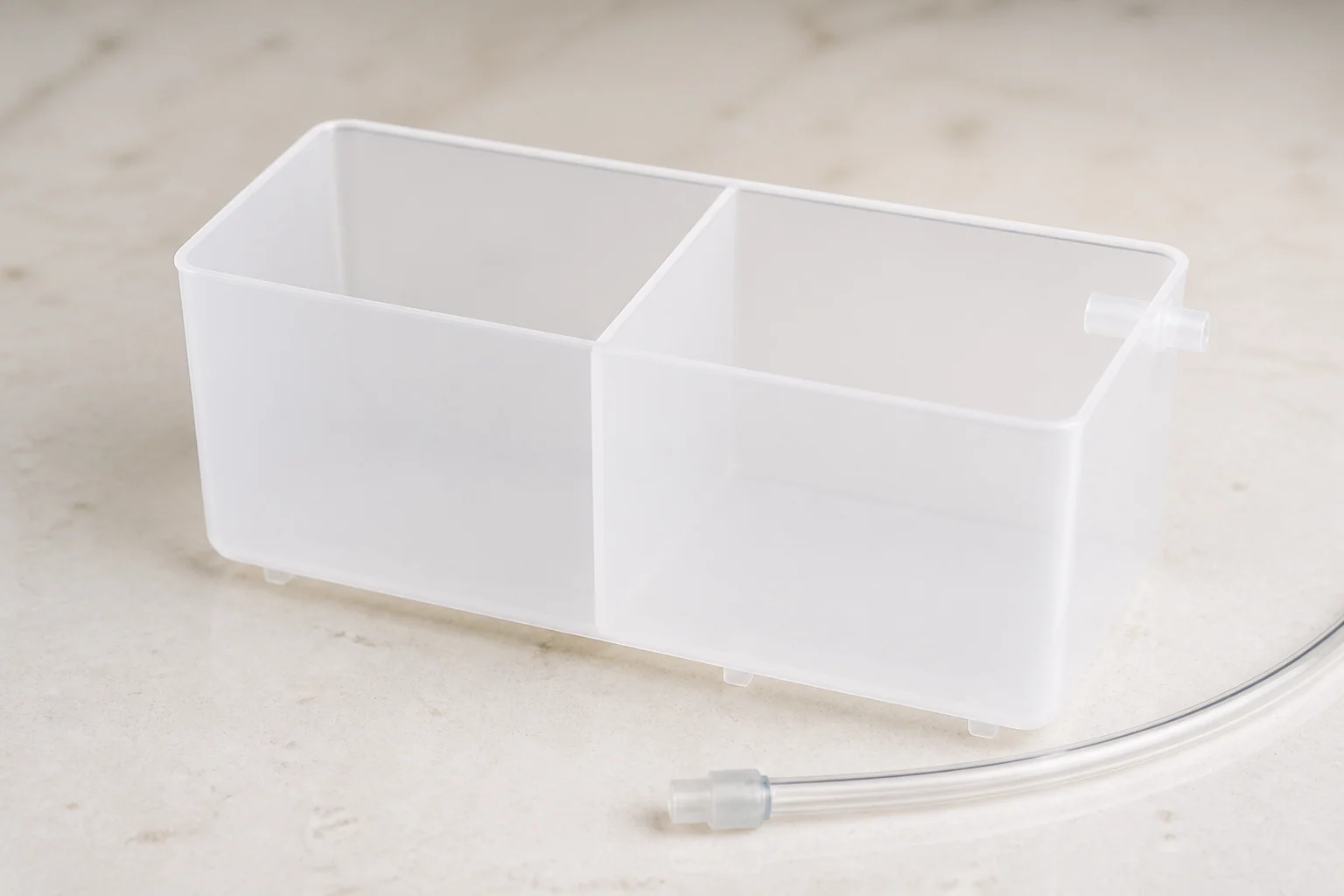
The white container in your Jura accessory box is the milk system cleaning container, and it has exactly one job: it holds one dosing unit of milk system cleaner while the machine draws it through the milk circuit. It is not a measuring jug, it is not a water reservoir, and you do not need to work out a fill level.
This is one of the least documented accessories Jura ships. It arrives unlabelled, the manual mentions it in a parts list and then in a single procedural line, and owners are left holding a shaped plastic container with two visible sections and no explanation. Here is what is actually documented, and where the documentation stops.
What It Is
In the W8 parts list the accessory is named simply “container for milk system cleaning”. It ships with the machine alongside the ground coffee measuring spoon and the key for the bean container cover.
It is used in one procedure: the milk system cleaning cycle. That cycle runs daily on a W8 whenever milk has been prepared.
How to Position It
The manual gives one instruction about placement, and it is worth reading slowly:
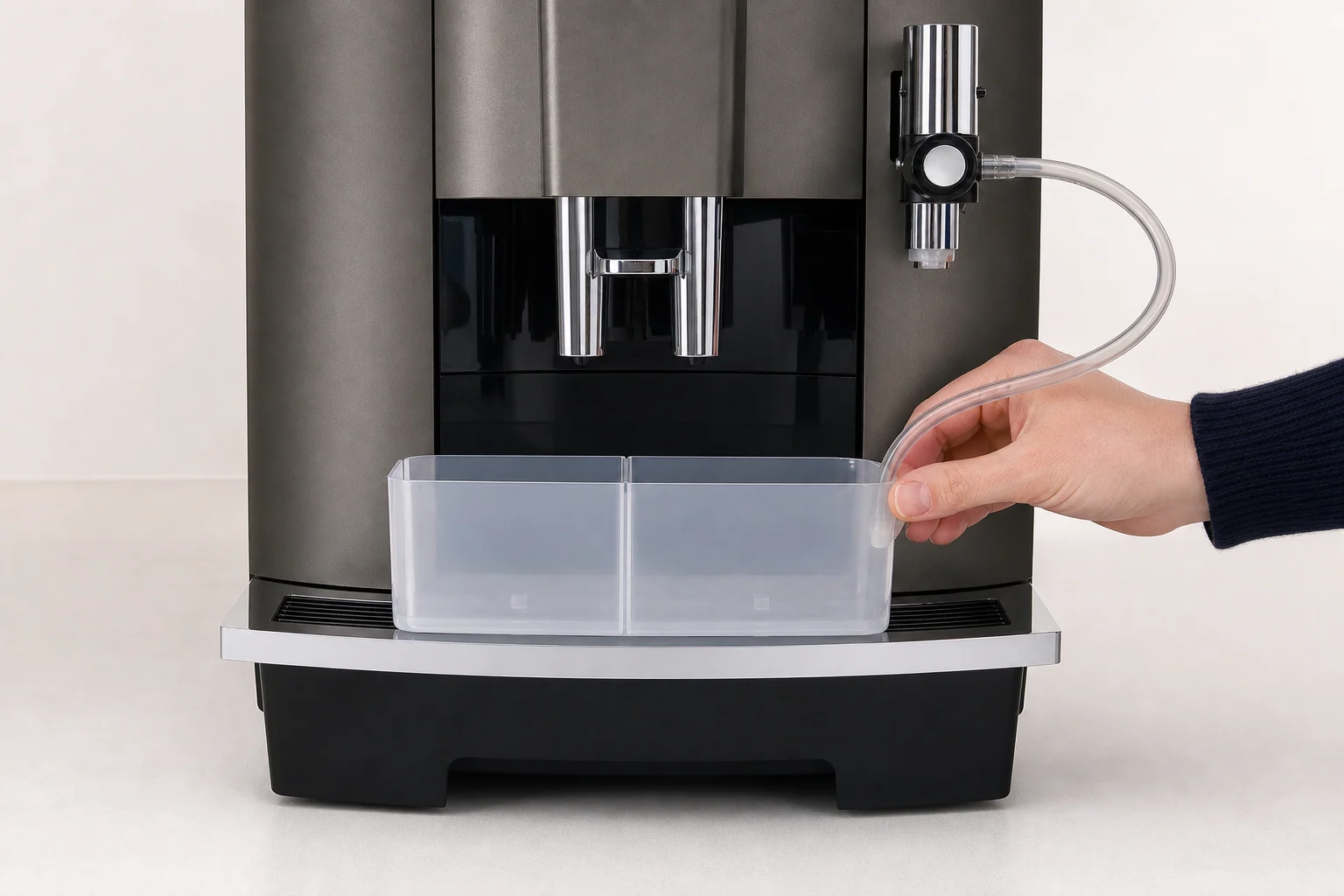
Place the container under the hot-water spout and the fine foam frother, then connect the milk pipe to the container.
Both outlets. The container has to sit so the hot-water spout and the fine foam frother are both over it. On the W8 these are two separate outlets, which is why a small cup does not work and why the container has the footprint it does.
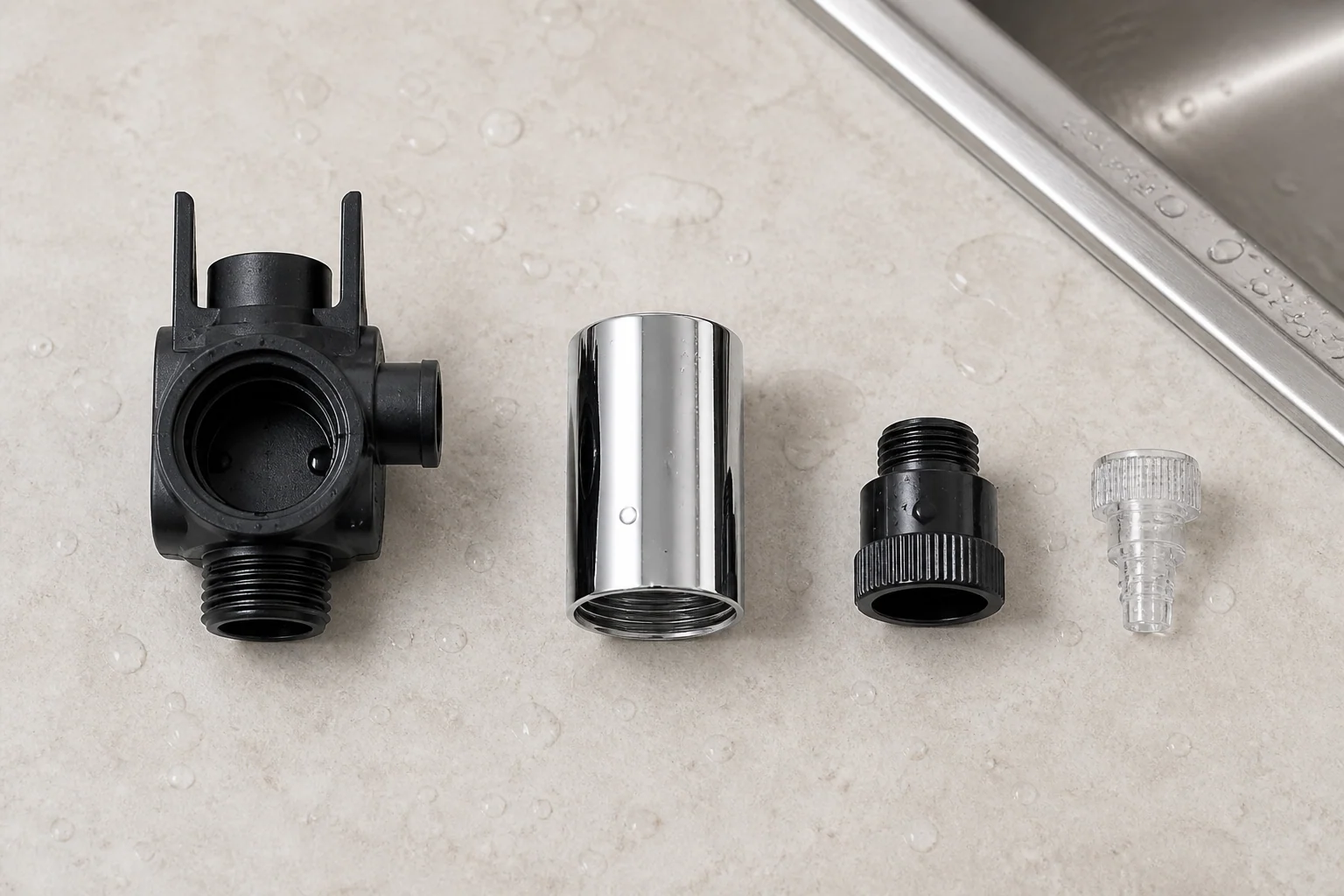
Then the milk pipe connects to the container itself. For that connection to seat correctly, the manual specifies the pipe must be fitted with a connector HP3.
So three things are happening at once during the cycle: hot water comes down from one spout, the frother discharges into the container from another, and the milk pipe draws cleaning solution up out of it.
What Goes In It
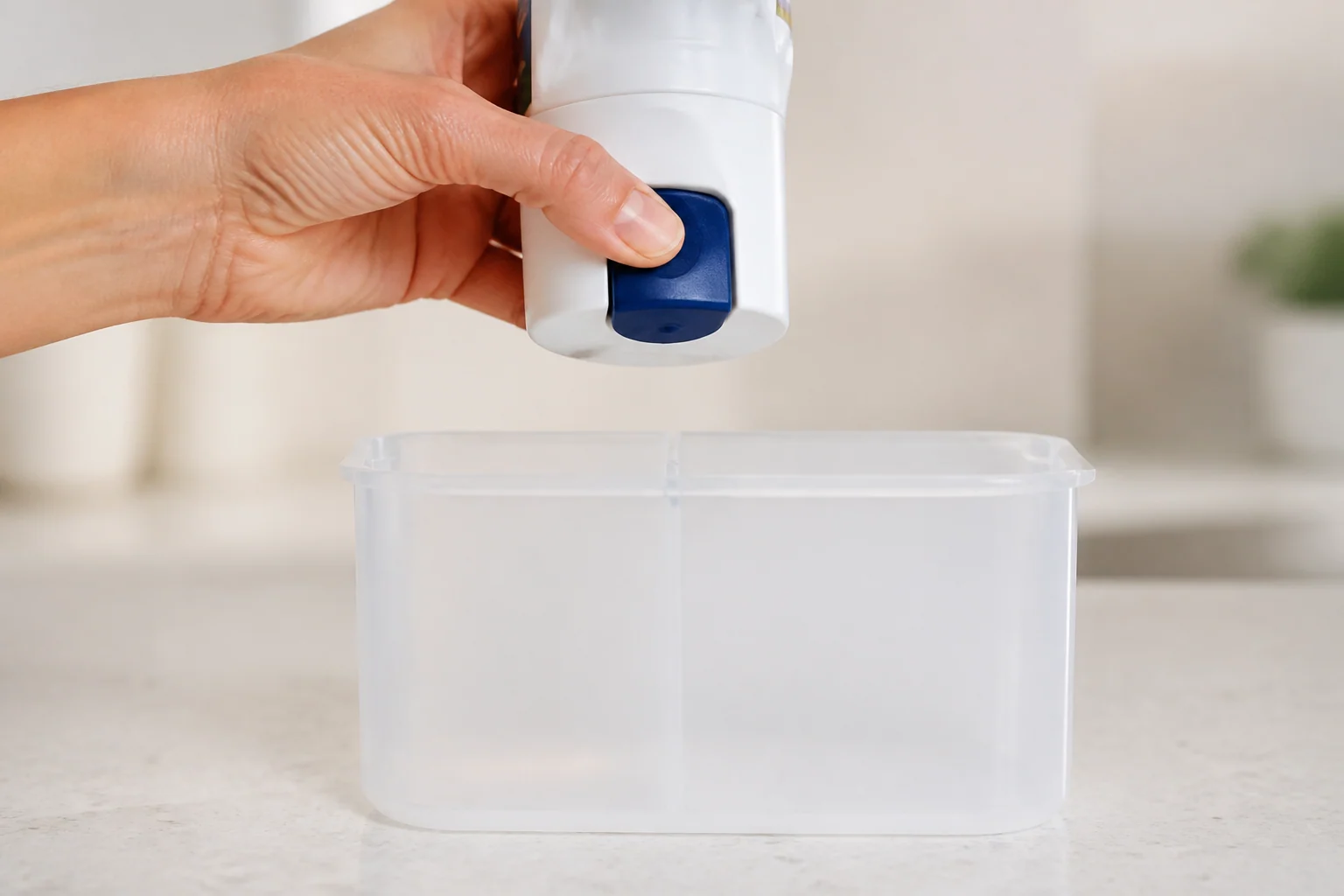
One dosing unit of Jura milk system cleaner. Nothing else.
No water. The W8 cleaning procedure has no water step. The machine supplies water through the hot-water spout during the cycle. If you have read a 250 ml figure somewhere, that belongs to a different task: hand-soaking a dismantled fine foam frother, which is covered in fine foam frother cleaning.
Do not split the dose between sections. The manual describes a single dose into the container, not a divided one.
If the phrase “one dosing unit” is what is holding you up, that has its own guide.
About Those Two Sections
Here is where we stop and tell you what we do not know, because the alternative is inventing an instruction about a chemical dose.
Jura does not document the compartments in the W8 manual. There is no line assigning one section to cleaner and another to water, no fill level, and no explanation of the moulded shapes or symbols. Plenty of forum answers state confidently which side takes what. None of them cite a source, and they contradict each other.
What is documented is the positioning: the container sits under two separate outlets and receives a connected milk pipe. A container that has to catch discharge from two points on the machine and hold a pipe connection is going to be a shaped object rather than a plain cup, and that is as far as the evidence goes.
The practical answer: pour the single dose in, position the container as the display shows, connect the pipe, press Next. The machine runs a fixed automated cycle. It is not measuring how you distributed anything inside the container.
After the Cycle
Rinse the container and the milk pipe thoroughly under running water and let them dry.
Do not put the container in the dishwasher on the assumption that it is safe. The W8 manual identifies specific dishwasher-safe parts - the drip tray, its insert, and the coffee grounds container - and the cleaning container is not among them. Absence from that list is not proof it would be damaged, but it is a reason to hand-rinse rather than find out.
What Goes In It
Jura Milk System Cleaner
One dosing unit per cycle, every day milk has been used. The original dosing bottle removes the guesswork about how much.
If the Pipe Will Not Connect
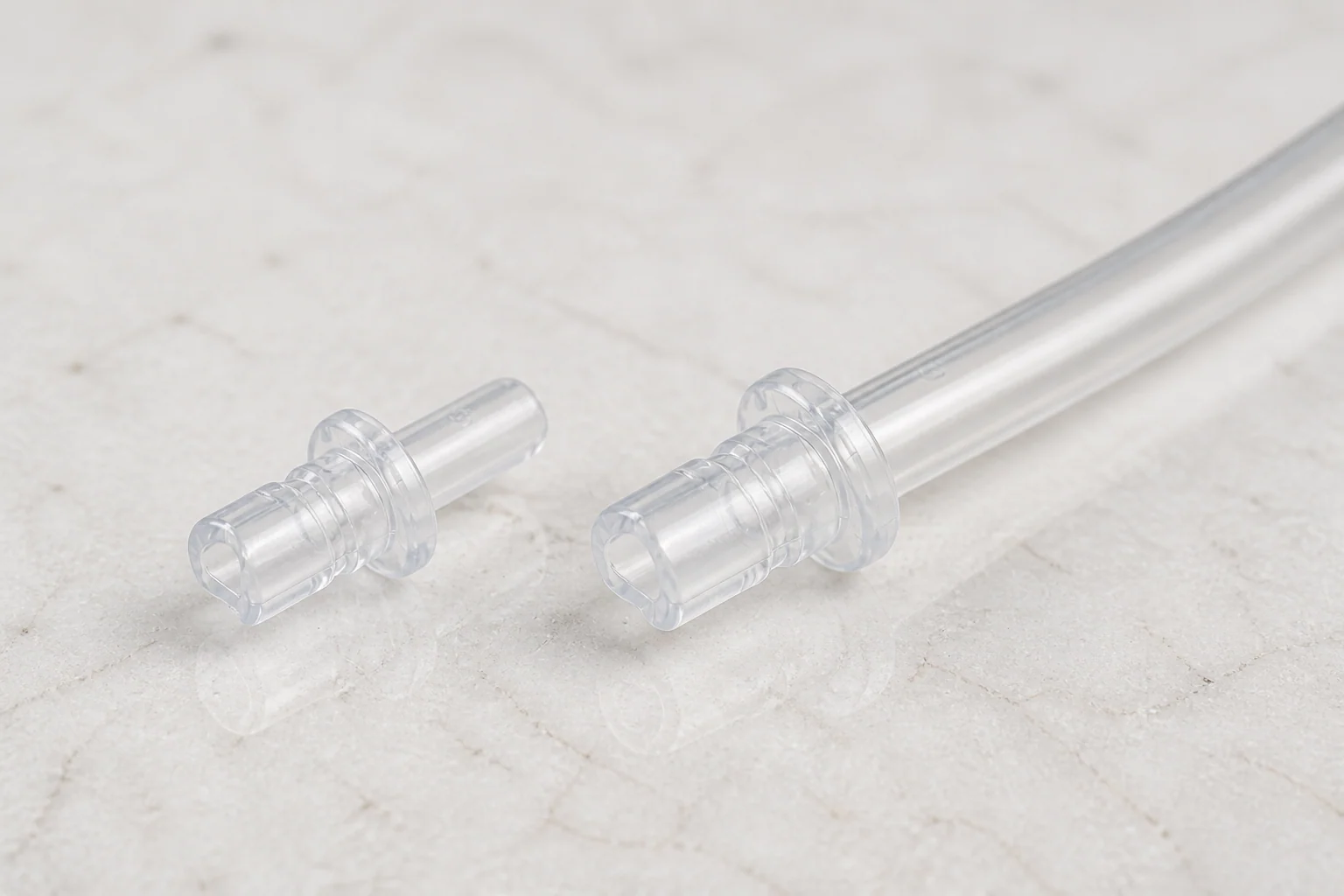
The most common cause is the wrong connector. The W8 milk pipe needs an HP3 connector to seat on the cleaning container. If your pipe came from another machine or a generic replacement, it may not have one.
The second cause is age. Jura lists the milk pipe with HP3 connector as a consumable to be replaced approximately every three months, along with the CX3 interchangeable milk spout. A pipe that has hardened, cracked or lost its shape will not seal properly on the container or in the milk container, and the symptom is usually weak foam and sputtering rather than an obvious failure.
Replacement pipes are widely available, but check the connector type before ordering - it needs to be an HP3 milk pipe to connect to the cleaning container correctly.
Where to Next
- How to clean the Jura W8 milk system - the full cycle, step by step
- What one dosing unit means - the dose, settled
- Jura W8 maintenance schedule - everything else the machine needs
- Jura milk system guide - how the milk systems differ across the range
- Cleaning tablets vs milk system cleaner - which product goes where
- W8 maintenance troubleshooting - prompts and common questions
- Cleaning products guide - what to buy for each task
Sources
- Jura W8 instructions for use (PDF) - chapter 1 parts list, chapter 5 maintenance actions, chapter 7 “Cleaning the milk system”