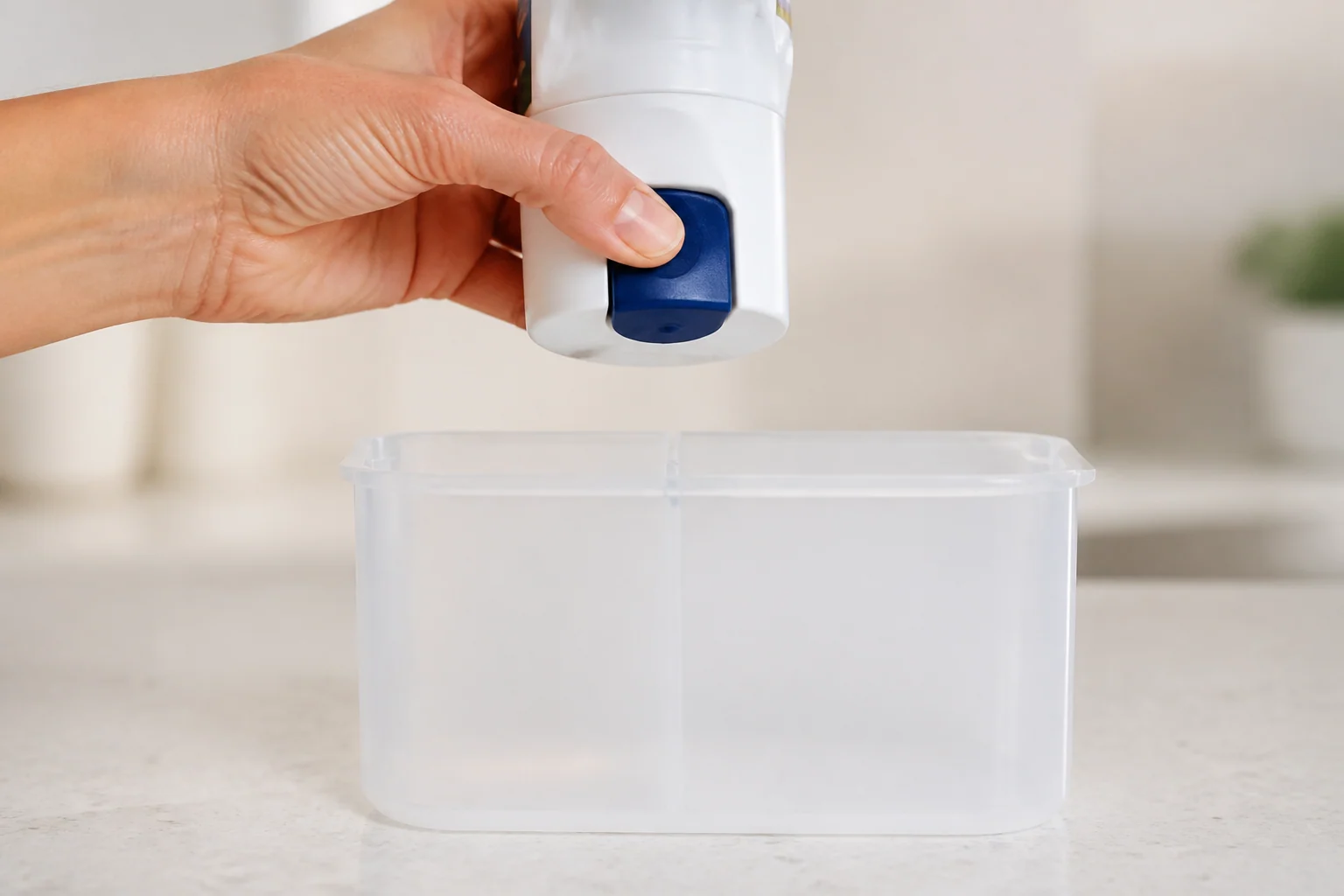
One dosing unit means one complete portion dispensed by the original Jura milk system cleaner bottle. It does not mean a number of mini-tabs, and it does not mean a weight in grams. If you have been staring at a pile of small white beads trying to work out how many to count, stop. The bottle does the measuring, and Jura’s instruction assumes you are using it.
This is one of the genuinely bad pieces of wording in Jura’s documentation. “One dosing unit” appears in the W8 maintenance procedure with no definition anywhere in the manual, and owners are left to guess at a chemical dose for a circuit their milk passes through. Here is what it actually refers to.
Why the Wording Is Confusing
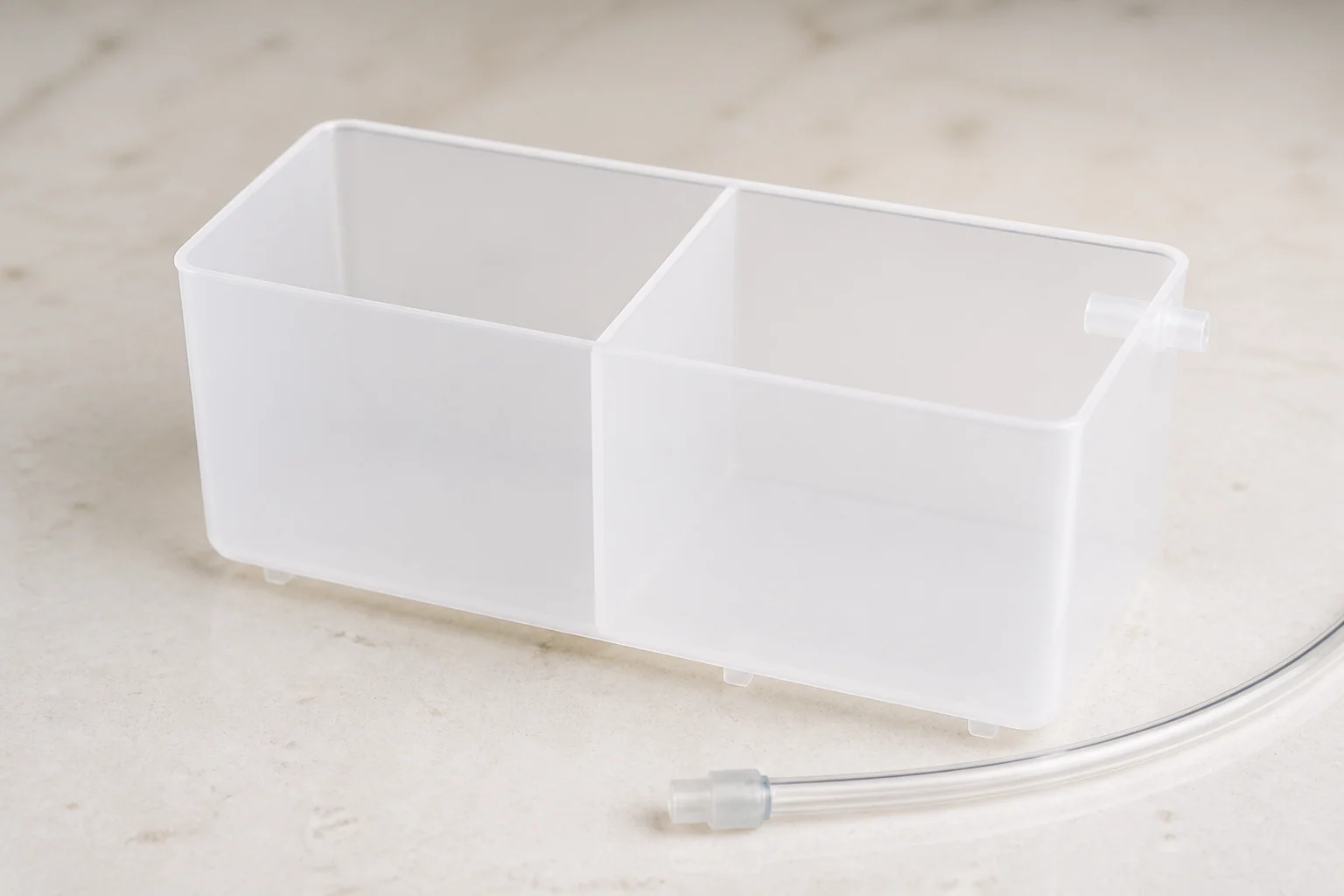
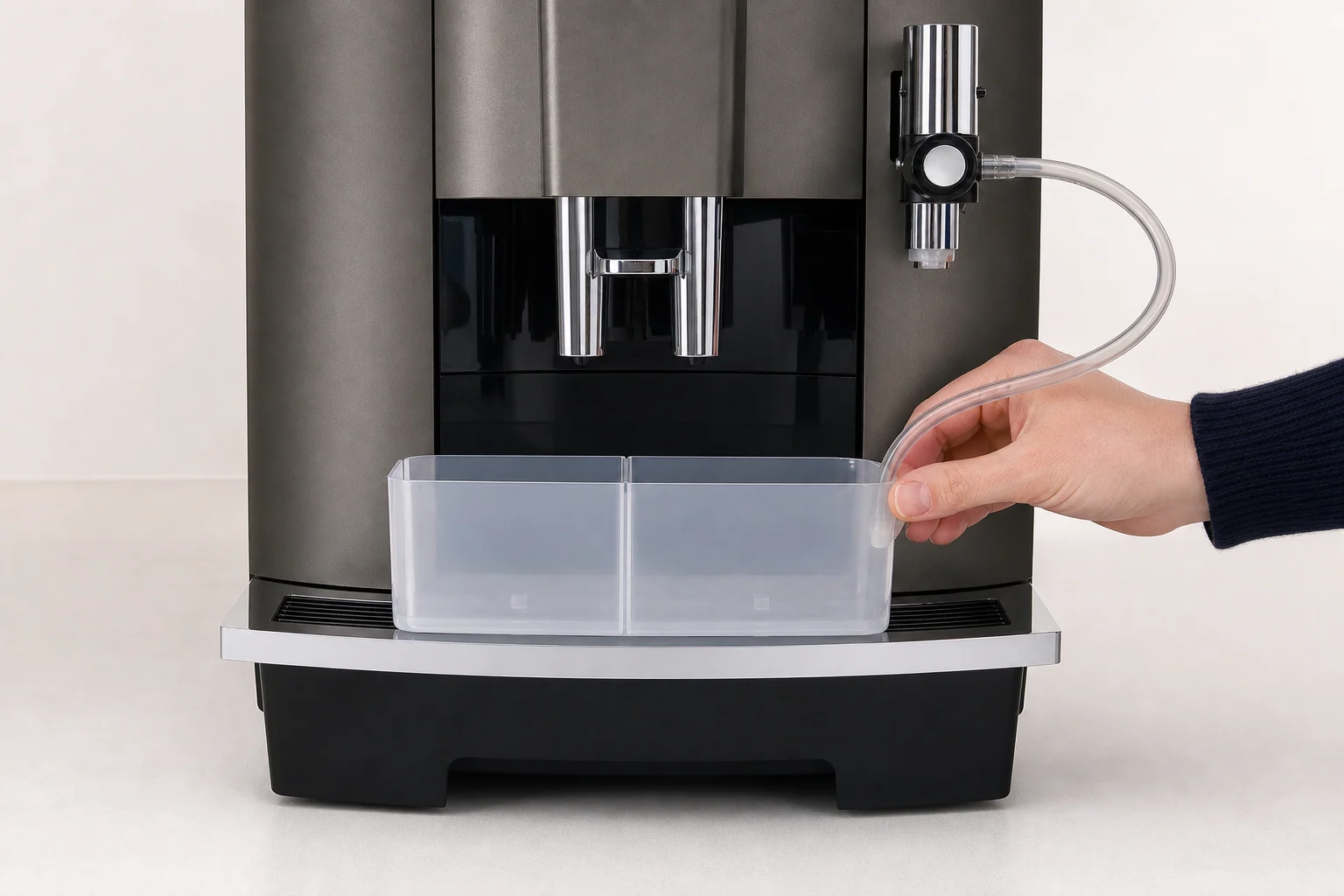
Jura’s milk system cleaner ships as small mini-tabs in a bottle fitted with a dosing mechanism. You operate the dispenser once and it releases a measured portion into your cleaning container. That portion is the “dosing unit”.
The problem is that the phrase only makes sense if you already know the bottle works that way. If someone hands you a machine, a cleaning container and a bag of loose beads, “pour one dosing unit into the container” reads like a quantity you are supposed to know. It is not. It is a description of a dispenser action.
The manual reinforces this indirectly: it never gives a bead count, never gives a gram figure, and never gives a volume. Those numbers do not exist in the W8 documentation because Jura does not expect you to measure.
What Not to Do
Do not count individual mini-tabs. They are not portioned as single doses. Counting them out is an invented procedure.
Do not weigh them. You will find gram figures circulating in forums and on retail listings. Jura does not define the dose by weight in the W8 manual, and a number derived from dividing a pack weight by a cycle count is packaging arithmetic, not an instruction. Treating it as one gives you a false sense of precision about a chemical going through your milk line.
Do not add extra for a dirty system. A double dose does not clean twice as well. If a proper cycle has not fixed your foam, the residue is physical and sitting in the frother assembly, which needs dismantling and rinsing, not more chemical.
Do not add water to the dose. The W8 milk system cleaning procedure never asks you to. Details in how to clean the W8 milk system.
Context on Pack Sizes
Jura’s milk system cleaner packaging states how many cleaning cycles a bottle covers. That is useful for one thing only: knowing when to reorder.
It is worth understanding what that number tells you and what it does not. It tells you the manufacturer’s expected number of doses per bottle. It does not authorise you to divide the pack weight by the cycle count and measure that amount out by hand. If your dispenser is working, use it. If your bottle has no dispenser, buy one that does rather than reverse-engineering a dose.
The Whole Point
Jura Milk System Cleaner, Original Dosing Bottle
The dispenser is the measurement. Buy the bottle with the dosing mechanism and the question this article answers stops existing - one click, one dose, into the container.
Mini-Tabs Are Not Cleaning Tablets
This trips up more owners than the dosing question, and it is the one that can actually damage something.
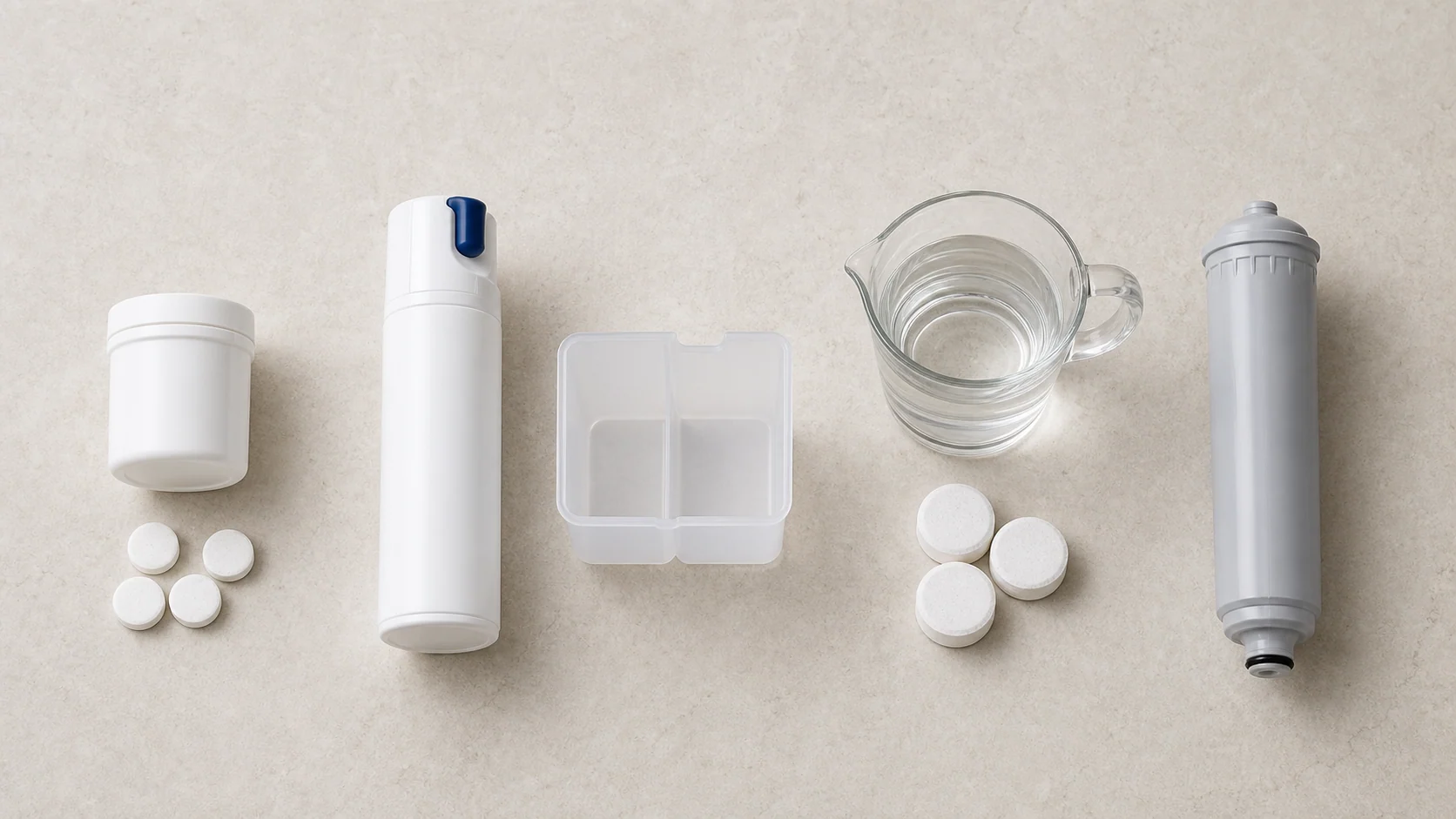
| Product | Size and form | What it cleans | Where it goes |
|---|---|---|---|
| Milk system cleaner mini-tabs | Small beads or mini-tabs, dispensed from a bottle | Protein and fat film in the milk pipe and fine foam frother | The supplied milk cleaning container |
| Jura cleaning tablet | One large round tablet | Coffee oils in the brew circuit | The ground coffee filler funnel, mid-cycle |
| Jura descaling tablet | Larger tablet, used three at a time | Limescale in the water circuit | Dissolved in the water tank, 3 tablets in 600 ml |
They are not interchangeable in either direction. A brew-system cleaning tablet does not belong in the milk container, and mini-tabs do not belong in the coffee funnel. The full comparison, including what happens when they get swapped, is in cleaning tablets vs milk system cleaner.
If You Only Have a Sachet
Single-use sachets are already portioned. One sachet is one cycle. Empty the whole thing into the cleaning container and you have your dosing unit.
This is often how the first cleaner arrives with a new machine, which is part of why the wording catches people out later: the first clean needs no decision, and the question only appears when the sachets run out and a bottle of loose mini-tabs arrives.
On Third-Party Cleaners
The W8 manual carries a specific caution here. Using the wrong cleaning agent can damage the machine or leave traces in the water, and it instructs owners to use only original Jura maintenance products.
Third-party milk system cleaners for automatic frother circuits do exist and use broadly similar surfactant chemistry. Whether to use one is a warranty and risk judgement rather than a purely technical one, and we cover the credible options in the cleaning products guide. What is not a judgement call: never put dish soap, vinegar, or any household cleaner through the milk circuit. Both attack the seals and leave residue in a line your milk runs through.
Where to Next
- How to clean the Jura W8 milk system - where the dose actually goes
- Using the milk cleaning container - the white container explained
- Jura W8 maintenance schedule - the full W8 routine
- W8 maintenance troubleshooting - prompts, rinse vs clean, and common questions
- Cleaning products guide - official vs third-party across the range
Sources
- Jura W8 instructions for use (PDF) - chapter 7, “Cleaning the milk system”
- Jura milk system cleaning short manual, dosing system reference (PDF)