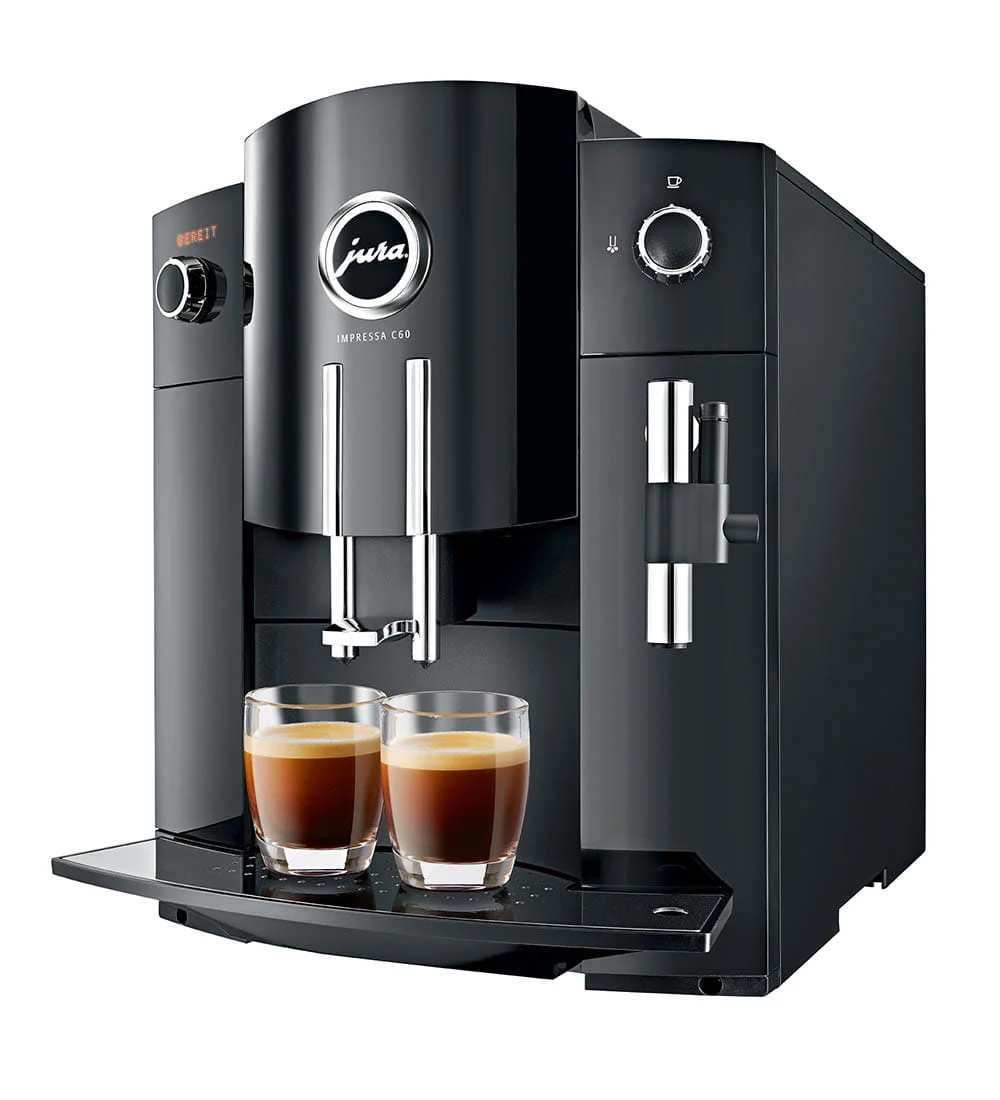
Quick answer: When the C60 motor spins but the bean level never drops, the fault is before or inside the grinder, not in the brew group. Empty the hopper, verify the bean gate is fully open, remove bridged oily beans, inspect the inlet for an obstruction and listen for an unloaded motor. If the motor runs but the burr does not turn, the drive coupling or grinder assembly needs service.
First, Identify What Is Actually Moving
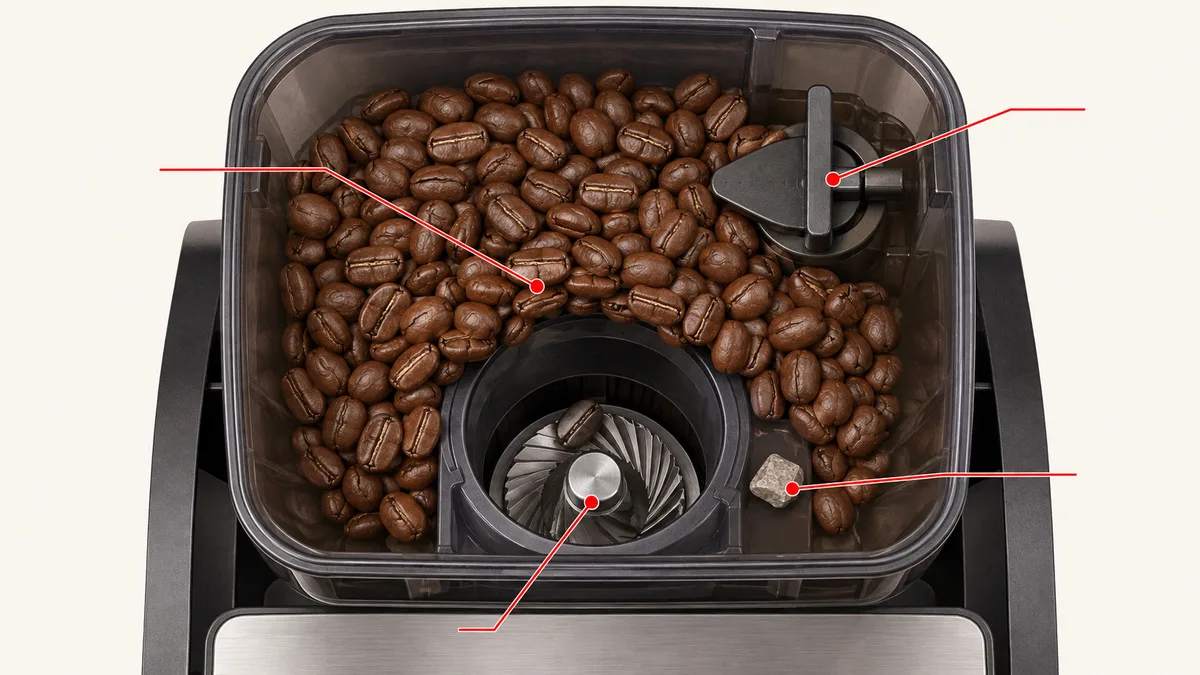
“The grinder runs” can describe two different conditions. In one, the motor and burr rotate but beans cannot enter. In the other, only the motor rotates because a coupling or gear no longer transfers power to the burr.
Remove the beans with the machine off and unplugged. With a flashlight, inspect the inlet without placing fingers or tools near the burrs. After reassembly, a brief normal brew attempt can help you listen, but do not bypass safety switches or operate an exposed grinder.
Fixes in Order of Likelihood
1. Open the Bean Gate Fully
Older Impressa hoppers use a gate to stop beans spilling during removal. If it is closed or only partly open, the motor may run normally with no load. Reseat the hopper and move the gate through its intended travel. Do not force brittle plastic on an older machine.
2. Break a Bean Bridge
Shiny, oily beans can cling together and form an arch above the inlet. The hopper looks full while nothing falls. With the machine off, stir beans with a dry wooden spoon, then remove oily residue from the empty hopper using the method in the manual. Never add liquid or grinder-cleaning material unless Jura explicitly approves it for the model.
A bridge often returns immediately when the same oily beans go back in. Test with a small amount of dry-surfaced medium roast. Do not fill the hopper completely until the feed path has completed several reliable cycles.
3. Look for a Foreign Object
Small stones and wood fragments occasionally arrive in coffee bags. A single object can sit at the burr entrance and stop feed. Empty the hopper completely and inspect under strong light. If the object is between burrs or requires force, stop before damaging the carrier or calibration.
4. Check Whether the Burr Turns
A noticeably higher, smoother motor pitch with no grinding noise suggests the motor is unloaded. If a safe visual check shows the burr remains stationary, a stripped coupling, damaged gear or disconnected drive is more likely than a bean problem.
If the burr rotates but fails to bite clean, the burr edges may be worn or the carrier may be incorrectly set. Ten-year-old machines often have more than one age-related issue, so confirm the whole grinder rather than replacing burrs blindly.
5. Clear Compacted Grounds Safely
Coffee dust and oils can harden around the inlet and discharge path. Remove only loose, accessible debris with the machine unplugged. Do not pour water into the hopper and do not probe deeply with metal tools. Cabinet disassembly exposes mains voltage and moving parts and is a technician job.
Use Sound as a Clue, Not a Verdict
A healthy grinder produces a loaded, rougher sound as beans enter. A fast whir can mean no beans are reaching it or the drive is no longer transferring load. A sudden click, stop or repeated start can point to a hard obstruction. Record a short video for a repair shop, but do not keep running the motor to capture a better example.
Sound varies with beans and grinder design. Compare the machine with its own normal behavior, not with a different Jura model in an online video.
Why the Bypass Doser Still Works
If the C60 brews correctly from an approved dose of pre-ground coffee, the water, heating and brew path can still function. That narrows the fault toward bean feed or grinding. It does not prove the grinder motor is healthy, and the bypass is not a permanent replacement for the hopper.
Use only the amount and grind type specified by the Impressa manual. Too much pre-ground coffee can create a second problem in the brew group and confuse the diagnosis.
Clog or Stripped Coupling?
| Observation | More likely cause |
|---|---|
| Beans fall after stirring | Bean bridge |
| Burr turns but beans sit above it | Gate, inlet obstruction or bridging |
| Motor pitch is fast and burr stays still | Drive coupling or gear |
| Motor strains or stops | Jammed burr or foreign object |
| Grounds appear but dose stays small | Worn burrs, calibration or blocked discharge chute |
This table is diagnostic, not proof. Stop if the machine produces a burning smell, grinding metal noise or repeated motor stalls.
Repair or Replace the C60?
A cleared gate or bean bridge costs almost nothing. A professional grinder repair can be worthwhile if the machine is otherwise dry, heats correctly and has a healthy brew group. Ask for a complete inspection before approving the repair, because a grinder plus leaks, seals and electronics can exceed the value of an aging C60.
Request a written quote that identifies whether the shop is replacing burrs, the complete grinder, a coupling or related seals. “Grinder service” can mean very different work. Ask whether calibration, cleaning and a brew test are included and what warranty applies to the repair.
Replacement becomes more attractive when the machine also leaks internally, heats inconsistently, shows recurring electronic faults or needs extensive brew-group work. If the C60 has otherwise been reliable and the failure is a single accessible obstruction, repair is the sensible first move.
After Restoring Bean Feed
Start with a moderate grind and a small hopper load. Brew three cups to clear retained grounds, then judge strength and puck consistency. Adjust one step at a time and follow the manual’s requirement for changing the grinder only during operation where applicable.
Keep future beans dry-surfaced and inspect the bag before filling the hopper. Wipe the empty hopper as instructed, but keep water away from the grinder opening. A weekly glance at bean movement is often enough to catch a new bridge before it becomes a complete no-feed event.
Repair Service
Need a Jura Repair Technician?
Tell us your machine, the problem, and your location. We will look for an experienced repair technician who covers your area. There is no obligation to proceed.