Quick Answer: If your Jura A1 gives wet, separated grounds at a lower strength setting and a firmer puck at a higher one for the same drink volume, the added coffee is helping the puck hold together. That observation is useful, but puck appearance is not a stand-alone extraction test. Judge the taste and flow first. For a stronger cup, raise the strength, then shorten the volume, then try one grind step finer while the grinder is running. If the cup stays weak at every setting, the grinder or brew unit may need inspection.
Repair Service
A1 Coffee Weak at Every Setting?
Tell us your machine model, what the puck looks like, and your location. We will look for an experienced independent Jura repair technician who covers your area. There is no obligation to proceed.
What This Guide Adds
We already have full guides on the settings. Our stronger coffee guide covers the three levers: strength, volume and grind. Our grinder settings guide explains how and when to move the grind dial. Our weak, watery coffee guide works through seven causes of a cup that suddenly went thin.
This guide does not repeat them. It uses one simple tool those guides do not lean on: the used puck in the grounds container. A small dose and a large dose leave very different pucks. Once you can read that difference, you know which lever to pull on a compact Jura like the A1.
Why the Same Shot Looks So Different at 7g and 10g
A super-automatic brews in a closed chamber. The grinder drops the dose in, a piston presses it, hot water goes through, and the machine ejects the spent puck. The amount of water depends on the cup size you chose. The amount of coffee depends on the dose.
What follows is general espresso knowledge, not a Jura specification.
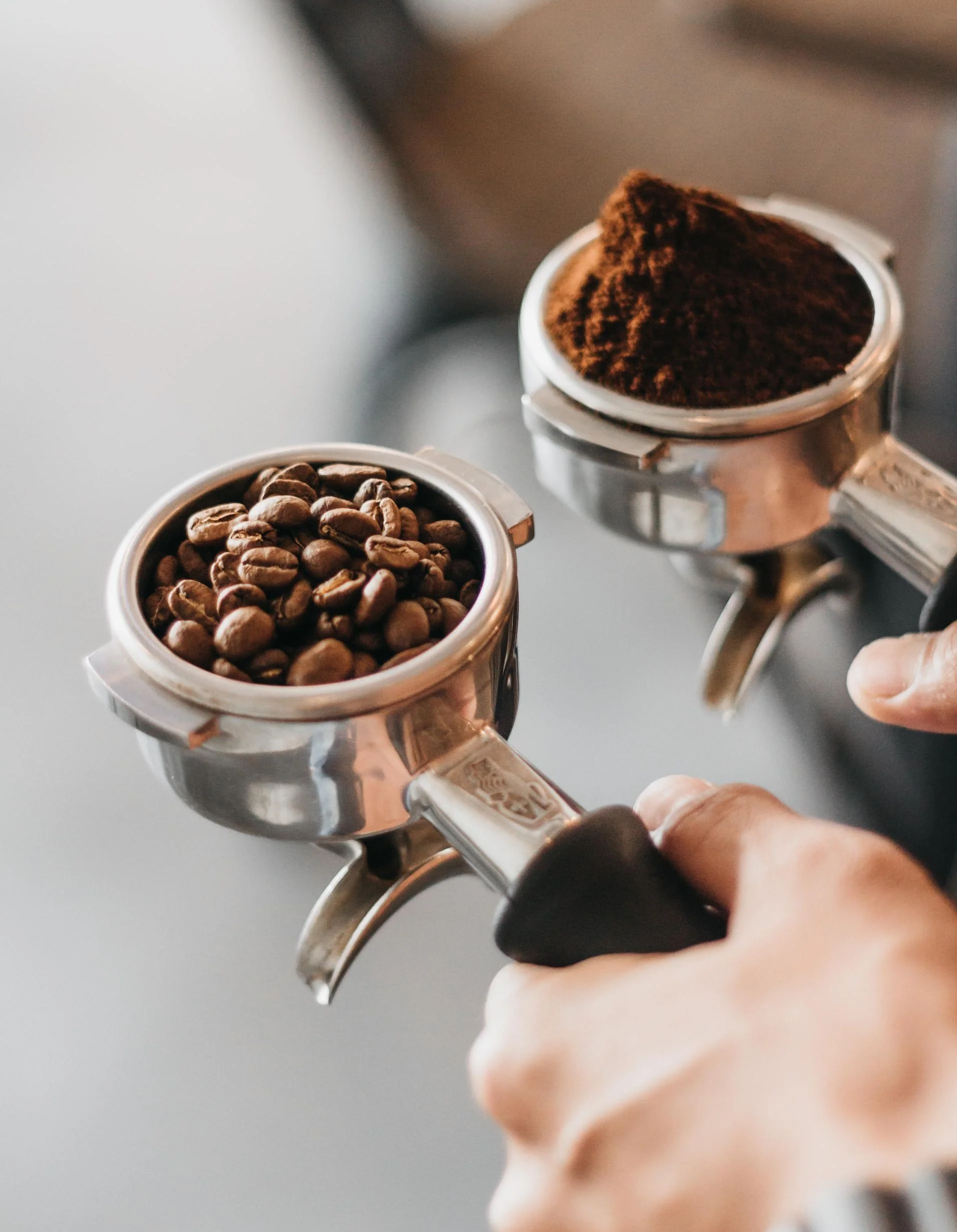
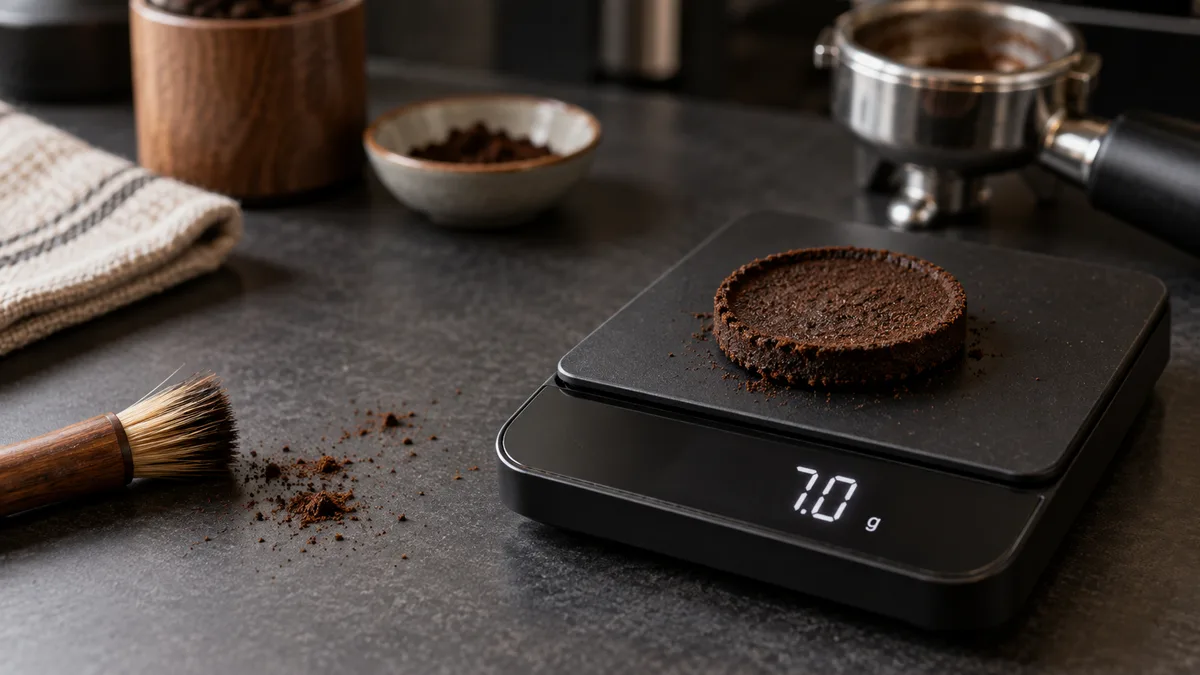
- Smaller dose (about 7g in this example). The coffee bed is thinner and may not hold together when the machine ejects it. For the same drink volume, the cup will also be less concentrated.
- Larger dose (about 10g in this example). The thicker bed often ejects as a more cohesive cake, and the same water meets more coffee, so the cup can have more body.
So the wet puck is not the problem in itself. It is one observation to combine with taste, flow, drink volume and repeatability. Rinse water and the drain cycle can change how wet the newest grounds look.
Our brew unit cleaning guide uses persistently soupy grounds alongside weak coffee as a troubleshooting clue, not as a quality score for one isolated puck.
Read Your Puck: A Quick Table
Open the grounds container after a normal drink. Look at the newest puck and match it below.
| What the puck looks like | What it usually means | What to try |
|---|---|---|
| Wet, broken, sloppy grounds; thin cup | Dose small for the cup volume | Raise strength, or choose a shorter cup |
| Firm, fairly dry cake; cup tastes good | Dose and volume suit each other | Leave it |
| Firm puck; cup tastes bitter or harsh | Grind may be too fine for this bean | One grind step coarser |
| Firm puck; cup tastes thin and sour | Grind may be too coarse, or beans are stale | One grind step finer, or fresher beans |
| Wet, soupy puck at every setting; weak cup | Possible brew unit or grinder fault | Clean, descale, then call a technician |
A puck can look wetter on the first drink of the day or after a rinse. Judge several pucks from the same drink, not one.
Do Not Chase a Gram Number
Our weak coffee after burr replacement guide makes an important point. Wet puck weight includes water the grounds held back, so it is approximate. It is also not an official Jura calibration value.
Use 7g and 10g as a picture of “less coffee” and “more coffee”, not as targets. Your useful number is your own baseline. Note the drink, the strength level, the cup volume, the grind position and the bean. Then compare pucks from three identical drinks. If you change one thing and the pucks firm up and the cup gets fuller, you moved in the right direction.
How to Get a Stronger Shot on the A1, in Order
Change one lever at a time. Brew two or three cups after each change, and judge the third. Old grounds sit in the chute and take a cup or two to clear, as our grinder guide explains.
1. Raise the dose first
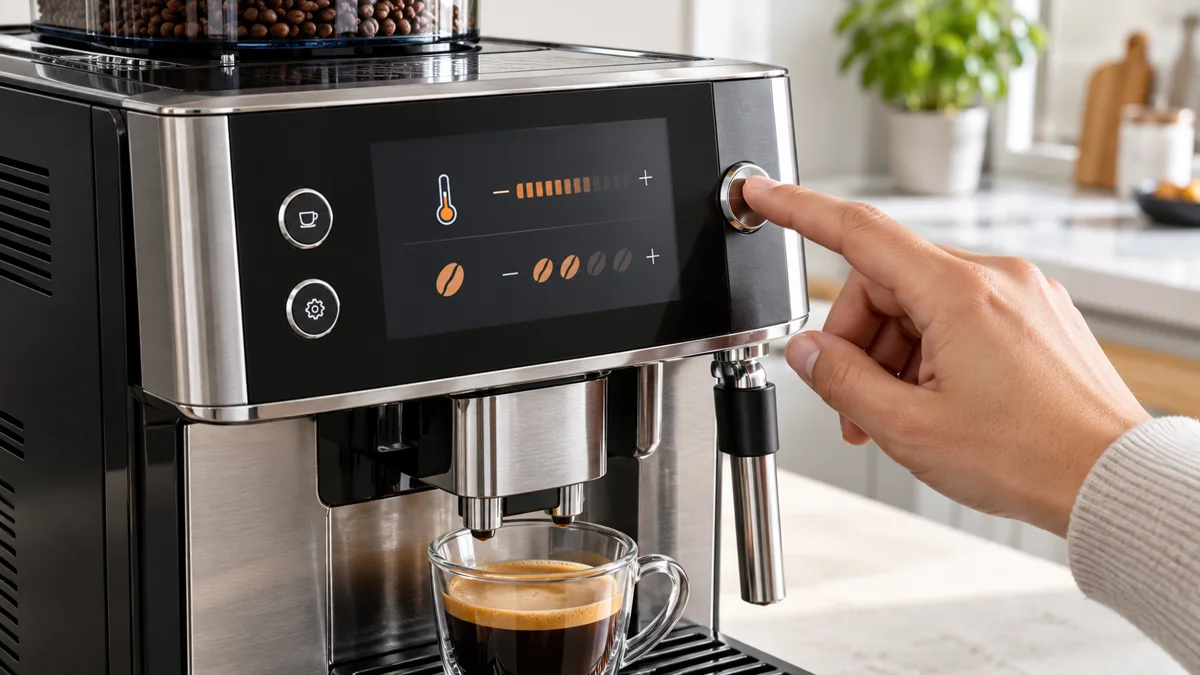
On most Jura machines, the strength (aroma) setting is what changes how much coffee the grinder doses. A higher setting means more coffee in the chamber and a firmer puck. This is the most direct fix for a wet puck. The way you set strength differs by model and display. Check your A1 manual for the exact steps.
2. Make the cup shorter
If the strength is already at the top, cut the water. The same dose with less water gives a more concentrated cup. If you like a big mug, a short strong drink topped up with hot water often tastes better than one long, thin extraction.
3. Go one grind step finer
A finer grind slows the water down and pulls more from each gram. Turn the grind dial only while the grinder runs. Move one step, then brew a few cups before you judge. Do not jump to the finest mark. Our grinder guide warns that a grind that is too fine can slow the flow, strain the grinder and cause errors.
4. Check the beans
Stale beans make thin coffee at any setting. Very oily, dark beans can also clog the grinder and chute over time, which lowers the real dose. Our oily beans guide explains why. A fresh medium roast with a dry surface is a safe test bean. Our best beans for Jura machines list has more choices.
A Safe Test Bean
Lavazza Super Crema Whole Bean, Medium Espresso Roast
A medium roast to test your dose and grind changes. It does not fix a worn grinder or brew unit.
Strong Is Not the Same as Bitter
More coffee and a finer grind give a fuller cup up to a point. Past that point, the shot turns harsh. If your puck is firm and the coffee now tastes burnt or dry, you went too far on the grind. Step back one notch. Our bitter espresso guide covers the other causes, and our espresso settings guide shows how the settings work together.
Rule Out a Dirty or Scaled Machine
Before you blame the dose, make sure the machine is clean. Coffee oil on the brew unit and scale in the water path both make thin coffee, and no setting makes up for them. Run the cleaning program when the machine asks for it, and descale or change the filter on time. Our cleaning schedule lists what to do and how often.
Cleaning Due?
Jura Cleaning Tablets and CLARIS Blue Filter Combo Pack
Tablets for the cleaning program, packed with CLARIS Blue filters. Check which filter your machine takes before you buy.
When Weak Coffee Is a Repair Job
Most strength complaints are settings, beans or cleaning. Some are not. Settings cannot fix a machine that does not dose or press properly.
Our existing guides point to two hardware causes:
- A worn or blocked grinder. Worn burrs give an uneven grind, and grind changes start to do less than they used to. A blocked chute can starve the brew chamber, so the real dose stays small even at a high strength setting. Our weak, watery coffee guide lists the signs.
- A worn brew unit. Our brew unit guide notes that wet, soupy pucks can mean low brew pressure from worn seals or a misaligned piston. Uneven flow, or a cup that starts strong and then thins out, points the same way.
Suspect hardware if all of these are true:
- The machine is clean, descaled and has a fresh filter.
- You raised the strength, cut the volume and went one or two grind steps finer.
- The beans are fresh.
- The puck is still wet and broken, and the cup is still weak.
Do not open the housing. The grinder and brew unit sit inside it, and work there is a job for a technician. If your A1 is under warranty, contact Jura first.
If you are not sure what you are looking at, record a short phone video of a brew and the puck it leaves. Add it to a repair request, and a technician can tell you whether it looks like a settings issue or a repair.
Repair Service
Puck Still Wet After Every Fix?
Send us your model, what you changed, and what the puck looks like. We will look for an experienced independent Jura repair technician who covers your area. There is no obligation to proceed.
Frequently Asked Questions
Why are my Jura A1 grounds wet and broken at a small dose?
The coffee bed is thin, so it packs loosely. Water runs through easily and more of it stays in the grounds. The cup tastes thin.
Is a firm, dry puck a sign of a better shot?
It is a good sign, not a guarantee. Taste decides. A firm puck with a bitter cup can mean the grind is too fine.
How do I make my Jura A1 coffee stronger?
Raise the strength first, then shorten the cup, then go one grind step finer. Change one thing at a time.
Can I put more coffee in the A1 than the maximum strength allows?
Not through the settings. Make a shorter drink, or make two short drinks into one cup.
My A1 puck is always wet, even at the strongest setting. Is something broken?
It can be. If the machine is clean and descaled and the cup is weak too, a worn brew unit or grinder is possible. Ask a technician.
Related
- How to Make Jura Coffee Stronger - the three strength levers in detail
- Jura Grinder Settings Explained - when and how to move the grind dial
- Jura Coffee Weak or Watery - seven causes of a thin cup
- Jura Brew Unit Cleaning Guide - signs the brew unit needs care
- Jura Repair Service - find an independent repair technician
As an Amazon Associate, we earn from qualifying purchases at no extra cost to you.