Quick Answer: The most common cause of weak Jura espresso is grind set too coarse or strength setting too low. Go to Settings and move the grinder one step finer, then increase the aroma level by one. If the machine has not been cleaned in the last 200 brews, run a cleaning tablet cycle first - oil buildup is the second most common cause and fixes in under 10 minutes.
Scale Kills Flavor
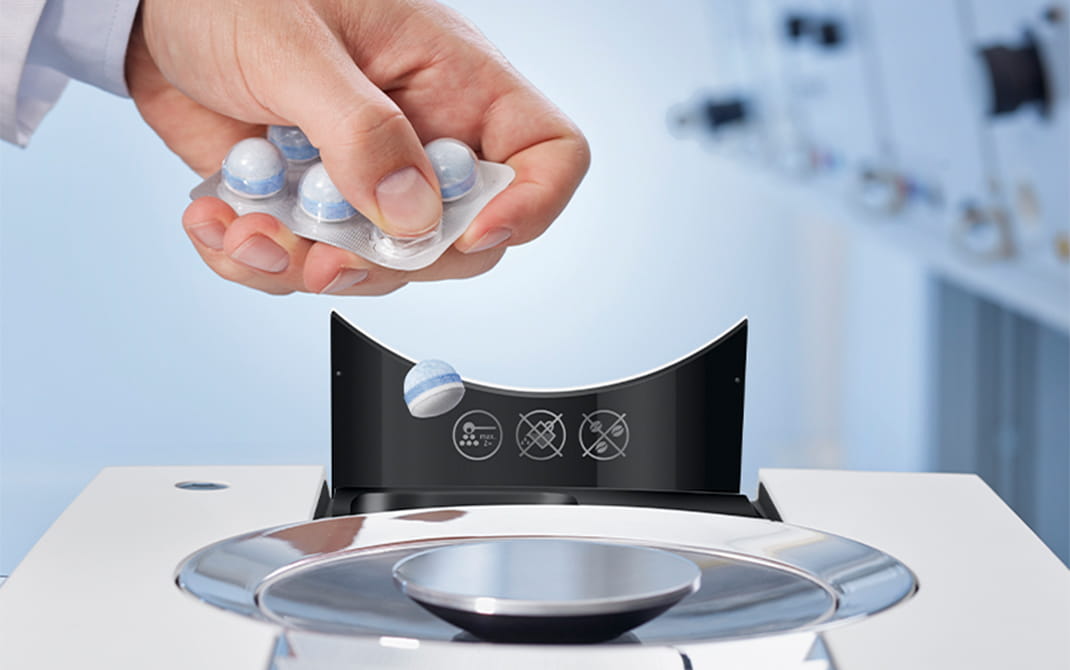
Jura Descaling Tablets
Scale on the thermoblock lowers brew temperature, and cooler water pulls weak, watery shots. If descaling is overdue, fix that first.
Jura coffee coming out weak, watery, or light-tasting? This is the most common complaint from new Jura owners and easy to fix in most cases. Work through the checklist below in order - the causes are arranged by frequency, so the most likely fix comes first.
Quick Diagnosis
| Symptom | Most Likely Cause | Fix |
|---|---|---|
| Weak from day one | Grind too coarse or strength too low | Adjust grind finer, increase strength setting |
| Started weak after weeks of good coffee | Dirty brew unit or stale beans | Run cleaning tablet cycle, fresh beans |
| Watery with thin crema | Grind too coarse or wrong bean type | Grind finer, switch to espresso roast |
| Weak only on first cup of the day | System not fully warmed up | Run a rinse cycle before first brew |
| Weak despite fine grind | Worn burrs or clogged grinder | Professional service |
Cleaning Tablets
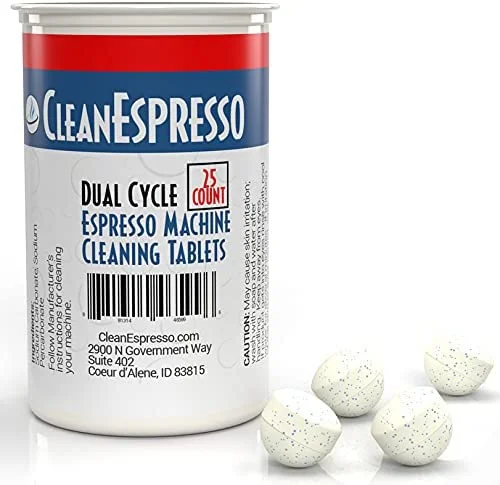
Oil buildup = weak, flat espresso. Most common fix.
Check Price →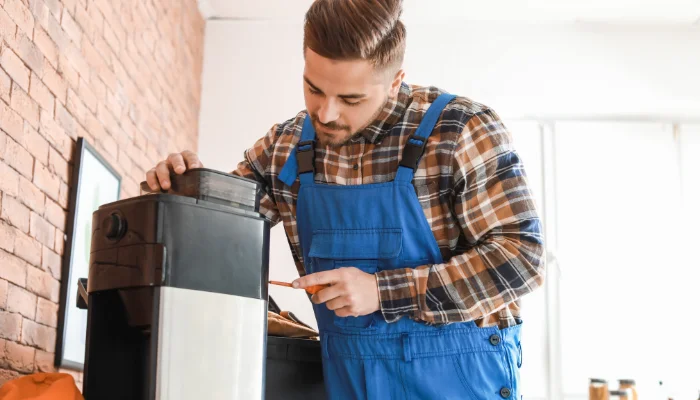
The Full Dial-In Routine (For a New E8 That’s Never Tasted Right)
If you just unboxed a new E8 and it’s tasted weak or flat from the first cup - not “went weak after weeks of good coffee” - the individual fixes below still apply, but real owners on r/superautomatic have converged on a specific routine that works faster than adjusting one setting at a time:
- Grind near-finest, right up to the point before it chokes. Move the grind setting finer step by step, brewing 2-3 cups after each change (see Fix 1 below for the mechanics). Stop one step before the machine starts choking or slowing to a crawl - that’s your ceiling, and it’s usually finer than people expect from a “default” setting.
- Target 30ml for a single, 50ml for a double. If your cup volume is set higher than that, you’re diluting a normal-strength shot into a weak-tasting one - this is a separate setting from grind and strength, and it’s an easy one to overlook.
- Set temperature to high. The E8’s default temperature setting is conservative. Bumping it up compensates for some of the flavor loss from a not-yet-broken-in machine.
- Give it a real break-in period - expect ~200 shots before it settles. New brew units and grinders need volume through them before extraction stabilizes. If your first two weeks taste inconsistent even with correct settings, that’s normal, not a defect.
- Avoid light roast and oily beans until you’ve dialed in. Light roasts are harder to extract properly on a super-automatic grinder, and oily dark roasts clog the grinder over time - both make it harder to tell whether a weak cup is a settings problem or a bean problem. Lavazza Oro is a commonly recommended starting bean for this exact reason - medium roast, low oil, forgiving of imperfect settings.
Once you’ve run through this once, the individual fixes below are for isolating what’s still wrong if it’s not just a fresh-machine issue.
Fix 1: Grind Setting Too Coarse (Most Common)
The single most common cause of weak Jura espresso. Jura machines ship with the grinder set in the middle range, which may not be fine enough for your beans or taste preference.
How to adjust:
- On the machine display, go to Settings - Grinder or Coffee Strength (model-dependent)
- Move the grinder one step finer
- Brew 2-3 cups before evaluating - the old, coarser grounds need to clear the grinder path first
- Repeat if still weak - you can go finer incrementally
Note: Only adjust the grinder while it is actively grinding (during a brew cycle). Adjusting it while stationary can damage the burrs.
A finer grind increases extraction resistance, which forces the water to slow down and extract more flavor. The correct setting varies by bean type, roast level, and freshness.
Jura Espresso Settings Guide
Step-by-step guide to grind size, strength, volume, and temperature - with setting recipes per drink type.
Settings Fixed - Now Upgrade Your Beans
Lavazza Super Crema (~$18-22)
Works at Jura default grinder settings. Arabica/Robusta blend for consistent body and crema without over-extraction. The most common upgrade after a grind adjustment.
Fix 2: Strength Setting Too Low
Jura machines have a separate “coffee strength” or “aroma” setting distinct from grind size. This controls how much ground coffee is used per drink, not how fine the grind is. A low strength setting produces a weaker, more diluted cup even with a correct grind.
How to adjust:
- Select your drink on the display
- Press and hold the brew button (or access drink settings)
- Navigate to Strength or Aroma and increase by 1-2 levels
- Save as default for that drink
The strength setting and grind setting work together. Start by adjusting strength first (it is faster to take effect) and then fine-tune with grind.
Jura Espresso Settings Guide
Dial-in grind, strength, volume, and temperature together - with recommended starting points per drink type.
Fix 3: Stale or Wrong Beans
Bean quality has a bigger impact on flavor than any machine setting. Two common bean problems that cause weak output:
Stale beans: Coffee begins losing flavor within 2-4 weeks of roasting. If your beans have no roast date, or the roast date was more than a month ago, staleness is likely contributing to the weak result. Buy beans with a roast date within the past 2-3 weeks.
Wrong roast type: Light roast beans taste less intense and more acidic than medium or dark roasts. If you are used to Italian espresso intensity, a light roast will always taste weak regardless of grind setting. Jura machines perform best with medium to medium-dark espresso roasts.
Oily or flavored beans: Avoid beans with added oils or heavy dark roast coatings. These can clog the grinder path over time and actually reduce grind consistency, leading to weaker and more inconsistent extraction.
See our best beans for Jura machines guide for tested recommendations.
Best Beans for Jura
Lavazza Super Crema
Medium roast, low oil, consistent grind performance. One of the most recommended beans for Jura grinders.
Fix 4: Dirty Brew Unit
Coffee oil deposits accumulate on the brewing unit’s piston seals and chamber walls over time. These deposits coat the extraction surfaces and reduce the efficiency of water-to-coffee contact, producing a weaker, stale-tasting result.
How to fix: Run a cleaning tablet cycle immediately.
- Insert a Jura cleaning tablet into the tablet drawer
- Place a container under the spout
- Navigate to Maintenance - Cleaning in the machine menu, or follow the prompted cleaning program
- The cycle takes approximately 10 minutes and is fully automated
If you have not run a cleaning cycle in the past 200 brews (or cannot remember the last time), this is very likely contributing to the weak result. Regular cleaning cycles are the most important ongoing maintenance for espresso quality.
Required Every 200 Brews
Jura Cleaning Tablets
Oil buildup is one of the top causes of weak, flat-tasting espresso. A cleaning cycle often restores full flavor immediately.
Fix 5: Water Volume Set Too High
Each drink specialty on a Jura has an adjustable water volume. If the water volume is set too high for the amount of coffee being used, the result is over-diluted and weak.
How to check and adjust:
- Select your drink
- Access drink settings and look for Volume or Coffee Volume
- Compare to Jura’s default volumes: espresso = 40ml, ristretto = 25ml, coffee = 120ml
- Reduce volume if it has been set above default
This is particularly common on machines where a previous owner or household member adjusted settings and you are inheriting those changes.
Fix 6: Scale Buildup Reducing Water Temperature
Heavy limescale buildup in the boiler reduces heating efficiency. If your water is not reaching optimal brewing temperature (92-96°C / 197-205°F), the extraction will be under-developed and taste weak.
Signs this is the cause: The weak taste is accompanied by coffee coming out cooler than usual, or the machine has not been descaled in several months.
Fix: Run a descaling cycle immediately.
- Add Jura descaling tablets to the water tank with fresh water
- Navigate to Maintenance - Descaling in the machine menu
- The cycle takes approximately 30 minutes and is fully automated
See our Jura cleaning schedule for recommended descaling frequency.
Every 2-3 Months
Jura Descaling Tablets
Scale reduces brewing temperature and extraction efficiency. Descaling is the most direct fix for weakening coffee quality over time.
Fix 7: Worn Grinder Burrs
If your Jura is more than 5-7 years old and has processed a high volume of cups, the grinder burrs may be worn. Worn burrs produce inconsistent particle sizes - more fines and coarser fragments mixed together - which leads to uneven extraction and a weak overall result.
Signs of worn burrs:
- Grind adjustment has less effect than it used to
- Coffee quality has been gradually declining despite fresh beans and clean machine
- Grinder sounds different - lighter or higher-pitched
Burr replacement requires professional service. Contact Jura’s flat-rate repair service or an authorized center. This is typically a service item at the 5,000-10,000 cup mark.
If Burrs Are Worn
Jura Grinder Burr Replacements
Search for replacement burrs for your specific model, or compare repair cost against a new machine.
FAQ
My Jura was making strong coffee and suddenly went weak - what happened?
Sudden changes are usually caused by a grind adjustment that was accidentally changed, the strength setting being reset (can happen during a cleaning cycle), or beans from a new bag being a lighter roast than your previous bag. Check strength and grind settings first.
I set the grind to its finest and it is still weak - what next?
If the finest grind setting still produces weak coffee, the issue is likely: wrong beans (light roast, stale, or low-quality), dirty brew unit (run cleaning tablets), or scale buildup (run descaling). Grind setting alone cannot fix a dirty machine.
Does the CLARIS water filter affect coffee strength?
The filter improves flavor clarity and protects against scale, but it does not directly affect strength. Replace it on schedule (every 2 months) as a depleted filter allows mineral buildup that reduces extraction temperature over time.
Still Weak After All Fixes?
If you have worked through all 7 fixes and your Jura still produces weak coffee, the machine likely needs professional service. The brew group seals may need replacement, or internal scale deposits may be beyond what a home descaling cycle can remove.
If repairs are not worth it
Time for a new machine?
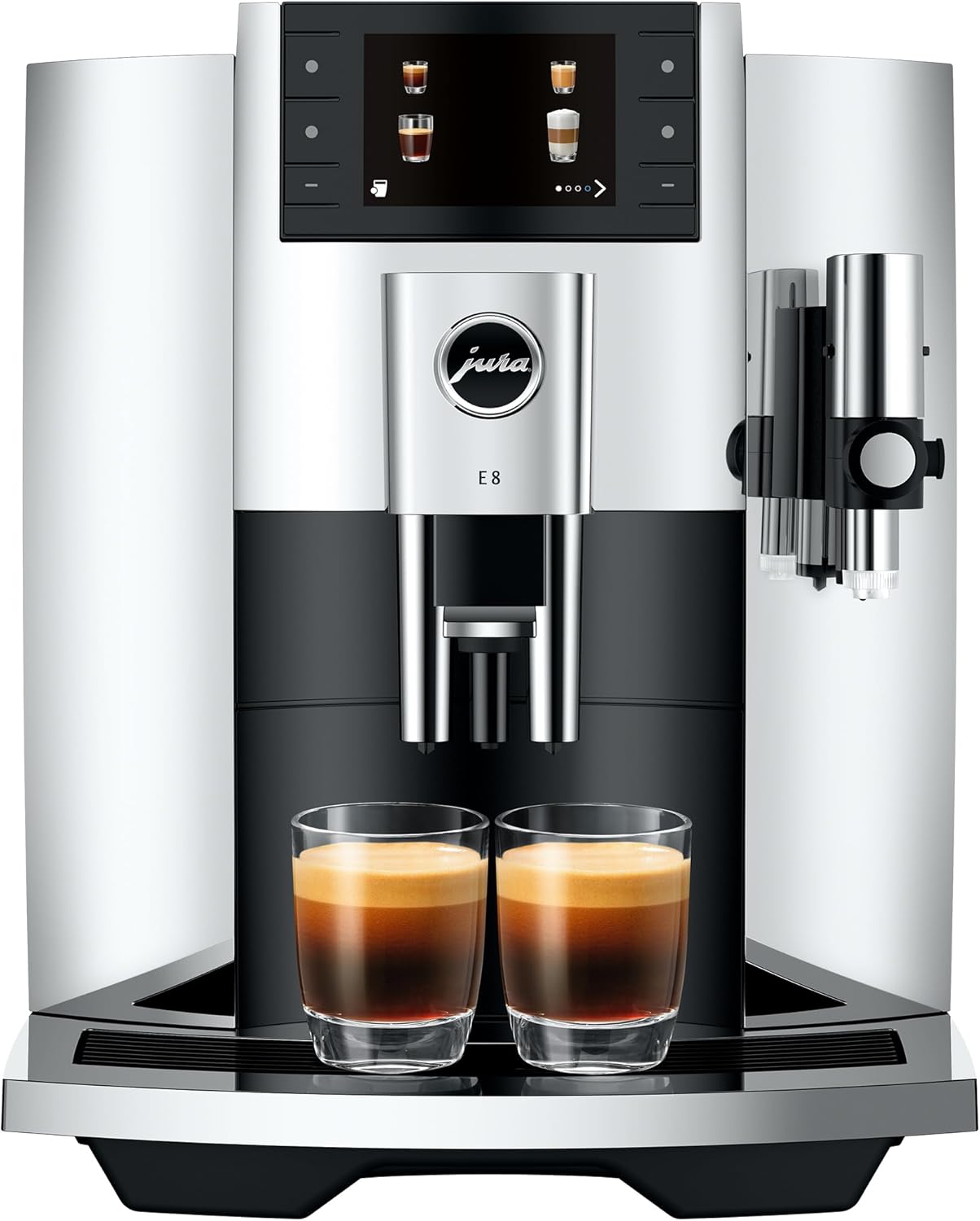
Older Juras with worn brew group seals or heavily scaled internals often cost more to repair than they are worth. The E8 is our top pick for most home buyers - better grinder, better foam, better everything.
See our brew unit cleaning guide for what professional service covers, or our repair vs replace guide if your machine is older than 5 years.
For dialing in the perfect espresso after fixing the weak output, see our espresso settings guide and grinder settings guide.
Still getting weak coffee?
If it keeps happening, the machine may be past its prime
Persistent weak output after cleaning and descaling usually means a worn brew group. If your machine is 6+ years old, the E8 starts fresh - new grinder, new brew unit, 2-year warranty.
Repair Service
Need a Jura Repair Technician?
Tell us your machine, the problem, and your location. We will look for an experienced repair technician who covers your area. There is no obligation to proceed.
Related
- Jura Coffee Not Hot Enough - related symptom, different cause
- Jura Brew Unit Cleaning Guide - professional maintenance for the brew group
- Jura Espresso Settings Guide - dial in grind and strength
- Jura Grinder Settings Guide - grinder adjustment deep dive
- Jura Cleaning Schedule - maintenance that prevents weak coffee
- Best Beans for Jura Machines - bean recommendations
- Jura Troubleshooting Guide - other common problems
- How to Make Jura Coffee Stronger - if the fix is too-mild extraction rather than a fault
Free Weekly Alerts
Get Jura Maintenance Reminders
We send a weekly digest: cleaning schedules, deal alerts, and tips to keep your Jura running longer. No spam - unsubscribe any time.
No spam. Unsubscribe any time.
As an Amazon Associate, we earn from qualifying purchases at no extra cost to you.