Unlike DeLonghi or Saeco machines, Jura brew units are fixed inside the machine and cannot be manually removed. Jura designed them this way for consistency - the brew group stays perfectly aligned, so extraction pressure and coffee puck geometry remain identical across every brew. But it means maintenance works differently. You cannot pull out the brew unit, rinse it under the tap, and put it back. Instead, you rely on Jura’s built-in cleaning system, scheduled professional service, and knowing when each is needed.
Here is the complete guide to keeping your Jura brew group in working order.
Jura’s Built-In Cleaning System
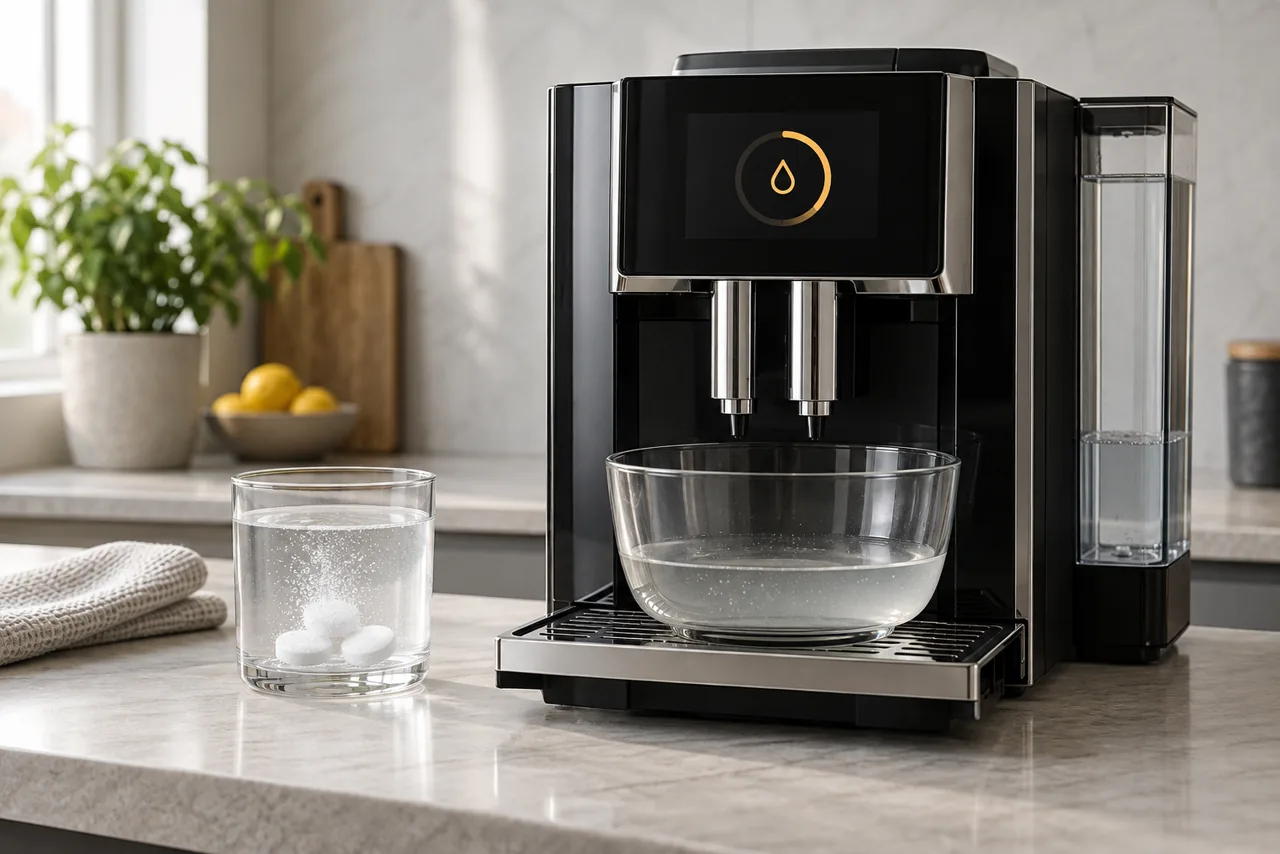
Every Jura super-automatic has an automated cleaning tablet cycle. This is your primary brew group maintenance tool - the one that replaces the manual rinse you would do on a removable brew unit.
Here is how it works:
- The machine tracks your brew count and prompts you every 200 brews (roughly every 1-2 months for daily home use)
- A cleaning tablet dissolves in hot water and the solution is pumped through the brew chamber, across the piston seals, and out the spout
- Coffee oils, dried residue, and fine particles are flushed out of the brew path
- The entire cycle takes about 10 minutes and is fully automated once you start it
This cycle is not optional. Coffee oils oxidize over time and harden into a sticky residue that adds bitterness to your coffee, increases friction on the brewing piston, and causes premature wear on the O-ring seals. Running the cleaning cycle on schedule prevents all three.
Step-by-Step: Running the Cleaning Cycle
The process is straightforward, but mistakes can reduce its effectiveness.
Before you start:
- Make sure the drip tray and grounds container are empty and reinstalled
- Place a container (at least 500ml) under the coffee spout
- Have a Jura cleaning tablet ready
The procedure:
- Go to the maintenance menu on your Jura’s display. On newer models (E8, S8, Z10), navigate to Settings > Maintenance > Cleaning. On older Impressa models, press and hold the maintenance button.
- The machine will prompt you to insert a cleaning tablet. Open the bypass doser (the small drawer or flap near the bean hopper, sometimes labeled with a tablet icon) and drop in one tablet. Do not put it in the bean hopper.
- Close the bypass doser and confirm on the display.
- The machine runs automatically from here - it draws water, dissolves the tablet, pushes the solution through the brew chamber, pauses to soak, then flushes with clean water.
- When the display shows the cycle is complete, empty the drip tray and the container under the spout. Rinse both.
Common mistakes to avoid:
- Using the wrong tablet type. Cleaning tablets and descaling tablets are different products for different purposes. Cleaning tablets dissolve coffee oils. Descaling tablets dissolve limescale. Do not use one in place of the other.
- Interrupting the cycle. If you power off the machine mid-cycle, the tablet may not fully dissolve and can leave residue in the brew chamber. Let it finish.
- Ignoring the prompt. The machine will continue brewing if you dismiss the cleaning prompt, but every additional brew adds more oil buildup. Run the cycle within a day or two of the prompt.
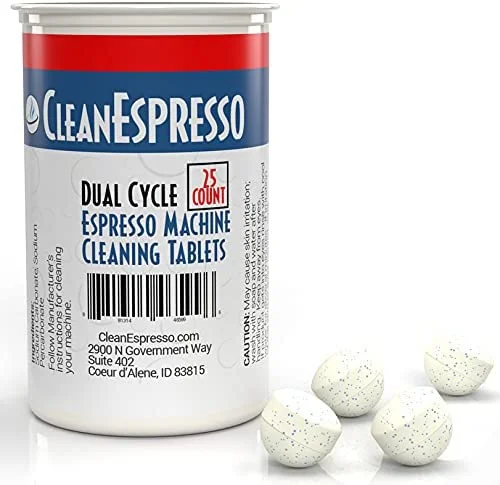
- Using third-party tablets without checking compatibility. Jura’s tablets are formulated to dissolve at a specific rate that matches the cycle timing. Some third-party tablets dissolve too fast or too slow, leaving residue or failing to clean completely. If you go third-party, use a reputable brand like Urnex Cafiza that is tested in super-automatics.
For a full comparison of cleaning tablet options, see our Best Jura Cleaning Tablets guide.
Beyond Cleaning Tablets: Brew Group Lubrication
The cleaning cycle handles coffee oil and residue. It does not address mechanical wear. Over time, the brew group’s moving parts - the piston, drive gears, and seals - need lubrication.
When lubrication is needed:
Jura recommends professional service every 5,000-10,000 cups, which includes brew group lubrication. For a household making 4-6 drinks per day, that translates to roughly every 3-5 years.
Signs your brew group needs lubrication:
- The machine is noticeably louder during the brewing cycle, particularly during the compression and release phases
- The piston movement sounds slower or strained (a grinding or labored motor sound)
- The machine occasionally displays an error during brewing, then works fine on the next attempt
- Coffee pucks in the grounds container are consistently too wet, suggesting incomplete compression
What is involved:
Jura designed the brew unit to be serviced by authorized technicians. The reasons are practical:
- Access requires a Jura-specific oval-head screwdriver - not a standard tool. Some models have a lubrication port accessible through the back panel, but reaching the brew group internals requires this proprietary tool to open the casing.
- Only food-safe silicone grease is appropriate. Petroleum-based lubricants will damage the seals. Jura sells its own lubricant, and authorized technicians stock it.
- Incorrect reassembly can misalign the brew group - the exact problem Jura’s fixed design is meant to prevent.
If your machine is under warranty, lubrication during a scheduled service visit is typically covered. If out of warranty, the cost is part of a broader service package.
What Professional Service Covers
A full Jura service at an authorized center goes well beyond what the home cleaning cycle can do:
- O-ring and seal replacement - the rubber seals around the brew group piston wear over time and lose their seal. Replacement costs $150-$300 depending on model and service center.
- Brew group inspection and lubrication - technicians disassemble the brew unit, clean all internal surfaces, inspect for wear, and re-lubricate all moving parts.
- Pressure testing - verifying that brewing pressure is within spec (typically 7-9 bar for espresso). Low pressure usually indicates worn seals.
- Internal descaling - professional-grade descaling reaches areas the home cycle cannot, including the thermoblock and internal tubing joints.
- Grinder inspection - checking burr wear and adjusting grinder calibration if needed.
For a full breakdown of repair costs and when replacement makes more sense, see Jura Repair vs Replace: When to Fix It and When to Upgrade.
Repair Service
Brew Group Stuck, Jammed, or Showing an Error?
Tell us the model and what the display says. We will match you with a technician who services brew groups in your area. No obligation to proceed.
Model-Specific Notes
The cleaning tablet procedure is the same across all current Jura models, but there are differences worth noting.
E6 / D6: These entry-level models have a simpler brew group with the same cleaning tablet cycle. The bypass doser location may differ slightly - check your manual. Maintenance needs are identical to higher-end models.
E8 / S8: Same brew group cleaning procedure. These models also have a fine-foam milk circuit (HP3 on the S8) that requires separate milk system maintenance. The brew group and milk system are independent - cleaning one does not clean the other.
Z10: Jura’s flagship uses the Product Recognizing Grinder (P.R.G.) that automatically adjusts grind settings per drink. The brew group cleaning cycle is the same, but the Z10’s self-optimization means the machine adapts to maintain extraction quality even as the brew group ages slightly between service intervals. It does not eliminate the need for cleaning and service - it just reduces the impact of gradual wear on coffee quality.
Impressa Series (older models): Same fundamental cleaning procedure, but older Impressa machines may need more frequent professional service. Parts availability can also be a factor - see our maintenance guide for model-specific intervals.
Signs Your Brew Group Needs Attention
Run the cleaning cycle first. If these symptoms persist afterward, the brew group likely needs professional service:
- Coffee tastes bitter or burnt despite fresh beans and correct grind settings. Old coffee oil residue that the cleaning cycle could not remove is the most common cause. See our espresso settings guide to rule out grind and dose issues first.
- Coffee flow is uneven - starts strong, then weakens or sputters. This suggests the brew chamber is not sealing properly, causing pressure loss during extraction.
- The machine makes unusual sounds during brewing - grinding, clicking, or labored motor noises during the compression or release phase.
- The cleaning cycle does not improve taste. If you run a cleaning tablet and the coffee still tastes off, the issue is likely mechanical (worn seals, lubrication) rather than residue.
- Grounds container has unusually wet or clumpy pucks. Properly extracted pucks should be relatively dry and hold their shape. Wet, soupy pucks indicate low brew pressure from worn seals or a misaligned piston.
For a full troubleshooting walkthrough, see our Jura troubleshooting guide.
Preventive Maintenance Schedule
Here is the complete schedule that keeps your brew group - and the rest of the machine - in working order:
| Task | Frequency | Purpose |
|---|---|---|
| Cleaning tablet cycle | Every 200 brews (~1-2 months) | Dissolves coffee oil from brew chamber |
| Descaling cycle | Every 2-4 months | Removes limescale from boiler and flow paths |
| CLARIS water filter change | Every 2 months | Softens water, removes chlorine that degrades seals |
| Professional service | Every 5,000-10,000 cups (~3-5 years) | O-ring replacement, lubrication, pressure testing |
The machine prompts you for the first three automatically. Professional service is on you to schedule - do not wait for a failure. For the complete maintenance calendar with daily and weekly tasks included, see our Jura Cleaning Schedule.
Essential for Brew Group Care
Jura Cleaning Tablets (25 Pack)
Official formula for the automated cleaning cycle. 25 tablets covers about 2 years of home use. Your primary brew group maintenance tool.
Keep Your Brew Group Running: The Maintenance Trio
These three products cover the core consumable maintenance for every Jura machine. Stock up so you never have to delay a maintenance prompt.
Every 200 Brews
Jura Cleaning Tablets
Dissolves coffee oil from the brew group. The single most important consumable for brew unit longevity.
Check Price →Every 2-4 Months
Jura Descaling Tablets
Removes limescale from the boiler and internal flow paths. Prevents the leading cause of machine failure.
Check Price →Every 2 Months
CLARIS Water Filter
Softens water and removes chlorine that degrades seals. Extends the life of every internal component.
Check Price →Related
- Jura Cleaning Schedule - complete maintenance calendar
- Best Jura Cleaning Tablets - official vs third-party compared
- Jura Cleaning Products Guide - all products you need
- Jura Maintenance Guide - full maintenance overview
- Jura Espresso Settings Guide - dial in grind and dose
- Jura Repair vs Replace - when to fix it vs upgrade
- Jura E8 Review - if your current machine is not worth cleaning further
- Weak coffee after replacing Jura burrs - separate a blocked chute from a brew-unit problem