The direct answer: If you can spend $1,700 or more, buy Jura. If your budget is $800-$1,300, DeLonghi gives you better value at that price point. The two brands have different strengths, and the right choice depends on your budget and how long you expect to keep the machine. Weighing more than these two brands? Our full six-brand super-automatic comparison (Jura vs De’Longhi vs Breville vs KitchenAid vs Gaggia) widens the field.
Head-to-Head: Jura E8 vs DeLonghi Dinamica Plus
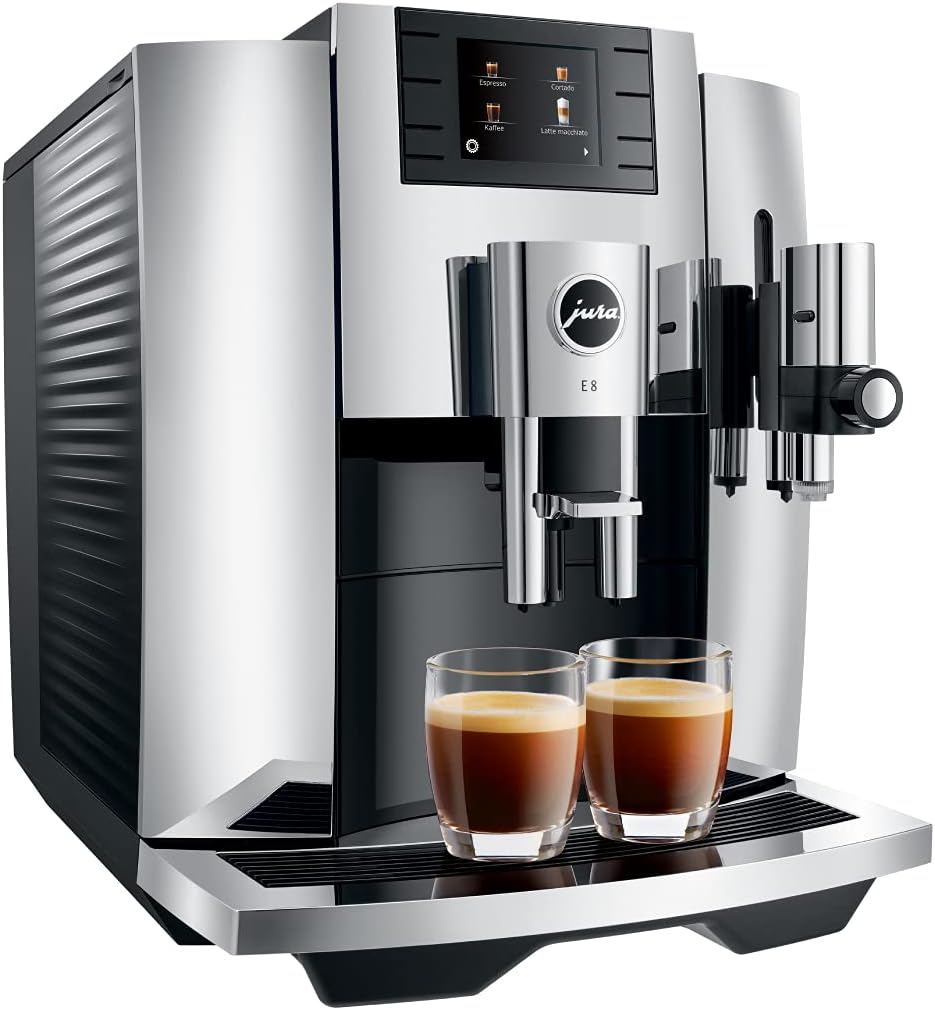
These are the two most commonly compared machines from each brand, even though the E8 now costs roughly twice as much:
| Feature | Jura E8 | DeLonghi Dinamica Plus |
|---|---|---|
| Price | ~$2,599 | ~$1,099-$1,299 |
| Drink specialties | 27 | 18 |
| Grinder | P.A.G.2 conical burr | Steel conical burr |
| Extraction | P.E.P. pulse extraction | Standard extraction |
| Milk system | HP3 automatic fine foam | LatteCrema automatic foam |
| Brew unit | Fixed (self-rinsing) | Removable (manual cleaning) |
| Display | 3.5” TFT color | 3.5” TFT touchscreen |
| Water tank | 1.9L | 1.8L |
| Build | Swiss-engineered, premium plastics | Italian-designed, mixed build |
| Warranty | 2 years | 2 years |
| Typical lifespan | 8-12 years | 5-8 years |
| Best for | Long-term, daily use, milk quality | Value, budget-conscious buyers |
Premium Pick
Jura E8
Swiss build, 8-12 year lifespan, HP3 fine foam, P.E.P. extraction. The better machine if budget allows.
Check Jura E8 Price →Value Pick
DeLonghi Dinamica Plus
$1,300+ cheaper, removable brew unit, touchscreen. Better value under $1,300.
Check DeLonghi Price →Where Jura Wins
Build Quality and Longevity
Jura machines are built and engineered in Switzerland (E-series in Portugal, Z-series in Switzerland - same standards). The internal components - grinder burrs, seals, brewing unit mechanics - are designed for 10+ years of daily use. Jura’s fixed brewing unit is a deliberate design choice: sealed tolerances mean fewer mechanical failure points over time.
DeLonghi machines are well-built for their price, but the component quality and expected lifespan are lower. Industry repair data and user reports consistently show DeLonghi machines requiring service at 4-6 years vs. 8-12 for Jura with proper maintenance.
If you plan to keep the machine for 10 years, the Jura’s higher upfront cost often works out cheaper per year.
Milk System Performance
Jura’s HP3 fine foam system (E8) produces the most consistent one-touch microfoam in its class. The foam density and temperature are independently programmable per drink. The result is closer to manually steamed milk than any DeLonghi automatic system.
DeLonghi’s LatteCrema system is good - genuinely good - but the foam is slightly less dense and the per-drink customization is more limited. For everyday cappuccinos most users won’t notice a significant difference. For serious milk drink preferences, Jura has the edge.
Pulse Extraction Process (P.E.P.)
The Jura E8’s P.E.P. extraction produces better-tasting espresso and ristretto by pulsing water through grounds rather than continuous flow. This improves extraction clarity on short drinks. The DeLonghi Dinamica uses standard extraction. The difference is noticeable on espresso-focused drinks, less so on milk-based drinks.
Maintenance System
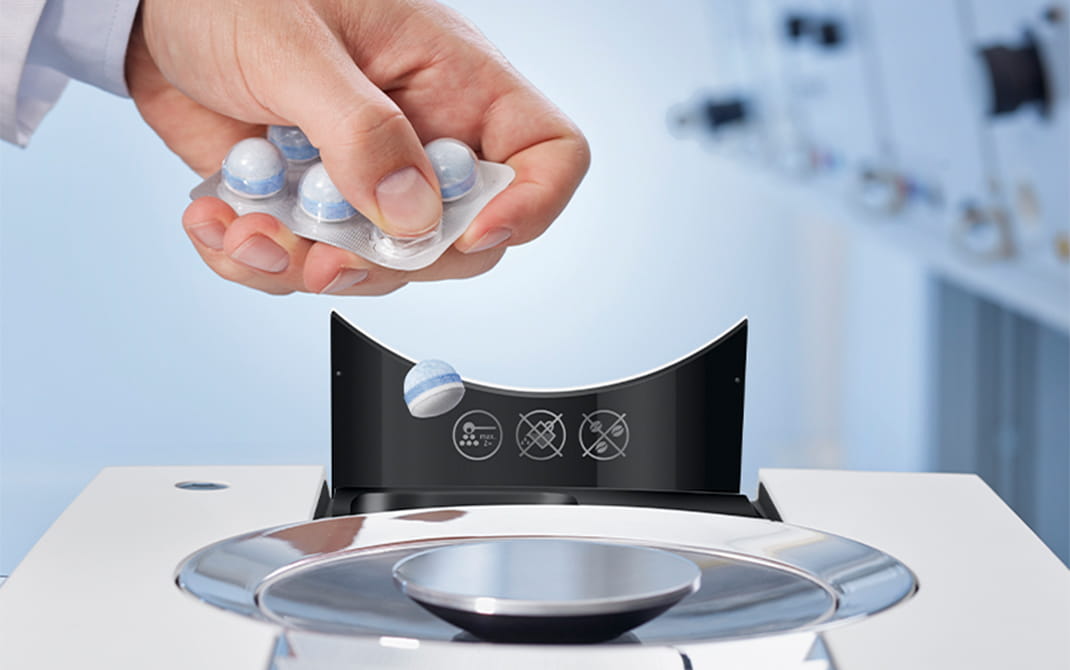
Jura’s automated maintenance prompts - cleaning tablets every 200 brews, descaling every 2-3 months, water filter every 2 months - are fully guided and automated. You insert the tablet, confirm on screen, and the machine handles the rest. This makes it significantly more likely that maintenance actually gets done, which directly impacts lifespan.
DeLonghi has similar prompts but the cleaning process, particularly for the removable brew unit, requires more manual steps.
Where DeLonghi Wins
Price
The DeLonghi Dinamica Plus is typically $1,300 or more cheaper than the Jura E8. At the $900-$1,200 budget tier, DeLonghi’s lineup (Magnifica Evo, Dinamica) offers machines that genuinely outperform anything Jura offers at the same price. Jura’s entry-level (ENA 4, D6) starts around $800 but lacks the full milk system.
Removable Brew Unit
DeLonghi’s removable brew unit is a genuine advantage for maintenance. You can pull the unit out, rinse it under the tap, and reinstall it - a deeper clean than Jura’s automated tablet cycle alone. Some users prefer this level of hands-on access.
Jura’s fixed unit compensates with automated cleaning cycles, but if manual deep-cleaning is important to you, DeLonghi is the better option.
Value at Lower Price Points
| Budget | Best Choice | Why |
|---|---|---|
| Under $800 | DeLonghi Magnifica Evo | Jura’s entry-level is thin; DeLonghi has more complete machines here |
| $800-$1,300 | DeLonghi Dinamica / Dinamica Plus | Jura has nothing new at this price except the ENA 4 |
| $1,300-$2,500 | Jura E6 or DeLonghi Eletta Explore | Close call - E6 has the better grinder and milk foam; DeLonghi has cold drinks and a touchscreen |
| $2,500-$3,000 | Jura E8 | Jura clearly wins in build, extraction, milk quality |
| $3,000+ | Jura S8 or J8 | DeLonghi not competitive at this tier |
Under $1,300?
DeLonghi Dinamica Plus
18 specialties, LatteCrema auto milk, removable brew unit. The honest recommendation when budget is under $1,300.
Jura E6 vs DeLonghi Dinamica
For buyers considering the mid-range option:
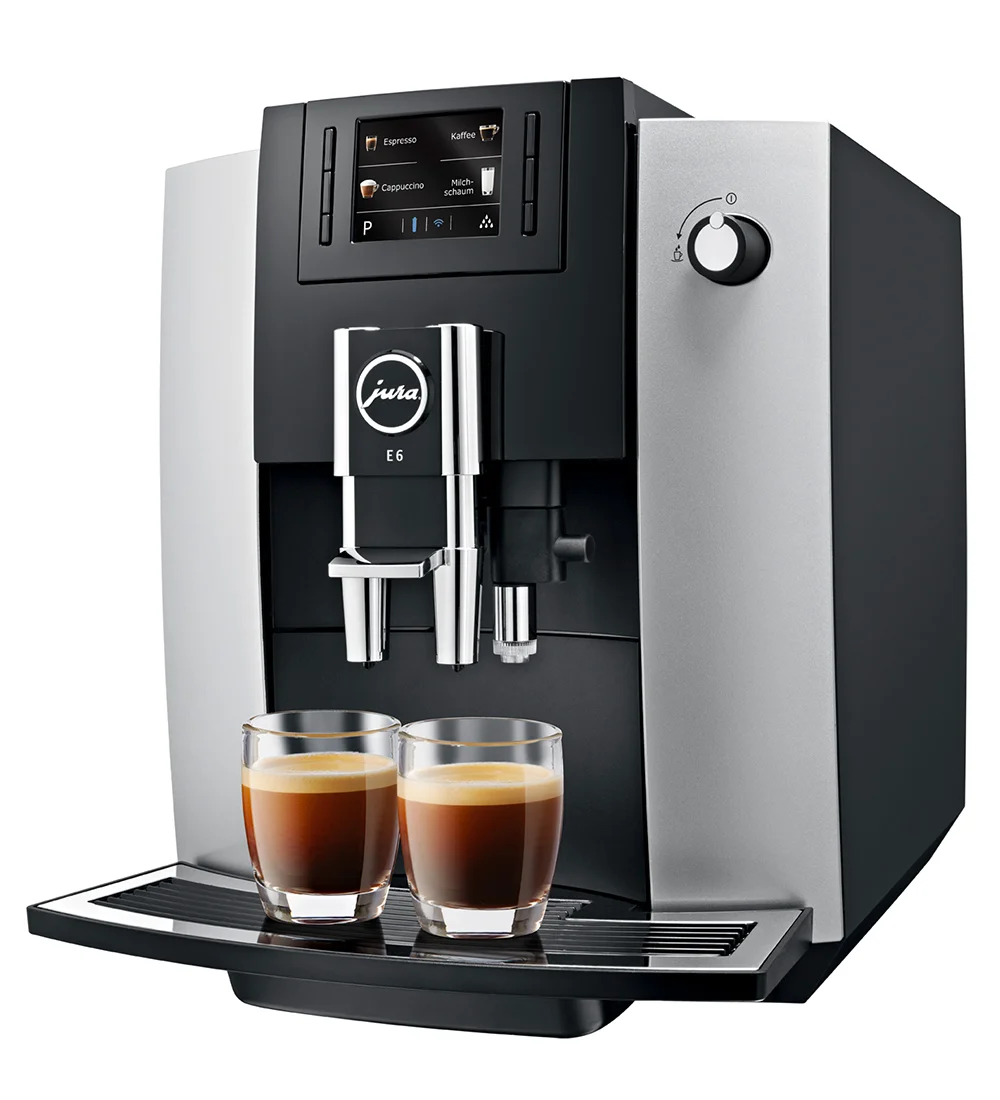
| Feature | Jura E6 | DeLonghi Dinamica |
|---|---|---|
| Price | ~$1,760-$1,900 | ~$849-$999 |
| Specialties | 11 | 15 |
| Milk system | HP2 fine foam (automatic) | LatteCrema (automatic) |
| Grinder | Professional Aroma Grinder | Steel conical burr |
| Display | TFT color | TFT color |
| Brew unit | Fixed | Removable |
Verdict: The DeLonghi Dinamica undercuts the Jura E6 by $800-$1,000 and offers more specialties. The E6 wins on grinder quality and milk foam texture. If the price gap is significant to you, the Dinamica is a legitimate alternative. If you can stretch to the E6 or above, Jura’s build quality pays off over time.
Budget $1,700-$1,900
Jura E6
Professional Aroma Grinder, fine-foam milk, 11 specialties. Costs more than the Dinamica but is the better long-term machine.
Common Questions
Is Jura really that much better than DeLonghi?
At the same price point, the gap is smaller than Jura’s marketing suggests. At $2,500+, Jura is meaningfully better - build quality, milk system, and extraction are all ahead. Below $1,300, DeLonghi competes well on value.
Can I use DeLonghi beans in a Jura?
Yes - both machines use standard whole coffee beans. See our best beans for Jura machines guide for tested recommendations.
Which brand is easier to repair?
DeLonghi. The removable brew unit makes owner servicing easier, and DeLonghi parts are more widely available from third-party suppliers. Jura repairs typically go through Jura’s own flat-rate service ($300-$400) or authorized centers. If repairability matters significantly, DeLonghi has the edge.
Which holds its value better?
Jura. Used Jura machines command 40-60% of original retail on the secondary market after 3-4 years. DeLonghi holds value less strongly. This partially offsets Jura’s higher purchase price.
Which Is Better for Iced Coffee: Jura or DeLonghi?
DeLonghi is the better brand for iced drinks. The DeLonghi Eletta Explore’s LatteCrema Cool system froths genuinely cold milk foam and has dedicated over-ice recipes, something no Jura machine can do - every Jura milk system only produces hot foam. Jura’s answer is the Cold Extraction Process on the Z10 and J10, which pulses cold water through the grounds for a true cold-brew-style espresso rather than hot coffee poured over ice. So the split is: cold milk drinks favor DeLonghi, black cold brew favors Jura’s flagship tier. See our Jura Z10 cold brew guide for what Cold Extraction actually produces, and our iced coffee with an espresso machine guide for workarounds on machines without cold features.
Which Costs More to Maintain: Jura or DeLonghi?
Annual running costs are similar - roughly $80-$120 for either brand - but the labor is very different. Jura consumables cost more per unit (cleaning tablets, plus CLARIS water filters at about $15-$20 every two months), but an active CLARIS filter means the machine never needs descaling, and every cycle is automated. DeLonghi consumables are cheaper and third-party alternatives are plentiful, but you do the work: manual descaling every one to three months and regular rinsing of the removable brew unit under the tap. Budget on money for Jura, time for DeLonghi. Our Jura cleaning schedule breaks down exactly what Jura ownership requires month by month.
Which DeLonghi Model Is Equivalent to Each Jura Machine?
The closest cross-brand matchups, based on price tier and feature set: the DeLonghi Magnifica Evo lines up against the Jura ENA 4 at entry level; the touchscreen DeLonghi Rivelia sits between the ENA 4 and E6; the Dinamica Plus and Eletta Explore compete with the Jura E6 and E8 in the mid-range; and the PrimaDonna Soul is DeLonghi’s counterpart to the Jura S8. There is no direct DeLonghi equivalent to the Z10 or GIGA series - DeLonghi’s lineup tops out below Jura’s flagship tier.
Does DeLonghi Make Anything That Competes With the Jura S8 or Z10?
Only partially. DeLonghi’s flagship, the PrimaDonna Soul, sells for roughly $1,800-$2,500 and matches the Jura S8 on drink count, touchscreen size, and bean-adapt technology, per DeLonghi’s published specs. Where it falls short is the fundamentals the spec sheet reveals: the S8’s Aroma G3 grinder and HP3 milk system produce finer, more consistent results, and Jura’s build quality supports a longer service life. Against the Jura Z10, buyers usually weigh two DeLonghi machines: the Maestosa, DeLonghi’s luxury dual-hopper flagship, wins on instant bean switching but cannot match the Z10’s Product Recognizing Grinder or true cold extraction; and the far cheaper Eletta Explore, which beats the Z10 only on cold milk foam, not on espresso quality. Above $2,000, Jura effectively competes with itself.
Jura E8 vs DeLonghi Rivelia: Which Should You Buy?
Buy the Jura E8 if espresso and milk foam quality come first; buy the Rivelia if you switch between bean types often or want a modern touchscreen for less money. The Rivelia typically sells for $1,199-$1,500 and its signature feature is two swappable 8.8 oz bean hoppers with Bean Adapt technology that re-tunes grind, dose, and temperature per bean - something no Jura offers. It also has a 3.5 inch touchscreen, 18 recipes, and four user profiles. The E8 counters with the fundamentals: the P.A.G.2 grinder, P.E.P. extraction, and HP3 milk system produce noticeably better shots and denser foam, and the machine is built for a longer service life. For DeLonghi’s lower tier, see our Jura ENA 4 vs DeLonghi Rivelia comparison.
Jura E8 vs DeLonghi Eletta Explore: Which Is Better?
The E8 is the better hot-coffee machine; the Eletta Explore is the better all-rounder if cold drinks matter. The Eletta Explore (around $1,499) offers 50+ hot and cold recipes, a dual LatteCrema system with a dedicated cold-foam carafe, and a cold extraction mode that brews cold-brew-style coffee in under three minutes - capabilities the E8 simply does not have. The E8 answers with superior espresso fundamentals: P.E.P. pulse extraction, the quieter P.A.G.2 grinder, denser HP3 microfoam, and Swiss build quality that typically outlasts DeLonghi by several years. Daily hot cappuccino drinkers should pick the E8; iced latte households should pick the Explore.
Jura D6 vs DeLonghi Magnifica: Which Budget Machine Wins?
The DeLonghi Magnifica Evo is the smarter buy today, because Jura has discontinued the D6. The D6 was Jura’s budget model - a 12-setting steel burr grinder, pre-wetting brew unit, and simple dial interface - and remaining stock still surfaces at retailers, but at typical asking prices near $999 it is hard to justify against the Magnifica Evo, which sells for roughly $400-$700 with a removable brew unit and, on LatteCrema trims, automatic milk frothing. If you want a current entry-level Jura instead, the ENA 4 is the D6’s effective successor - see our Jura ENA 4 vs DeLonghi Magnifica Evo comparison for that matchup.
Which Brand Has the Quieter Grinder?
Jura. The Aroma G3 conical burr grinder used across the E6 and S8 (the 5th-gen E8 uses the newer P.A.G.2) is engineered to grind roughly twice as fast as its predecessor, and the shorter grind time plus tighter housing makes it noticeably quieter than the steel burr grinders in DeLonghi’s Magnifica and Dinamica lines, which owners commonly describe as the loudest part of the machine. Neither brand is silent - all super-automatics announce themselves - but if you brew before the rest of the house wakes up, Jura is the safer pick.
The Bottom Line
- Budget under $1,300: DeLonghi is the honest recommendation
- Budget $1,300-$2,500: Jura E6 or DeLonghi Eletta Explore - close call, lean Jura if you plan to keep it 8+ years
- Budget $2,500+: Jura E8, no question
$2,500+ Budget
Jura E8
Swiss build quality, 8-12 year lifespan, HP3 fine foam, P.E.P. extraction. The clear winner at this price tier.
Check Jura E8 on Amazon →Under $1,300 Budget
DeLonghi Dinamica Plus
18 specialties, LatteCrema auto milk, removable brew unit. The value-conscious choice when Jura’s price is out of reach.
Check DeLonghi on Amazon →Related
- Jura E8 Review (2026) - full E8 hands-on review
- Jura E6 Review (2026) - full E6 hands-on review
- Jura E6 vs E8 - comparison within Jura’s lineup
- Best Jura Espresso Machine 2026 - full lineup guide
- Where Are Jura Machines Made? - manufacturing and quality context
As an Amazon Associate, we earn from qualifying purchases at no extra cost to you.