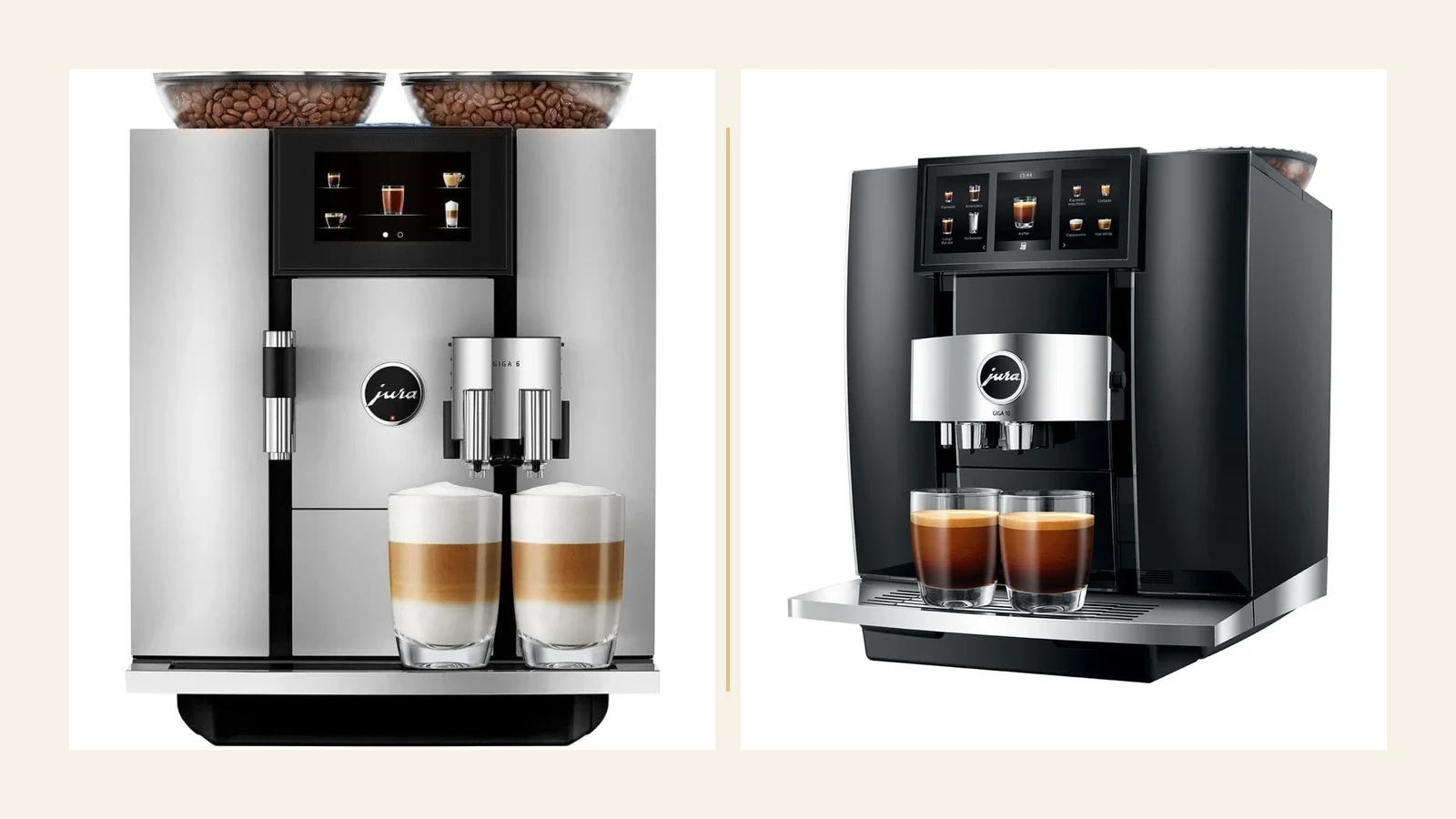
Quick Answer: A $900 trade-in against a GIGA 10 at about $4,200 means you pay roughly $3,300 for the upgrade. That is a lot of money to swap a machine that still does the core GIGA job: two grinders, two bean hoppers, two heating systems. Take the upgrade if you will use what the GIGA 10 adds, mainly cold drinks, app control and the newer interface. If your GIGA 6 has a fault, get a repair quote before you decide. And before you accept the $900, find out what a private buyer would pay. The trade-in is the easy route, not always the best-paying one.
Repair Service
Is Your GIGA 6 Acting Up?
Get a repair quote before you accept a trade-in. Tell us your model, the fault and your location. We will look for an experienced independent Jura repair technician who covers your area. There is no obligation to proceed.
The Situation
The case is common. You own a GIGA 6 and it has made a few thousand drinks, say 4,200. You see the GIGA 10 at a discount, still over $4,000. The seller offers $900 for your old machine. The offer feels low, and the new machine still costs a lot.
This guide does not repeat the spec tables. Our GIGA 6 vs GIGA 10 comparison covers every difference line by line. Here we look at one question: does it make financial sense to give up a working GIGA 6 for a GIGA 10 on these terms?
Step 1: Work Out What the Upgrade Really Costs
Start with the simple number:
| Item | Amount |
|---|---|
| GIGA 10, typical Amazon price | about $5,499 |
| GIGA 10, discounted price (owner’s quote) | about $4,200 |
| Trade-in offered for the GIGA 6 | $900 |
| Net cost of the upgrade | about $3,300 |
That $3,300 is the price of what the GIGA 10 adds over your GIGA 6. It is not the price of a GIGA. You already own one.
Then add the running costs. Our GIGA 10 review puts GIGA maintenance products at about $150-$200 per year. You pay that on either machine, so it does not change the decision. It does mean an upgrade does not save money on upkeep.
Step 2: Ask What the GIGA 10 Adds for You
Both machines share the expensive hardware. Each has two ceramic disc grinders, two bean hoppers and dual heating. So you already have the dual-bean convenience and the ability to serve a group without waiting. Those are the main reasons people buy a GIGA at all.
Based on our comparison and review, the GIGA 10 adds:
- Cold Extraction Process specialties, including cold versions of espresso and other drinks. Jura does not describe these as concentrate.
- Wi-Fi Connect, so you can program drinks from the J.O.E. app.
- A newer touchscreen interface and a longer drink menu.
- The newer grinder setup, which our GIGA 10 review calls a meaningful upgrade.
Now be honest about your habits. If your household drinks espresso, cappuccino and lattes, and you rarely change the settings, the GIGA 6 already makes those well. The $3,300 then buys features you will not use much. If you want cold coffee every day, or you are tired of an interface that feels dated, the case is stronger.
If you run the GIGA in an office, check our best Jura for office use page. Volume, not features, decides the right machine there.
If You Decide to Upgrade
Jura GIGA 10
Two grinders, dual heating, cold preparations and app control. Compare the listing price with your trade-in quote before you commit.
Step 3: Check How Much Life Your GIGA 6 Has Left
A drink counter of 4,200 gives useful context, but it does not tell you the remaining life. Jura’s consumer specification pages do not publish a cup-life rating for the GIGA 6 grinders. Drink mix matters too: milk-system use, rinses, heat cycles and age put different loads on different parts.
Other parts wear with time as well as use. Brew group seals and O-rings age, and scale builds up when descaling slips. But a service replaces those parts. Age, maintenance history and any current faults tell you more than the counter.
Ask yourself these questions:
- Does the GIGA 6 show any error, leak, weak coffee or new noise?
- Have you run cleaning and descaling cycles when the machine asked?
- Has it had a service in the last few years?
If the answers are no fault, yes and no, a single service may give you years more use. That costs a fraction of the upgrade.
Step 4: Get a Repair Quote Before You Accept
Many owners start to look at a new machine when the old one shows a fault. That is the moment a trade-in looks most attractive. It is also the moment a repair quote matters most.
Our repair cost guide lists these ranges for the GIGA 6 and GIGA 10:
- Independent shop: about $450-$700.
- Jura flat-fee rebuild: about $600, which replaces wear parts throughout.
Our refurbished buying guide adds a warning: a GIGA with a complex fault can cost $800-$1,200 to fix. So get a real quote, not a guess.
Compare it to the upgrade. A $600 service against a $3,300 net upgrade leaves $2,700 in your pocket. You keep a GIGA with fresh wear parts. Our repair vs replace guide sets a general rule: if a repair costs more than half the price of a new machine, replace it. A GIGA repair rarely gets near that line.
If you are not sure what the fault is, add a short phone video of the problem to a repair request. A technician can tell you whether it looks like a home fix or a technician job before you decide anything.
Step 5: Compare the Trade-In With a Private Sale
A trade-in is convenient. You hand over the old machine and pay the difference. The buyer takes the risk, cleans and services the machine, and resells it. That work and risk come out of your offer.
Our Jura value analysis says a well-kept Jura often resells for 30-50% of its purchase price after five years. Do that sum with your own purchase price and the age of your machine. As an illustration only: a machine bought for $4,000 would fall in a $1,200-$2,000 range on that rule. Your number may be higher or lower.
A private sale has costs too:
- You need time to list it, answer questions and show it.
- Buyers want to see a test espresso and a milk drink, with no errors on the display.
- A GIGA is heavy, so most buyers collect it in person.
- You may need to sell before the new machine arrives, or live with two machines for a while.
If a private sale clears the $900 offer by a margin that pays for your time, sell privately. If the gap is small, the trade-in is fair for the convenience. Keep your maintenance records and the original box if you have them. They help with any sale.
Step 6: Consider a Factory Refurbished GIGA 10
There is a fourth path. Sell the GIGA 6 yourself and buy a professionally refurbished GIGA 10 with a written warranty. Availability and warranty terms vary, so verify who performed the work, what was replaced, the cup count, return rights and the exact warranty rather than applying a generic discount percentage.
On a GIGA, buy refurbished only from Jura or an authorized dealer, with a real warranty. A private or lightly refurbished GIGA saves less than it seems once one repair comes up.
The Decision in One Table
| Your situation | Best move |
|---|---|
| GIGA 6 works well, you rarely use cold drinks or apps | Keep it. Service it when it needs it. |
| GIGA 6 has a fault, repair quote under about $700 | Repair it. Revisit the upgrade later. |
| GIGA 6 is old with repeat faults and a large quote | Upgrade. Compare trade-in and private sale first. |
| You want cold drinks and app control every day | Upgrade. Push for a better trade-in or sell privately. |
| You want a GIGA 10 but the net cost is too high | Look for a professionally refurbished GIGA 10 with a written warranty. |
Our Jura cost calculator can help you put a cost per cup on either machine. Our GIGA comparison page shows how both fit in the wider GIGA range.
Want the GIGA 6 Instead?
Jura GIGA 6
The same dual-grinder, dual-heating core, without cold preparations or app control. Read our full GIGA 6 review first.
Our GIGA 6 review covers what the older machine still does well.
Repair Service
Repair Quote Before You Trade In?
Send us your GIGA model, the fault and your location. We will look for an experienced independent Jura repair technician who covers your area, so you can compare a repair with the trade-in. There is no obligation to proceed.
Ready to Upgrade?
Jura GIGA 10
Check the current price and compare it with the net cost after your trade-in or private sale.
Frequently Asked Questions
Is $900 a fair trade-in for a Jura GIGA 6?
It depends on age and condition. A trade-in usually pays less than a private buyer. Work out 30-50% of your purchase price and compare.
Is a GIGA 6 with 4,200 drinks worn out?
Not on that number alone. Jura does not publish a cup-life rating for the GIGA 6 grinder on its consumer spec page; age, maintenance and an inspection matter more.
What does the GIGA 10 do that the GIGA 6 cannot?
Cold preparations, app control, a newer touchscreen and a longer drink menu. The dual-grinder, dual-heating core is the same idea on both.
Should I repair my GIGA 6 or trade it in?
Get a repair quote first. A GIGA repair of about $450-$700 is far less than a $3,300 net upgrade.
Is a refurbished GIGA 10 a good alternative to buying new?
Yes, if the seller documents the refurbishment and provides a real written warranty. Avoid unknown sellers on a machine this complex.
Related
- Jura GIGA 6 vs GIGA 10 - full spec comparison
- Jura Repair vs Replace - the cost math for any Jura
- Where to Buy a Refurbished Jura - warranty and what to check
- How Long Do Jura Machines Last? - part life and lifespan
- Jura Repair Service - find an independent repair technician
As an Amazon Associate, we earn from qualifying purchases at no extra cost to you.