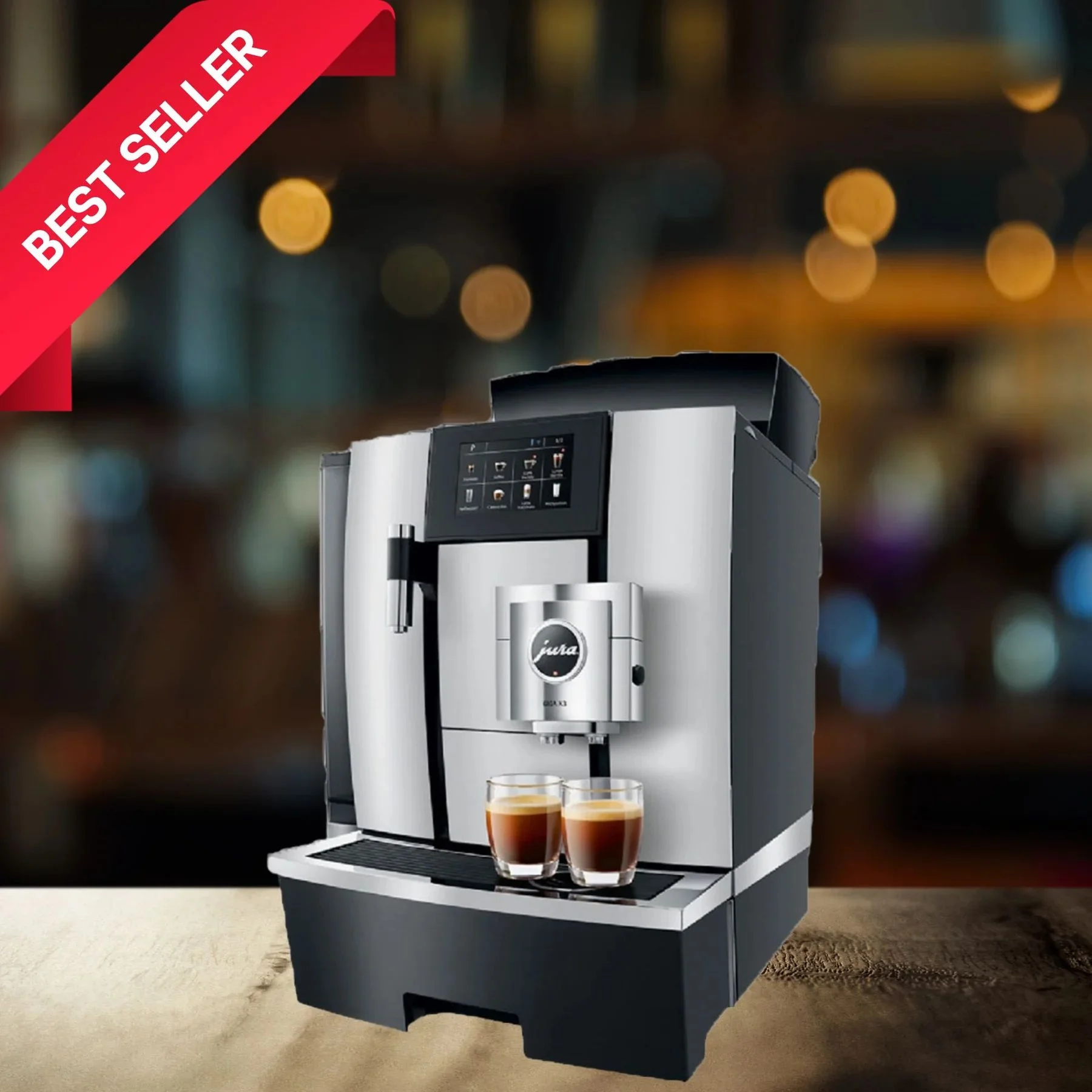
The short answer: A Jura espresso machine is worth the price if you drink 2 or more espresso-based drinks per day. At that volume, a Jura E8 costs roughly $0.28 per drink over 5 years - compared to $5.50 at a coffee shop. You break even in about 7 months. If you only drink a few cups per week, the math does not work in your favor, and you should look at cheaper alternatives.
Here is the full cost breakdown.
Cost Per Cup: The Real Numbers
Most “is Jura worth it” articles skip the actual math. Here it is, with every cost included - the machine, beans, maintenance supplies, electricity, and water filters.
Assumptions: Jura E8 at $2,599, medium-roast beans at $0.18/cup (roughly $15/lb, 40 cups per pound), annual maintenance supplies at $110/year, electricity at $15/year.
| Method | Upfront Cost | Cost/Cup (Year 1) | Cost/Cup (Year 3) | Cost/Cup (Year 5) |
|---|---|---|---|---|
| Jura E8 (3 cups/day) | $2,599 | $2.67 | $1.09 | $0.77 |
| Jura E8 (2 cups/day) | $2,599 | $3.91 | $1.54 | $1.06 |
| Jura E8 (1 cup/day) | $2,599 | $7.64 | $2.90 | $1.95 |
| Coffee shop | $0 | $5.50 | $5.50 | $5.50 |
| Nespresso | $200-$350 | $1.10-$1.50 | $0.95-$1.30 | $0.90-$1.25 |
| Drip coffee maker | $30-$150 | $0.15-$0.30 | $0.10-$0.25 | $0.10-$0.25 |
Key takeaway: At 2-3 cups per day, a Jura E8 drops below $0.65/cup by year 3. It never gets that cheap with Nespresso pods, and drip coffee cannot make espresso, cappuccinos, or lattes.
Jura vs Coffee Shop: Payback Period
This is the comparison most people care about. If you are currently spending $5-6 per drink at Starbucks or a local cafe, the Jura pays for itself fast.
The math at 2 drinks per day:
- Coffee shop: 2 drinks x $5.50 x 365 days = $4,015/year
- Jura E8 year 1: $2,599 (machine) + $131 (beans at $0.18/cup x 730 cups) + $110 (maintenance) + $15 (electricity) = $2,855
- Jura E8 year 2+: $131 + $110 + $15 = $256/year
Annual savings after year 1: $3,759. You recoup the machine cost in roughly 8-9 months if you were buying two coffee shop drinks daily.
Even at 1 drink per day: $5.50 x 365 = $2,007/year at a coffee shop vs $2,790 year 1 with the Jura. You break even in about 17 months.
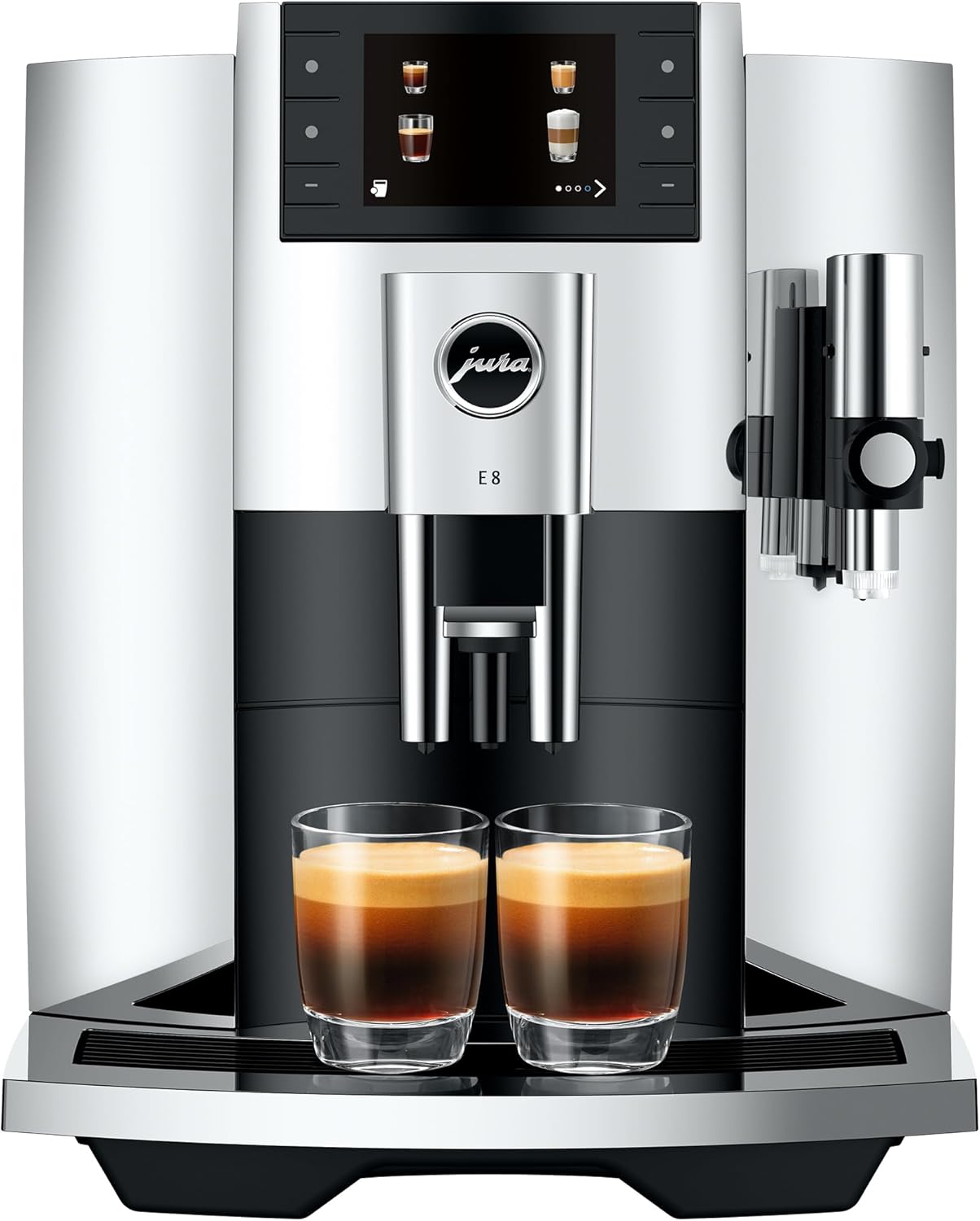
Most Popular Model
Jura E8 - 27 One-Touch Specialties
The best-selling Jura for home use. Makes espresso, cappuccino, flat white, and latte macchiato at the push of a button.
Jura vs Nespresso: The Long Game
Nespresso is the most common “but isn’t this cheaper?” objection. And in year 1, it is. But the cost gap narrows and eventually reverses.
Nespresso costs per year (2 cups/day):
- Machine: $200-$350 (one-time)
- Pods: $0.85-$1.10 each x 730 = $620-$803/year
- Milk (if making lattes): $150-$200/year for a separate frother + milk
- Total year 1: $970-$1,353
- Total year 2+: $770-$1,003/year
Jura costs per year (2 cups/day):
- Machine: $2,599 (one-time)
- Beans: $131/year
- Maintenance: $110/year
- Total year 1: $2,855
- Total year 2+: $256/year
The crossover point: Around 3 to 3.5 years, depending on which Nespresso pods you buy. After that, the Jura saves you $500-$750 per year over Nespresso.
There is also a quality gap. Nespresso makes decent coffee, but a Jura with freshly ground beans produces significantly better espresso - richer crema, more complexity, adjustable strength. If you care about the drink quality, Nespresso is not a real competitor.
And Nespresso machines typically last 3-5 years. A Jura lasts 8-12 with proper maintenance. Factor in replacing your Nespresso machine 2-3 times over the Jura’s lifespan, and the total cost of ownership tilts even further.
Jura vs DeLonghi: The Cost Angle
We have a full Jura vs DeLonghi comparison that covers features, build quality, and drink quality. Here is just the cost comparison.
DeLonghi’s Dinamica Plus or Eletta Explore costs $800-$1,300 - roughly $500-$1,000 less than a comparable Jura. But the total cost of ownership picture is different:
- DeLonghi lifespan: 5-7 years on average
- Jura lifespan: 8-12 years on average
- DeLonghi annual maintenance: Similar ($90-$120/year)
- Jura resale value: 30-50% after 5 years. DeLonghi: 15-25%.
10-year cost comparison (2 cups/day):
- Jura E8: $2,599 + (9 x $256) + one service at $400 = $5,303 (one machine)
- DeLonghi Dinamica Plus: $1,199 + (4 x $230) + $1,199 replacement at year 5 + (4 x $230) = $4,238 (two machines)
Over a decade the Jura costs about $1,000 more, but you buy one machine instead of two, and you get better build quality and espresso extraction for all ten years. DeLonghi makes sense if you are on a tight budget right now and need to keep upfront spending under $1,200. For a full breakdown of features and quality differences, see our Jura vs DeLonghi comparison. And if you are comparing upward rather than downward - premium brand against premium brand - see how Jura stacks up against Miele, the other name buyers shortlist above $1,500.
Hidden Costs Most Reviews Skip
Every Jura review talks about the machine price. Few mention the ongoing costs. Here is what you will actually spend beyond the purchase:
Annual Maintenance Supplies (~$85-$130/year)
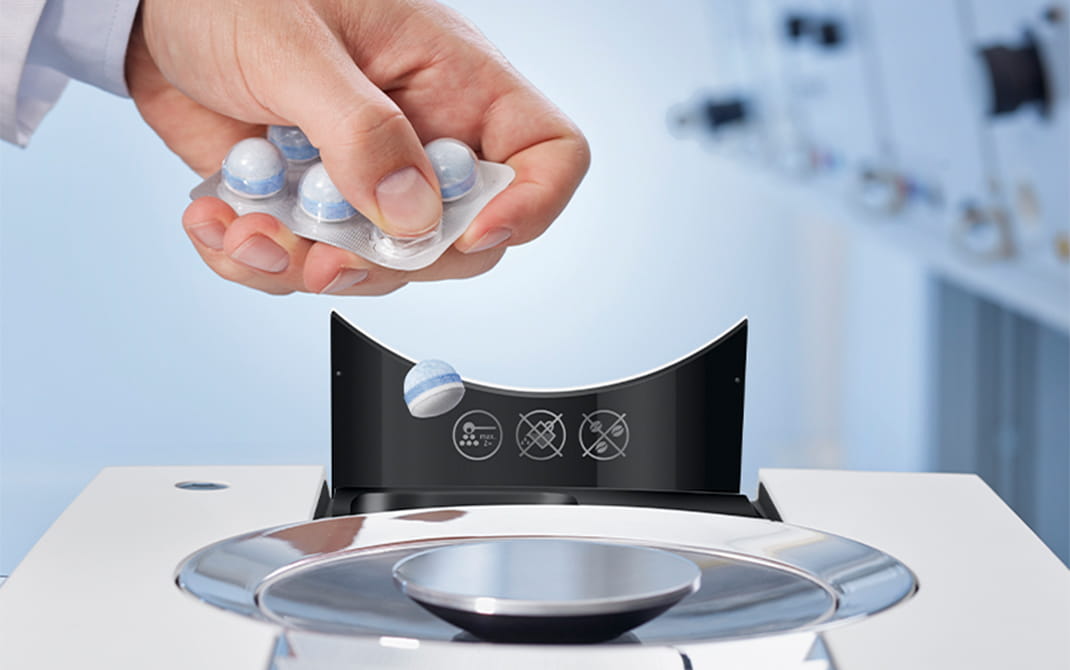
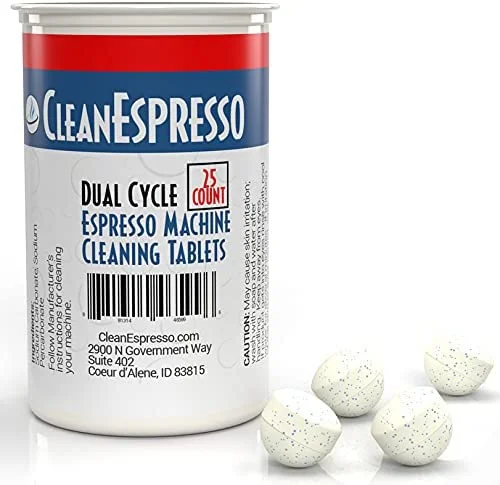
Every 200 brews
Cleaning Tablets - $25-$35/year
Check Price →Every 2-3 months
Descaling Tablets - $20-$30/year
Check Price →Every 2 months
CLARIS Water Filter - $40-$65/year
Check Price →The CLARIS water filter is optional but strongly recommended. It reduces scaling, which extends the machine’s life and reduces how often you need to descale. Skipping it saves $50/year but costs you more in repairs down the road.
Professional Service ($150-$300 every 2-3 years)
Jura recommends professional service every 2-3 years. This involves sending your machine to an authorized service center for a deep clean, seal inspection, and any worn-part replacement. Some owners skip this and the machine still runs fine. Others skip it and end up with a $700 repair bill at year 6.
If you follow the maintenance schedule and use filtered water, you can often stretch this to every 3-4 years.
What does Jura service actually cost, and is there a service contract? For home machines in the US, Jura does not sell an annual service contract - service is pay-per-use. A routine preventive service runs $150-$300. If something is actually broken, Jura’s factory service works on a flat-fee model of roughly $450-$600 that covers most internal parts, labor, and return shipping, while third-party authorized centers typically charge $380-$690 depending on the fault. During the 2-year warranty period, defects are fixed free, including ground shipping both ways. Some independent authorized dealers offer their own paid care plans, but they are dealer programs, not a Jura product. Our authorized repair centers guide breaks down the flat-fee program and how to find a center.
Repairs After Year 5 ($380-$850)
No machine lasts forever without some parts wearing out. The most common repairs on a Jura after 5+ years of daily use are brew unit seal replacement ($380-$450) and grinder burr replacement ($400-$500). Not every machine will need these, but plan for at least one major service over the machine’s lifetime. What you get in exchange is the 7-10 year Jura lifespan that anchors all of this value math - and well-maintained machines regularly run 15 years or more.
For a full breakdown of repair costs and when it makes sense to repair vs replace, see our Jura repair vs replace guide.
Total 5-Year Cost of Ownership
Here is the honest all-in number:
- Machine: $2,599
- Beans (2 cups/day, 5 years): $655
- Maintenance supplies (5 years): $550
- One professional service: $200
- Total: $4,004 over 5 years = $801/year = $1.10/cup
Compare that to 2 coffee shop drinks per day for 5 years: $20,075. The Jura saves you $16,071.
When a Jura is NOT Worth It
Being honest here. A Jura is not the right purchase for everyone.
1 cup per day or fewer. At 1 cup per day, the cost-per-cup stays above $0.90 for years. A $200-$350 Nespresso or a $600 DeLonghi Magnifica gives you reasonable espresso at a fraction of the upfront cost. The Jura’s advantages - longevity, freshly ground beans, lower per-cup cost - only compound meaningfully at higher volumes.
You want brewing variety. If you enjoy rotating between pour-over, French press, AeroPress, and espresso, a $2,600 machine that only does one style of brewing is hard to justify. You would be better off with a good manual espresso setup ($300-$500 for a grinder + lever machine) and keeping your other brewers. Our Jura vs Breville brand comparison looks at exactly what Jura’s price premium buys over a hands-on semi-automatic.
Tight budget, no flexibility. If $2,600 is a financial stretch, do not buy a Jura. A DeLonghi Magnifica S at $450-$600 makes perfectly decent espresso. It will not last as long and the espresso is not quite as good, but the drink quality difference is 15-20%, not 50%. See our Jura vs DeLonghi comparison for specifics, or the brand-by-brand comparison of Jura against De’Longhi, Breville, KitchenAid, Philips, and Gaggia for the full field of cheaper alternatives.
You mostly drink drip coffee. If black drip coffee is your daily driver and you only want espresso occasionally, a $2,600 super-automatic is overkill. Get a good drip machine and visit a cafe when you want espresso. Our Jura vs Moccamaster guide walks through that decision in more detail if you are on the fence.
Break-Even Calculator by Model
At what point does each Jura model pay for itself versus buying coffee at a cafe ($5.50/drink average) or using Nespresso pods ($0.80-$1.20/pod)?
| Model | Price | Cost/Cup (supplies) | Cafe break-even | Nespresso break-even |
|---|---|---|---|---|
| ENA 4 | ~$1,199 | ~$0.28/cup | ~230 drinks (3.8 months at 2/day) | ~580 drinks (9.7 months) |
| E8 | ~$2,599 | ~$0.35/cup | ~505 drinks (8.5 months at 2/day) | ~2,500 drinks (3.4 years) |
| S8 | ~$3,299 | ~$0.35/cup | ~640 drinks (10.5 months at 2/day) | ~3,170 drinks (4.3 years) |
| Z10 | ~$3,399 | ~$0.40/cup | ~660 drinks (11 months at 2/day) | ~3,270 drinks (4.5 years) |
Cost per cup assumptions: Fresh beans at ~$16-$20/lb (approximately 30-35 shots per 250g), CLARIS filter amortized, cleaning tablet amortized. Does not include machine purchase cost.
Key insight: Against cafe prices, every Jura model breaks even well within the first year at 2 drinks per day. Against Nespresso, the ENA 4 breaks even quickly but the E8 takes 3+ years. The comparison that makes Jura most compelling is not Nespresso - it is the coffee shop habit it replaces.
For two-person households: Double the drink count and halve the break-even time. At 4 drinks per day (two people, two drinks each), the E8 breaks even in 4 months against cafe prices.
Run Your Own Numbers
The table above uses approximate list prices, and street prices are usually lower - our E8 review tracks the E8 at about $2,599 at major retailers, a little under its $2,799 list price. So your real break-even is often faster than the table suggests.
The calculator below runs the same formula with your habit instead of ours. It prefills the E8 at $2,599 - its typical street price - along with the same $5.50 cafe drink used throughout this article. Every field is editable, including the machine price: put in whatever number you see today, or a different model’s price entirely. Enter the drinks-per-day figure as the volume you would genuinely stop buying at a cafe, not your theoretical maximum - that is what makes the comparison honest. The full formula is shown under the tool, so nothing is a black box.
Interactive Tool
Cafe Habit vs Home Machine: Your Break-Even Point
Your Habit
Your Prices
| Total Cost | Jura | Coffee Shop | Difference |
|---|---|---|---|
| After 1 year | $3,002 | $4,015 | Jura saves $1,013 |
| After 3 years | $3,807 | $12,045 | Jura saves $8,238 |
| After 5 years | $4,612 | $20,075 | Jura saves $15,463 |
Break-Even
How the math works (no black box)
- Jura running cost per year = total daily drinks × 365 × bean cost per drink (bean price per lb × 8g ÷ 454g) + milk drinks/day × 365 × milk cost per drink + $110/year care products + $15/year electricity.
- Coffee Shop running cost (espresso/milk drinks) = those drinks/day × 365 × the cafe/fallback price, since Coffee Shop can't make them itself. That price is treated as already including milk.
- Milk cost per drink = 6 oz of milk × milk price per gallon ÷ 128 oz.
- Total after N years = machine price + N × yearly running cost. Machine resale value and (except where noted) electricity are ignored on both sides.
- Break-even = the point where cumulative spend on both sides is equal, based on the price and running-cost gap between them.
- Every default is editable. Bean-to-drink and pod-to-drink ratios are our own stated assumptions, not user-editable fields, to keep the tool simple - sources for machine and consumable prices are listed at the end of this article.
Two honest readings of the output. If your cafe habit is small - say 3-4 drinks per week - the break-even stretches past two years, which is exactly the “when a Jura is NOT worth it” territory covered above. And if you would keep visiting cafes anyway for some drinks (many people do), enter only the drinks per day you would actually replace - your real savings are whatever fraction of visits the machine replaces, not your total cafe spend.
Did the Math Work Out?
Price the E8 With Today’s Number, Not Ours
The calculator prefills $2,599, but the E8’s street price moves often. Check the current price, then plug it into the machine price field.
The Best Value Jura Models
If you have decided a Jura is worth it, here are the three models that offer the best value at different price points.
Best Overall Value
Jura E8 - ~$2,599
27 one-touch drinks, P.E.P. extraction, HP3 fine foam. The sweet spot between price and performance. Inherits key technology from the $3,000+ Z-line at half the price. Read our full E8 review.
Check E8 Price on Amazon →Budget Entry Point
Jura ENA 4 - ~$1,199
Compact design, espresso and coffee only (no built-in milk system). If you drink straight espresso or americanos and want Jura build quality without the premium price tag.
Check ENA 4 Price on Amazon →If You Want the Best
Jura Z10 - $3,299-$3,999
Hot and cold brew, Product Recognizing Grinder, 4.3” touchscreen, 32 specialties. The Z10 is Jura’s flagship and the best super-automatic you can buy for home use.
Check Z10 Price on Amazon →Mid-Range Pick
Jura S8 - ~$3,299
15 specialties, touchscreen, one-touch milk drinks. Slots between the E8 and Z10 for buyers who want a larger display and slightly more refined milk texturing.
Check S8 Price on Amazon →For most buyers, the E8 is the right answer. It delivers 90% of what the Z10 offers at less than half the price. The full E8 review covers every detail. Still weighing the tiers against each other? Our complete Jura buying guide walks through every series step by step and matches a model to your budget and routine.
Why Are Jura Machines So Expensive?
Jura machines cost $800-$3,500 because you are paying for Swiss-engineered hardware designed to survive a decade of daily use: a conical burr grinder rated for the machine’s full lifespan, the Pulse Extraction Process (P.E.P.) that pulses hot water through the grounds for shot quality most super-automatics cannot match, and fully automated rinsing, cleaning, and descaling programs that do the maintenance a cheaper machine leaves to you. The premium also buys longevity - Jura’s expected service life of 8-12 years is roughly double a typical $500-$800 super-automatic, so the real comparison is one Jura versus two or three replacement machines. Not sure which model fits your budget? The Jura machine finder narrows the lineup to a recommendation in under a minute.
Do Jura Machines Hold Their Resale Value?
Yes - a well-maintained Jura typically resells for 30-50% of its purchase price after 5 years, roughly double what comparable DeLonghi models fetch (15-25%). That is unusual for a kitchen appliance and it changes the ownership math: a $2,599 E8 sold for $1,000 after five years effectively cost you about $320/year in depreciation. The resale market is genuinely liquid too - used and factory-refurbished Juras sell steadily on eBay and through refurbishing dealers, precisely because the machines are known to run 8-12 years with proper care. To protect resale value, keep the maintenance records, use CLARIS filters, and hold onto the original packaging if you can.
Is a Refurbished Jura Worth Buying?
A factory-refurbished Jura is worth it if it comes from an authorized dealer with a warranty - you can save $300-$1,000 versus new, and factory-serviced units are tested to the same working standard as new machines. The trade-offs: refurbished stock is usually previous-generation (older milk systems, smaller displays), the pre-refurbishment maintenance history is unknown, and warranties are typically 1 year instead of 2. Avoid private-party used machines with no service records - a neglected brew unit or scaled boiler can erase the entire discount in one repair bill. Our guide to where to buy a refurbished Jura lists the dealers worth trusting and what to check before paying.
Is Jura Coffee as Good as a Coffee Shop?
For milk drinks and everyday espresso, a Jura gets you 85-90% of the way to a good cafe - noticeably better than chain-store coffee, but a skilled barista on a commercial machine with a dialed-in grinder will still pull a more refined straight shot. What the Jura wins on is consistency: the same drink every morning in under a minute, with no barista variance and no line. If you mostly drink cappuccinos, lattes, and flat whites, the gap is small enough that most owners stop noticing it. If you are a straight-espresso purist chasing cafe-level shots, a semi-automatic setup is the better path - our Jura E8 vs Breville Barista Express comparison walks through exactly that trade-off.
The Bottom Line
A Jura is a serious purchase - $800 to $3,500 depending on the model. But if you drink 2+ espresso drinks per day, the math is unambiguous: it saves you thousands over coffee shop visits, hundreds over Nespresso pods, and delivers better coffee than either alternative.
The real question is not whether a Jura is “worth it” in the abstract. It is whether your daily coffee habit justifies the upfront investment. At 2 cups per day, the answer is yes. At 3+ cups per day - especially if two people in your household are drinking - it is one of the most cost-effective upgrades you can make.
Pair it with quality beans, follow the maintenance schedule, and a Jura E8 will deliver cafe-quality drinks for 8-12 years at under $0.50 per cup. If you are evaluating older models like the Jura Impressa J9, the same logic applies - the per-cup economics are compelling once the machine is already paid off.
Ready to Buy?
The Jura E8 is the best value in the lineup
17 one-touch specialties, P.E.P. extraction, 8-12 year lifespan. At 2 cups per day, it pays for itself in about 9 months and saves you $3,700+ per year vs coffee shop drinks.
Check E8 Price on Amazon →