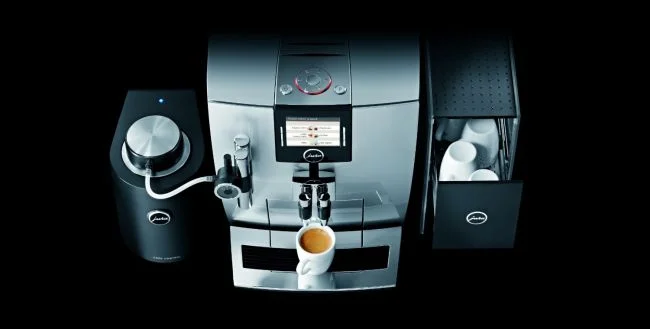
Great milk drinks start with great foam. Whether you are making a cappuccino, latte, or flat white, the texture and temperature of your milk makes the difference between a mediocre drink and a cafe-quality one. Here is how to get the best results from your Jura’s milk system.
How Jura Milk Systems Work
Jura uses two types of milk frothing across its lineup:
Basic frothing (D6, E6, older models):
- Draws milk through a tube and froths it with steam
- Produces decent foam for cappuccinos
- Foam texture is coarser - visible bubbles rather than smooth microfoam
- Less control over foam density
Fine-foam technology (ENA 8, E8, S8, Z10):
- Advanced frothing that creates silky microfoam
- Smaller, more uniform bubbles for a smooth, velvety texture
- Better foam density control - adjust for cappuccino (thick) vs latte (thin)
- Produces results closer to manual steam wand quality
If milk drinks are a daily habit, the fine-foam system is worth the upgrade. See our milk system comparison for a detailed breakdown.
Repair Service
Milk system still not working after cleaning?
If the frother still sputters, draws air, or gives no foam after a full clean, a part has likely failed. Tell us your machine, the fault, and your location. We look for a repair technician who covers your area. No obligation.
Getting the Best Foam
Use the Right Milk
| Milk Type | Foam Quality | Notes |
|---|---|---|
| Whole milk (3.5% fat) | Excellent | Best foam texture and sweetness. Our top recommendation. |
| 2% milk | Good | Slightly thinner foam, still works well |
| Skim milk | Fair | More foam volume but less creamy, less stable |
| Oat milk (barista version) | Good | Best non-dairy option. Use “barista” versions designed for frothing. |
| Almond milk | Fair | Thin foam, can separate. Results vary by brand. |
| Soy milk | Fair | Froths decently but can curdle with very hot espresso |
Key rule: Always use cold milk, straight from the refrigerator. Cold milk froths better because the proteins have more time to stretch and trap air before the milk gets too hot.
How to Adjust the Milk Foam Density
Yes, milk foam density is adjustable on every current Jura with a fine-foam system - but where you adjust it depends on the machine. On the E8, foam texture is set mechanically: the Professional Fine Foam Frother has a selector switch on the spout itself - one position dispenses fine milk foam, the other dispenses warm milk - and the amount of foam is programmed in seconds via the rotary switch while the drink is being prepared (on the 5th-gen E8, use the display buttons). On touchscreen models (S8, Z10, J8), foam density is a per-drink software setting: open the drink’s product settings and choose the milk foam level, and the machine remembers it for that specialty. Recommended settings by drink:
- Cappuccino: Maximum foam setting. Thick, airy foam that holds its shape.
- Flat white: Medium foam setting. Silky microfoam that blends with the espresso.
- Latte: Low-medium foam setting. Thin layer of foam on top of steamed milk.
- Latte macchiato: Medium foam setting. The milk layers need distinct separation.
Temperature
Jura machines froth milk to approximately 65-70 degrees Celsius (150-158 degrees Fahrenheit). This is the ideal range for sweetness and texture. Some models allow temperature adjustment - stay within 60-70 degrees C for best results. Above 70 degrees C, milk proteins break down and the foam collapses.
Milk Circuit Care
Milk residue left in the frothing circuit causes problems within hours. Dried milk protein narrows the air intake, blocks suction and kills foam quality. About 90% of frother faults trace back to it, so this is the most important maintenance habit for milk drink users.
After every milk drink:
- Remove the milk container from the machine
- Place the milk tube in a cup of cold water
- Run the milk frothing cycle for 10-15 seconds to flush the line (or start the milk rinse when the machine prompts you)
- Wipe the spout clean
Weekly: Run the milk system cleaning program with Jura Milk System Cleaner. A water rinse cannot dissolve dried milk protein; the cleaner can.
- Fill a container with warm water and add cleaner at the concentration on the bottle
- Place the milk tube in the solution
- Start the milk system cleaning program from the maintenance menu
- When it finishes, run the cycle once more with plain water
Fix Most Milk Problems
Jura Milk System Cleaner
Dissolves protein buildup in the milk circuit. Use weekly to prevent foam issues. Fixes most frother problems within one cleaning cycle.
Monthly: Take the spout, frothing nozzle and every detachable part apart. Soak them in warm water with milk system cleaner for 20-30 minutes, brush inside the openings, rinse, and let them air dry. This reaches areas the automatic program cannot fully flush. It matters most on older Impressa models (J9, C9, F9), whose narrower passages clog faster.
Never run vinegar through the milk circuit. It attacks the O-rings and seals, and the taste lingers through many rinses. Dish soap foams inside the circuit and is hard to rinse out. Third-party milk system cleaners such as Urnex Rinza use the same alkaline chemistry and are safe; our cleaning products guide compares the options. See our cleaning guide for the full routine and our cleaning schedule for timing.
Troubleshooting Milk Issues
Work through these fixes in order. Most owners solve the problem with one deep clean.
Foam is thin or watery:
- Run a full milk system clean with cleaner, not just a water rinse
- Use colder, fresher milk - it froths best at 3-5 degrees C (37-41 F), straight from the fridge
- Check the foam density setting - it may have been accidentally lowered
- Switch to whole milk or a barista-edition plant milk
- Make sure the milk tube is fully seated at both ends
No foam at all, just hot milk:
- Foam setting at minimum. At its lowest setting (or on the E8 spout’s warm milk position) the machine makes hot milk on purpose. Turn it toward maximum foam.
- Blocked frother nozzle. Dried milk blocks the small air hole that creates foam. Take the spout apart and soak the parts in warm water with milk system cleaner for 15-20 minutes. Clear the air hole with a thin brush or pipe cleaner, then reassemble and test.
- Worn frother parts. The fine-foam frother attachment wears after about two years of daily use and stops aerating milk. Replacing it is a five-minute job you can do yourself.
If cleaning restores foam for a day and it fails again, the wear is in the spout itself. Two parts fix that without a technician:
Replaceable Attachment
Jura Frother Add-On
The frothing attachment. The first part to replace when cleaning no longer holds.
Check Price →Spout Housing
Jura Frother Housing
The outer housing assembly. Replace it when it is cracked or its seals no longer seat.
Check Price →Milk is not being drawn (pump runs, no milk):
- Check that the tube reaches the milk at the bottom of the container, not just the top
- Remove the tube and blow through it to find a blockage; check for kinks
- Push the connector firmly into the machine until it clicks - a half-seated connector cannot hold suction
- Clean the connector and tube connection points
- If the outside parts are clean, run the full milk system cleaning program to dissolve buildup in the internal valve and circuit
Foam looks good, then collapses within a minute:
- Milk is too warm - foam stability drops above 65 degrees C (149 F), so never preheat the milk
- Skim milk and regular plant milks collapse faster - use whole milk or barista-edition plant milk
- A cup preheated with boiling water can destabilize foam - use warm water or a room-temperature cup
Foam has large bubbles instead of smooth texture:
- This is typical of basic frothing systems (D6, E6). Their simple nozzle cannot make true microfoam, so coarse foam is a design limit, not a defect. For smoother foam, upgrade to a model with fine-foam technology.
- If you have fine-foam (E8, S8, Z10) and see large bubbles, clean the milk circuit.
Frother works one day but not the next: This is early-stage residue. A half-blocked air intake still froths cold, fresh milk but fails when the milk is slightly warmer or lower in the container. A deep clean usually ends it. Also check that the tube reaches the bottom of the container every time; a milk container with a fitted lid and tube port removes that variable.
Clicking or rattling while frothing: Rapid clicking near the water tank base is usually scale in a valve, and a descaling cycle normally clears it. Rattling or gurgling at the spout means air enters at a loose joint: reseat the tube and connector until they click, and check the tube for hairline cracks. If the noise comes only on milk drinks, the milk circuit is the cause, not the pump.
Leaking right after cleaning: An O-ring is worn, flattened or out of its groove after reassembly. The small spout and connector rings lose their seal after roughly 1-2 years. Take the spout apart again, check each ring for flat spots or cracks, apply a thin film of food-safe silicone grease, and reseat everything fully. Our O-ring replacement guide walks through the swap.
Quick Checklist
- Run a milk system clean with cleaner (not just water)
- Turn the foam density setting toward maximum
- Use cold whole milk straight from the fridge
- Check the milk tube: fully submerged, no cracks or kinks
- Clean the connector where the tube meets the machine
- Soak and clean the frother nozzle and spout
- Replace worn frother parts if foam fails again within a day
- Still not working? Get a repair quote (below)
Model-Specific Guides
- E8: the E8 is the model we see most foam complaints about, and it is almost always a cleaning issue. See E8 milk frother not working for HP2 vs HP3 parts and the E8 cleaning sequence.
- S8: shares the E8’s fine-foam system. See S8 not drawing milk for that failure and the repair-or-replace maths.
- ENA 8: uses the older HP1 system with an interchangeable spout. If it hisses or draws air but no milk, use the ENA 8 frother diagnosis.
- Impressa (J9, C9, F9): narrower passages clog faster. If the frother stopped completely, soak the frothing connector in warm cleaning solution for at least 30 minutes before testing.
When a Part Has Failed
If you have done the daily rinse, weekly clean and monthly soak and the frother still fails, the fault may be mechanical:
- Worn frother attachment - the most common failure, and one you can replace yourself (see the parts above)
- Internal milk valve - the solenoid valve that controls milk flow can fail and needs a technician
- Pump - rare, but after 4-5 years of heavy use the pump can weaken; this is a service-level repair
On an older machine with a high repair quote, upgrading may make more sense. See our repair vs. replace guide for the cost comparison.
Repair Service
Need a Jura Repair Technician?
Tell us your machine, the problem, and your location. We will look for an experienced repair technician who covers your area. There is no obligation to proceed.
Why Is My Jura Milk Frother Sputtering Steam but No Milk?
Sputtering almost always means air is leaking into the milk line - dried milk residue inside the frother connector or a loose, cracked milk tube breaks the suction, so the machine spits steam and droplets instead of drawing a steady milk flow. First check the simple cause: if the milk level is low or the tube has curled up, the frother pulls air instead of milk. Jura frothers work on the venturi principle: steam passing through the spout creates a vacuum that pulls milk up the tube, and even a pinhole air leak collapses that vacuum. Disassemble the spout connector, soak the parts in milk system cleaner, and check that the tube is fully seated at both ends. Tubes harden and crack with age, so replace one that feels stiff. If sputtering continues after a deep clean, worn seals are the usual culprit - see our milk system O-ring replacement guide and the full sputtering fix walkthrough.
Why Is My Jura Milk Not Hot Enough?
Jura heats milk to roughly 65-70 degrees C (150-158 F) by design, which feels cooler than many people expect - but if your milk is genuinely lukewarm, the milk temperature setting is the first thing to check. On the E8, S8, and Z10 you can raise milk temperature per drink through the settings menu, and many machines ship on a middle level. Two other common causes: a cold, thick ceramic cup absorbs a surprising amount of heat, so preheat it with hot water, and scale buildup inside the heating system lowers output temperature over time - run a descaling cycle if it has been more than two months. A clogged milk circuit also lowers temperature, because the milk-steam mix pulls in extra cool air, so run a milk system clean as well. If milk stays lukewarm after descaling and cleaning, the thermoblock or temperature sensor may need a technician. If coffee is also coming out cool, see Jura coffee not hot enough: causes and fixes.
Which Plant Milk Froths Best in a Jura?
Barista-edition oat milk froths best in a Jura - its added fat and protein stabilizers mimic dairy closely enough to produce stable, fine foam in both basic and fine-foam systems. Regular oat and almond milks are too thin and produce foam that collapses within a minute. Soy froths acceptably but can curdle when it hits very hot espresso; lowering the milk temperature setting one level usually prevents this. Whatever plant milk you use, run the rinse cycle immediately after every session, because plant milks leave more residue in the circuit than dairy. For brand-level results and machine compatibility, see our full guide to using oat milk in a Jura.
Can a Jura Machine Make Cold Milk Foam?
No - every Jura milk system is steam-driven, so milk specialties always come out hot, even on machines with cold coffee features. The Z10’s Cold Extraction Process pulses cold water through the grounds to make genuine cold brew, but the milk side still runs through the steam circuit; our Z10 cold brew guide covers what it can and cannot do. The practical workaround for iced lattes: dispense a double espresso directly over a glass of ice, then top with cold milk shaken in a sealed jar for 20 seconds. If cold drinks matter to you, the E8 vs Z10 comparison breaks down whether the cold-extraction upgrade is worth it.
How Long Can Milk Stay in the Jura Milk Container?
Treat the milk container like an open glass of milk: about one hour at room temperature is the safe limit, so return it to the refrigerator between coffee sessions. Milk should stay below 4 degrees C (40 F) to slow bacteria growth, and a warm kitchen shortens that window further. An insulated stainless container, or Jura’s Cool Control accessory, keeps milk at a safe temperature through a full morning of drinks. Never top up fresh milk onto milk that has been sitting out - empty, rinse, then refill. Our Jura milk container guide compares the container options and covers daily storage routines in detail.
What Are the Best Cappuccino Settings on a Jura E8?
For a classic cappuccino on the E8: set the frother spout’s selector switch to the milk foam position, program 12-15 seconds of milk foam, and pair it with a strong coffee setting so the espresso cuts through the milk. All of this is adjusted with the rotary switch - press it during preparation to change the milk foam time on the fly, or edit the cappuccino preset in product settings to save your changes. If the foam comes out flat despite the right settings, the milk circuit needs cleaning before anything else. Dial in the coffee side with our E8 espresso settings guide, and see the full Jura E8 review for how its cappuccinos compare across the lineup.
Does Jura Make a Standalone Automatic Milk Frother?
Yes - Jura sells the Automatic Milk Frother Hot & Cold, a countertop frother that works independently of any coffee machine. It runs on a single button: press once, twice, or three times to choose cold, warm, or hot milk foam, and it handles both dairy and barista plant milks. Because the pitcher uses a magnetic drive with no electronics inside, it can be immersed and rinsed under the tap, which makes cleanup far easier than a machine’s milk circuit. It is a practical add-on if your Jura has no milk system, or if you want the cold foam that built-in Jura frothers cannot produce. For add-on frother kits that attach to the machine itself, see our Jura frother parts guide.
Ready to Upgrade Your Milk Drinks?
If you are using a basic frothing system and want better milk quality, the E8 is the most affordable Jura with fine-foam technology. For the ultimate milk drink experience with a larger touchscreen, see the S8.
Best Value Fine Foam
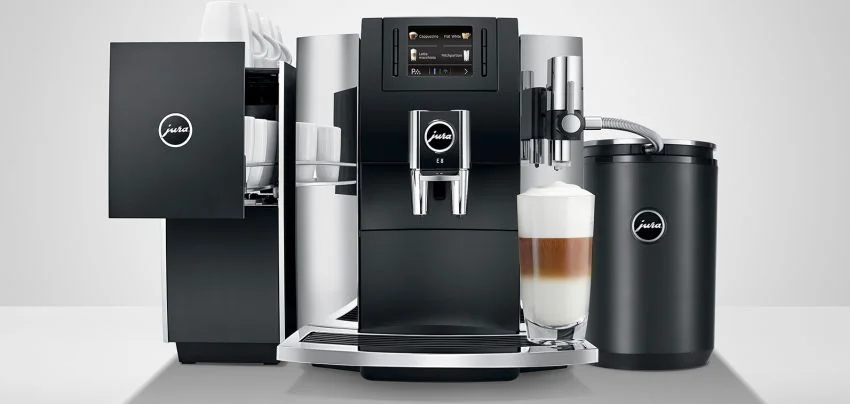
Jura E8
27 specialties, fine-foam technology, fully automatic milk drinks. Most affordable Jura for silky cappuccinos and flat whites.
Check E8 Price →Premium Interface
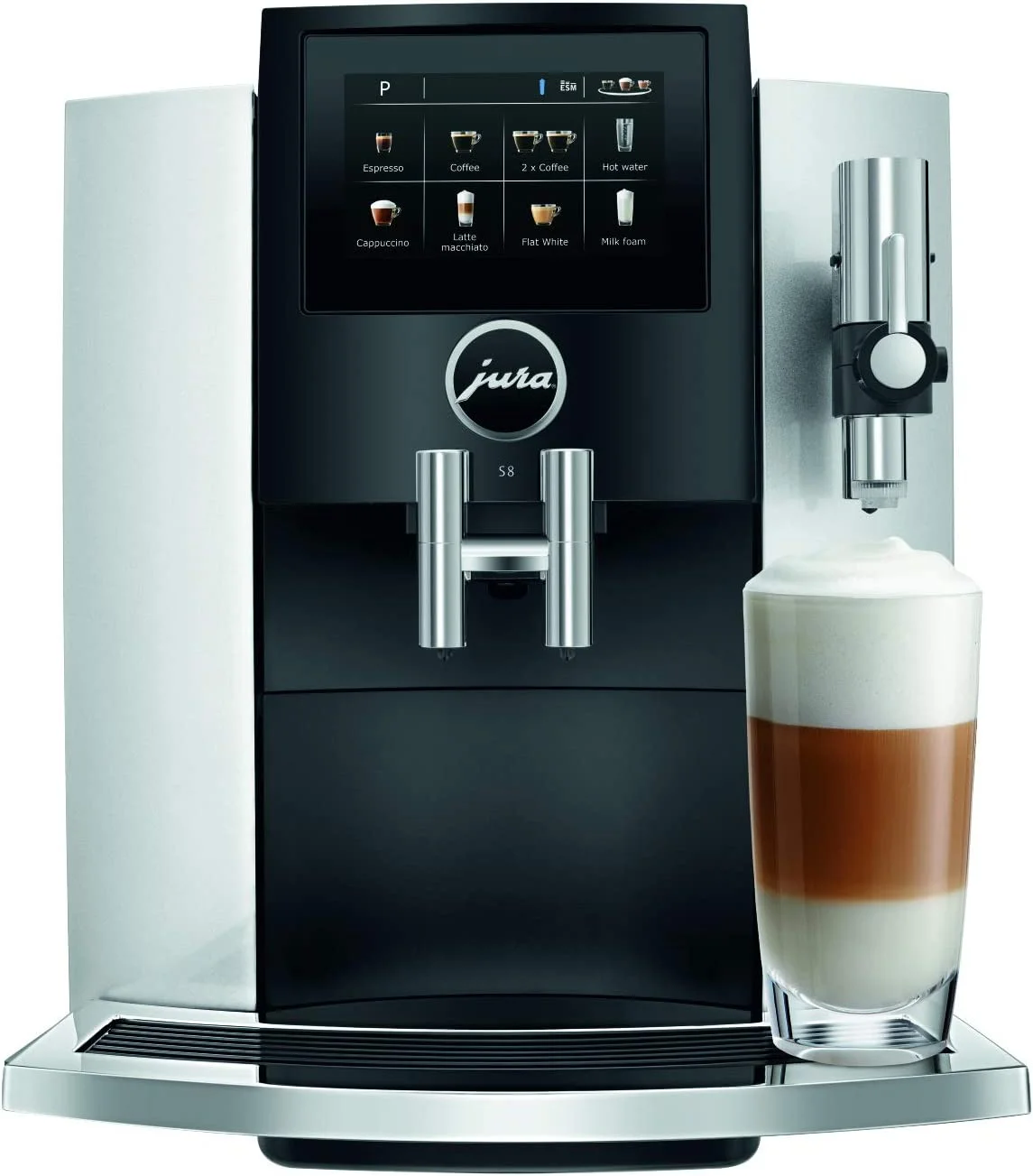
Jura S8
Same fine-foam quality as E8 with a 4.3” touchscreen for easier foam density control.
Check S8 Price →Back to all guides | See also: Latte art tips | Brewing guide | Cleaning guide | Milk frother sputtering fix | Can Jura use oat milk?
As an Amazon Associate, we earn from qualifying purchases at no extra cost to you.
Milk Drink Picks
Products that help improve texture and consistency for milk drinks.
As an Amazon Associate, we earn from qualifying purchases at no extra cost to you.
Jura E8
Best-value machine with excellent fine-foam results for daily lattes.
View on Amazon
Milk & Barista Accessories
Tools that help improve foam workflow and repeatability at home.
View on Amazon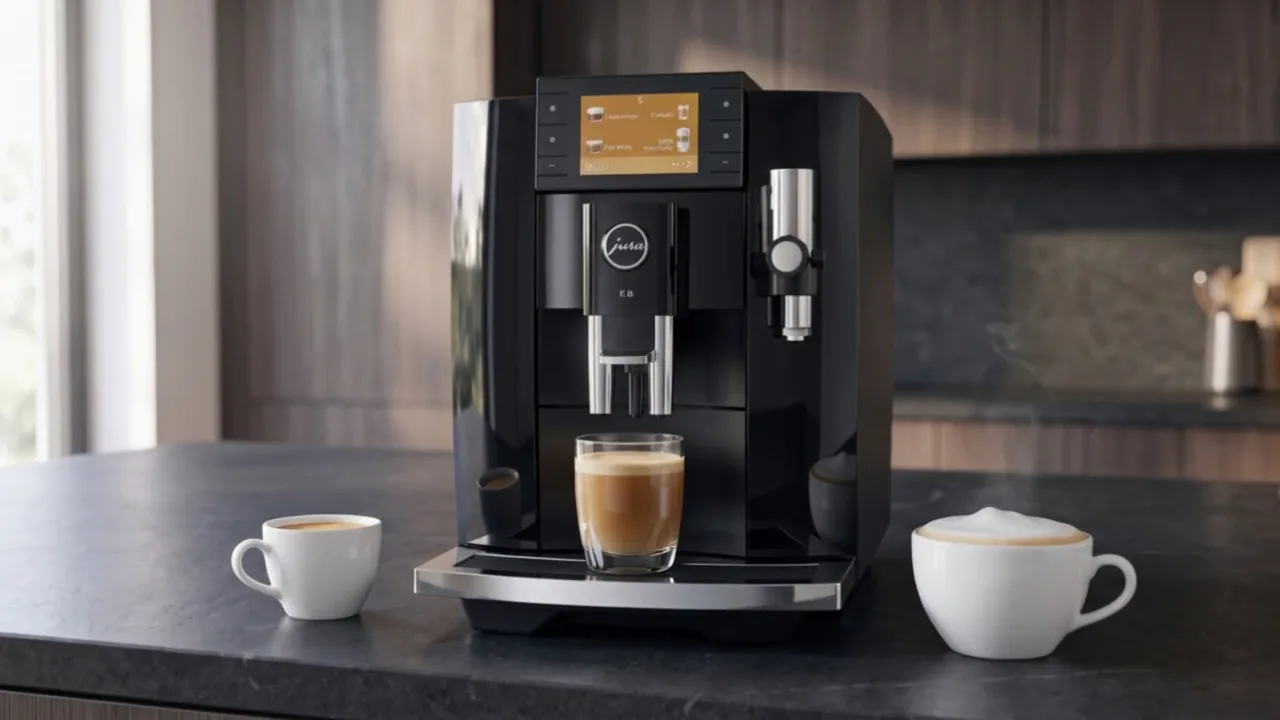 Our top pick
Jura E8 (5th generation)
The best-value premium Jura for most homes: flagship-style milk drinks without the flagship price.
- 27 one-touch specialties
- HP3 fine foam milk system with Sweet Foam
- P.A.G.2 grinder with 7 grind levels
- Hot Brew and Light Brew coffee styles