Super-automatic = press one button, get espresso. Semi-automatic = you grind, tamp, and pull the shot yourself. The price difference is $300-2,000+. The espresso quality difference is smaller than most people think.
This guide breaks down exactly how each type works, what each one costs over time, and which type fits your daily routine. No tribal loyalty to either camp - just an honest comparison based on what matters: espresso quality, time, cost, and how much effort you actually want to put into your morning coffee.
How Each Type Works
Super-Automatic Espresso Machines
A super-automatic handles every step from bean to cup:
- Built-in grinder grinds whole beans fresh for each cup
- Automatic tamping compresses the grounds at consistent pressure
- One-touch brewing extracts espresso at the right temperature and pressure
- Automatic milk frothing (on models with milk systems) steams and textures milk
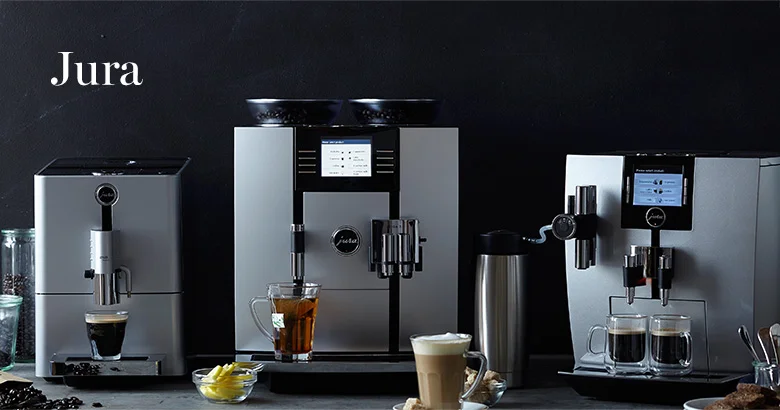
You press a button, walk away, and come back to a finished drink. The machine grinds, tamps, brews, and cleans up after itself. Total time from button press to espresso: 30-60 seconds. Machines like the Jura E8 produce 27 different drink types this way - espresso, cappuccino, flat white, latte macchiato - all with one touch.
Semi-Automatic Espresso Machines
A semi-automatic gives you hands-on control of the process:
- Separate grinder (usually purchased separately) grinds beans to your spec
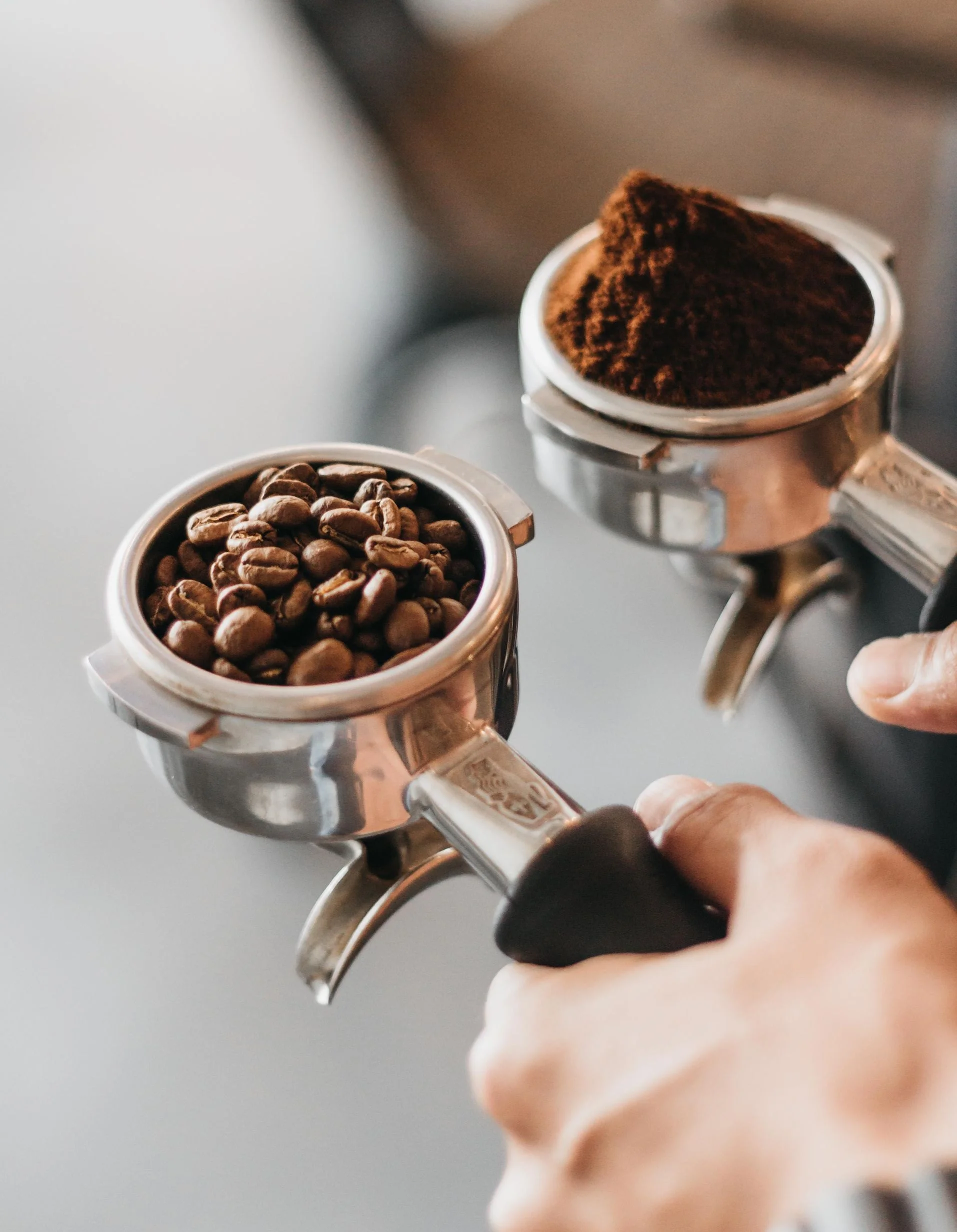
- Manual tamping - you distribute and compress grounds in the portafilter
- Manual shot pulling - you start and stop extraction, controlling timing
- Manual milk steaming - you texture milk with a steam wand yourself
Each step requires skill and attention. A good espresso routine takes 3-5 minutes of active work per drink, plus cleanup. The payoff is full control over every variable: grind size, dose weight, tamp pressure, extraction time, and milk texture.
Side-by-Side Comparison
| Feature | Super-Automatic | Semi-Automatic |
|---|---|---|
| Price range | $800 - $3,500+ | $300 - $2,000 (machine only) |
| Time per drink | 30 - 60 seconds | 3 - 5 minutes |
| Consistency | Very high (machine-controlled) | Depends on your skill |
| Espresso quality ceiling | Very good (8/10) | Excellent (9.5/10 with skill) |
| Milk drinks | One-touch automatic | Manual steam wand |
| Maintenance | Automated cleaning cycles | Manual backflushing, cleaning |
| Learning curve | Minutes | Weeks to months |
| Typical lifespan | 8 - 12 years | 10 - 20 years |
The numbers tell a clear story. Super-automatics win on convenience and consistency. Semi-automatics win on quality ceiling and long-term durability. Neither is objectively better - it depends on what you value.
The Real Time Cost: A Weekly Active-Time Model
“3-5 minutes per drink” undersells the difference, because those are active minutes - hands on the machine, attention engaged. Multiply them out over a normal week and the gap becomes the single biggest practical difference between the two types. Here is the model, with every assumption stated so you can adjust it to your own routine.
Assumptions: you are a practiced home barista, not a beginner (dialing in a fresh bag of beans adds another 10-20 minutes on top of this); the machine is already warm on a timer, so heat-up time is not counted as active time for either type; drinks are made one at a time; a “milk drink” means a cappuccino or latte with steamed milk.
Active minutes per drink: semi-automatic
| Step | Active minutes |
|---|---|
| Warm-up flush and prep | 0.5 |
| Grind, dose, and level the basket | 1.0 |
| Distribute and tamp | 0.5 |
| Pull the shot (you watch it, you stop it) | 0.75 |
| Steam milk (milk drinks only) | 1.0 |
| Purge and wipe the wand, knock the puck, rinse the portafilter | 1.25 |
| Total per milk drink | ~5 minutes |
| Total per straight espresso | ~4 minutes |
Active minutes per drink: super-automatic
| Step | Active minutes |
|---|---|
| Select drink, press button (machine grinds, tamps, brews, steams) | 0.25 |
| Refills amortized per drink (water tank, beans, grounds bin, drip tray) | 0.25 |
| Milk system rinse amortized per drink (milk drinks only) | 0.25 |
| Total per drink | ~0.5 - 0.75 minutes |
What that means per week
At 2-3 drinks per day (14-21 drinks per week, a normal two-person household):
| Semi-automatic | Super-automatic | |
|---|---|---|
| Drinks (14-21 x active minutes) | 56 - 105 min | 7 - 16 min |
| Weekly cleaning (backflush + wand soak vs tray wipe + rinse cycle) | ~10 min | ~5 min |
| Total active time per week | ~65 - 115 minutes | ~12 - 20 minutes |
That is roughly 1 to 1.5 hours of hands-on work per week that a super-automatic hands back to you - in the neighborhood of 50-80 hours per year. If the manual process is the hobby, those hours are the point and this table argues for a semi-automatic. If they are just a chore standing between you and a cappuccino, this table is the strongest case for a super-automatic that exists.
If 20 Minutes a Week Sounds Better Than 90
Jura E8
One button, 17 drinks, and the machine handles the grinding, tamping, milk, and rinse cycles itself.
Who Should Buy a Super-Automatic
A super-automatic is the right choice if:
- You are a busy professional who needs great espresso without spending 5 minutes per cup. You want to press a button before rushing out the door and have a cappuccino ready when you grab your keys.
- Your household has multiple coffee drinkers with different preferences. One person wants espresso, another wants a latte macchiato, someone else wants a flat white. A super-automatic handles all of them with no skill required from anyone.
- You want consistency above all else. Every cup tastes the same. No bad shots because you were half-asleep and tamped unevenly.
- You are buying for an office. Multiple people using one machine means nobody needs training and nobody can mess up a shot.
- You value convenience over craft. Making espresso is a means to an end - you want the result, not the process.
If you view espresso as fuel, not a hobby, go super-automatic. There is zero shame in this. A good super-automatic like the Jura E8 produces espresso that is genuinely excellent - better than most coffee shops and far better than a semi-automatic in the hands of someone who has not invested months learning to dial in shots.
Best Overall Super-Automatic
Jura E8
27 one-touch drinks, P.E.P. extraction, HP3 fine foam. Consistently rated the best value in Jura’s lineup. Read our full E8 review.
Who Should Buy a Semi-Automatic
A semi-automatic is the right choice if:
- Making espresso is part of the enjoyment. You like the ritual of grinding, dosing, tamping, and watching espresso flow. The process is meditative, not tedious.
- You want maximum control over flavor. You want to adjust dose weight by 0.1g, grind size by microns, and extraction time by seconds. You want to taste the difference each variable makes.
- You are on a tighter budget. A solid semi-automatic setup (Breville Bambino Plus, around $500 as of July 2026, plus a decent grinder) can be had for roughly $650-$750. That is still about half the cost of a mid-range super-automatic.
- You enjoy learning new skills. Dialing in espresso is a skill that takes weeks to learn and years to master. If that sounds fun rather than annoying, you are a semi-automatic person.
- You plan to keep the machine for 15+ years. Semi-automatics are simpler mechanically - fewer electronics, fewer points of failure. A quality semi-auto can last decades with basic maintenance.
If dialing in a shot sounds fun rather than tedious, go semi-automatic. The espresso hobby community exists for a reason - there is genuine satisfaction in pulling a perfect shot yourself.
What a Prosumer Semi-Automatic Actually Looks Like
“Semi-automatic” covers everything from a $300 starter machine to serious prosumer hardware that costs as much as a Jura flagship. Since this guide keeps comparing the two paths, here are four real prosumer machines people cross-shop against super-automatics, with what daily use actually involves on each. Prices are approximate US retail at authorized dealers - always check current pricing.
| Machine | Approx Price | Boiler Setup | What Daily Use Looks Like |
|---|---|---|---|
| Rancilio Silvia Pro X | ~$2,195 | Dual boiler (0.3 L brew + 1 L steam), dual PID | Warm on a timer, grind on a separate grinder, tamp into the 58 mm portafilter, pull and steam simultaneously. Rewards technique; forgives little. |
| Profitec MOVE | ~$2,249 | Dual boiler (0.4 L brass brew + 0.75 L steam), PID with OLED display | About 15 minutes to full heat (9 minutes to espresso in fast heat-up mode), then the same manual grind-tamp-pull-steam routine. Volumetric shot programming trims a little attention per shot. |
| Lelit Bianca V3 | ~$2,999 | Dual boiler (0.8 L brew + 1.5 L steam), E61 group with flow-control paddle | The full hobbyist workflow plus a paddle for shaping pressure mid-shot. Maximum control in this group - and the most variables to manage every morning. |
| Rocket Appartamento | ~$2,150 | Heat-exchanger single boiler (1.8 L), E61 group, no PID | Brew and steam back to back off one boiler, with a cooling flush before shots to manage temperature. Classic Italian workflow, gorgeous hardware, more ritual per cup. |
If you have seen the Profitec Pro 300 recommended in older guides: it has been discontinued and replaced by the MOVE, which carries over the same compact dual-boiler concept (the Pro 300 sold for roughly $1,800-$1,850 depending on retailer before it was phased out).
Two things jump out from this table. First, every one of these machines still needs a separate grinder - add $400-$700 for a grinder that does the machine justice. Second, the prices overlap almost exactly with Jura’s mid-range: a Silvia Pro X plus grinder costs about the same as a Jura E8 setup (see our full Jura E8 vs Rancilio Silvia Pro X breakdown), and the same is true of the Profitec MOVE once its full setup cost is counted. At this level you are not choosing on price. You are choosing between a craft and a button, which is exactly why the weekly time model above matters more than any spec sheet. Two of this table’s machines get their own dedicated matchup on this site: the Lelit Bianca V3’s flow paddle and dual PID against the E8’s fixed process in Jura E8 vs Lelit Bianca V3, and Rocket’s dual-boiler flagship against Jura’s own in Jura Z10 vs Rocket R58.
Counter Space: The Footprint Nobody Budgets For
A semi-automatic is never just the machine. The realistic counter lineup is machine + grinder + knock box + scale, and it adds up fast. Worked example with sourced dimensions:
- Rancilio Silvia Pro X: 9.8 in wide x 16.5 in deep (Rancilio official spec)
- Eureka Mignon Specialita grinder: roughly 4.7 x 7.1 in footprint, about 13.8 in tall (retailer spec sheet)
- Knock box: typically about 6 in wide
- Scale and tamping area: call it another 6-8 in of working space
Lined up, that is roughly 26-30 inches of counter width at up to 17 inches deep - most of a standard counter section, permanently occupied. The tall grinder also has to clear your upper cabinets.
A super-automatic is one box. The Jura E8 measures 11 in wide x 13.8 in tall x 17.6 in deep (Jura official spec) with the grinder, brew group, and milk system all inside. You need clearance above for the bean hopper lid and water tank, and that is it. If you live with a galley kitchen or shared counter space, this alone can settle the decision.
The Espresso Quality Question
This is where the internet debate gets heated, so let’s be honest about what actually matters.
The quality ceiling is higher on semi-automatics. A skilled barista with a good semi-auto and a quality grinder will produce better espresso than any super-automatic. The ability to fine-tune every variable - grind size, dose, distribution, tamp pressure, pre-infusion, extraction time - means you can optimize a shot in ways a super-automatic cannot. This is not debatable.
But the average shot tells a different story. A Jura E8 makes better espresso than 90% of home baristas because it is perfectly consistent. It does the same thing every time, with precise pressure, temperature, and timing. It does not have bad mornings. It does not rush when it is late for work. It does not under-extract because it got distracted.
Here is the reality most espresso forums will not tell you:
- The best shot from a good semi-auto beats the best shot from a super-auto
- The average shot from a super-auto beats the average shot from a semi-auto
- The worst shot from a semi-auto (channeling, uneven tamp, wrong grind) is far worse than anything a super-auto produces
If you want to invest the time to learn and practice, semi-automatic gives you a higher ceiling. If you want reliably great espresso without the learning curve, super-automatic is the more practical choice. For most people, consistency matters more than peak performance.
You can learn more about dialing in a super-automatic in our espresso settings guide - even one-touch machines have adjustable parameters that affect flavor.
Where Semi-Automatic Honestly Wins
This is a site about Jura super-automatics, so let us be extra clear about where the other side genuinely has the advantage. Pretending otherwise would not help you make the right call.
- Drink quality ceiling. Covered above, but worth repeating: a skilled user with a good prosumer machine and grinder can pull shots no super-automatic matches. If you drink straight espresso and care about the last 10% of flavor, the manual path has a higher peak.
- Control. Machines like the Lelit Bianca let you shape pressure during the shot with a paddle. Dose, grind, temperature, pre-infusion, flow - every variable is yours. A super-automatic exposes a handful of settings; a prosumer machine exposes all of them.
- Repairability. Prosumer machines are built around commercial standards: 58 mm portafilters, E61 groups, off-the-shelf gaskets, valves, and switches. A handy owner can replace most wear parts at the kitchen table with parts that are cheap and widely stocked. Super-automatics are dense with proprietary electronics and usually go to a service center instead - this is the honest trade-off behind one-touch convenience.
- Upgrade path. With a semi-automatic you can upgrade the grinder, swap to a bottomless portafilter, add precision baskets, or move up to a better machine while keeping everything else. The setup grows with you. A super-automatic is a sealed ecosystem: what you buy is what you have until you replace the whole unit.
- Longevity. Simpler mechanics and standard parts are why well-kept prosumer machines routinely run 15-20 years and hold resale value. Super-automatics have solid lifespans (8-12 years is typical), but fewer of them become heirlooms.
None of this changes the earlier math. The average cup, the weekly time cost, and the counter footprint still favor the super-automatic for most households. But if the points above describe what you care about, buy the semi-automatic - you will be happier, and no one-button machine will scratch that itch.
Total Cost of Ownership (5 Years)
The sticker price difference between super-automatic and semi-automatic is larger than the actual cost difference over time. Here is what each path really costs:
Semi-Automatic Path
| Item | Cost |
|---|---|
| Machine (Breville Bambino Plus or Gaggia Classic Pro) | $450 - $600 |
| Grinder (Eureka Mignon, Baratza Sette, or similar) | $200 - $400 |
| Accessories (tamper, scale, distribution tool, knock box) | $75 - $150 |
| Beans (5 years at ~$15-20/month) | $900 - $1,200 |
| Maintenance (gaskets, screens, descaler) | $50 - $100 |
| Total | $1,675 - $2,450 |
Super-Automatic Path
| Item | Cost |
|---|---|
| Machine (Jura ENA 4, E8, or Z10) | $1,199 - $3,500 |
| Beans (5 years at ~$15-20/month) | $900 - $1,200 |
| Maintenance (cleaning tablets, descaling, filters) | $400 - $600 |
| Total | $2,050 - $5,300 |
The mid-range comparison is the most telling. A Jura E8 ($2,599) plus 5 years of supplies costs roughly $4,000-$4,400. A solid semi-automatic setup costs roughly $1,800-$2,400 over the same period. The gap is $400-$800 over five years - about $7-$13 per month.
That monthly difference is the cost of convenience. Whether that is worth it depends entirely on how you value your time and how much you enjoy (or do not enjoy) the manual process.
For bean recommendations that work well in super-automatics, we have a dedicated guide.
Best Super-Automatic Picks
If you have decided super-automatic is right for you, here are the three Jura models worth considering:
Best Overall
Jura E8 - ~$2,599
27 one-touch specialties, P.E.P. extraction, HP3 fine foam. The sweet spot of Jura’s lineup - flagship technology without flagship pricing. Read our full review.
Check E8 Price →Budget Super-Auto
Jura ENA 4 - ~$1,199
Compact design, excellent black coffee, no automatic milk system. The most affordable entry into Jura’s lineup for espresso and coffee drinkers.
Check ENA 4 Price →Premium Pick
Jura Z10 - ~$3,500
32 specialties including cold brew, Product Recognising Grinder, 4.3” touchscreen. Jura’s flagship for buyers who want the absolute best.
Check Z10 Price →For a detailed comparison of how Jura stacks up against other super-automatic brands, see our Jura vs DeLonghi guide.
Final Verdict
Choose super-automatic if you want great espresso every morning without thinking about it. You value consistency, speed, and convenience. You would rather spend your morning minutes on something other than grinding and tamping. A machine like the Jura E8 will deliver cafe-quality drinks at the press of a button for 8-12 years.
Choose semi-automatic if making espresso is part of the enjoyment. You want maximum control, a lower entry price, and the satisfaction of mastering a craft. You are willing to invest weeks learning to pull good shots and do not mind the daily hands-on process.
There is no wrong answer - just different priorities. Both paths lead to excellent espresso at home. The question is whether you want the machine to do the work or whether you want to do it yourself.
Our Top Super-Automatic Pick
Jura E8 - Best Value Premium Super-Automatic
27 one-touch specialties, P.E.P. extraction, HP3 fine foam, P.A.G.2 grinder. The E8 borrows flagship technology from Jura’s Z-line while keeping the price $700-$1,400 below the Z10. For most home buyers, this is the super-automatic to beat.
Check E8 Price on Amazon →All prices are approximate US retail and change often - use the price buttons on this page for current figures. Time-model minutes are our own estimates based on the stated assumptions, not manufacturer claims. Specifications last checked: July 2026.
If a Prosumer Semi-Automatic Is What You Want
Rancilio Silvia Pro X
Check Price on Amazon →Profitec MOVE
Check Price on Amazon →Lelit Bianca V3
Check Price on Amazon →Rocket Appartamento
Check Price on Amazon →As an Amazon Associate, we earn from qualifying purchases at no extra cost to you.