Jura machines make noise at two points: the grinder (loudest, 8-12 seconds per brew) and the pump (quieter, runs throughout the brew). The rest of the cycle - water heating, dispensing - is quiet. If you are in an apartment, have a sleeping baby nearby, or work from home with early morning calls, the grinder is the part to think about.
How Loud Is a Jura, Actually?
Jura does not publish official noise measurements for their machines. Based on real-world measurements with a decibel meter at 1 meter distance:
| Phase | Approximate level | Duration |
|---|---|---|
| Startup rinse (pump only) | 55-60 dB | 10-15 seconds |
| Grinding | 65-72 dB | 8-12 seconds |
| Brewing / pump running | 58-63 dB | 20-30 seconds |
| Milk frothing | 55-65 dB | 15-30 seconds |
| Total cycle (espresso) | peaks at 65-72 dB | ~45-60 seconds total |
For reference: a normal conversation is 60 dB, a dishwasher is 55-60 dB, a vacuum cleaner is 70-75 dB. The Jura grinder is roughly as loud as a loud conversation or slightly louder - not extreme, but audible through thin walls.
Which Jura Models Are Quietest?
The grinder is the primary noise source, and all current Jura home models use the Aroma G3 conical burr grinder (ENA 4, E6, E8, S8) or the more advanced P.A.G.2/P.R.G. grinders on the J8 and Z10. In practice, the noise difference between models is modest - under 3-4 dB typically, which most people cannot discern.
| Model | Grinder | Relative noise | Notes |
|---|---|---|---|
| ENA 4 | Aroma G3 | Moderate | Compact body amplifies resonance slightly more |
| E6 | Aroma G3 | Moderate | Similar to ENA 4 |
| E8 | Aroma G3 | Moderate | Most common reference point |
| S8 | Aroma G3 | Moderate | Slightly quieter grind than E8 in user reports |
| J8 | P.A.G.2+ | Moderate-Quiet | More precise grinder, slightly quieter overall |
| Z10 | P.R.G. | Moderate | Professional grinding system, similar noise floor |
The honest answer: no current Jura is “quiet.” They are all within a similar noise band. If you have heard one Jura grinder, you have a reasonable expectation for any other model.
When Noise Actually Matters
Early morning in an apartment
The grinding cycle at 65-72 dB through an interior wall will be audible in an adjacent bedroom if the wall is lightweight. If your partner is a light sleeper or you have a small apartment with thin walls, a 7am espresso will wake someone up.
What helps:
- Use the machine in the kitchen with the door closed
- Place the machine away from the wall shared with the bedroom
- Use an anti-vibration mat under the machine - this reduces transmitted vibration noise by 5-10 dB at the surface level, which is noticeable
- Make coffee before going to sleep if you want it cold at work the next morning (not practical, but it is the only way to avoid the morning grind noise)
Open-plan living spaces
In an open-plan kitchen-living room, the grinder is clearly audible during a TV show or conversation but not disruptive. Most people adapt to it within a week. The 8-12 second grind duration is short enough to be forgettable.
Office environments
In a shared office kitchen, Jura machines are among the quieter options compared to pod machines with high-pressure pumps or traditional commercial grinders. The brief grind noise is accepted in most workplace settings.
Sleeping baby nearby
If the kitchen is adjacent to a nursery, expect the grinder to occasionally wake a light sleeper. Anti-vibration mats and door closure help. Most parents find a 5-10 minute window after the baby settles where brewing is fine.
Noise Reduction: What Actually Works
Anti-vibration mat
The most effective single upgrade. The grinder vibrates the counter surface, which amplifies and transmits the sound. A dense rubber anti-vibration mat under the machine absorbs vibration before it reaches the counter. The grinder still makes the same air-borne sound, but the counter resonance - which can nearly double the apparent volume in a kitchen - is significantly reduced.
Result: Approximately 5-10 dB reduction in perceived noise at the counter surface.
Placement
- Against a wall: More resonance and reflection. If possible, keep the machine a few centimeters from the wall to reduce acoustic bouncing.
- On a solid countertop: Thick stone or solid wood transmits less vibration than a hollow surface or thin laminate.
- Away from shared walls: A machine positioned on an island or away from the wall shared with a bedroom makes a practical difference in sound transmission.
Can you reduce grind time?
Not significantly. The Aroma G3 grinds to order for each drink. The grind duration depends on the amount of coffee needed (which depends on drink type and strength setting). Reducing the strength setting reduces grind time by a few seconds but also reduces coffee intensity.
Using the Bypass Doser (Pre-ground Coffee)
All current Jura models accept pre-ground coffee through the bypass doser chute. When you use pre-ground coffee, the grinder does not run at all.
If noise is a genuine daily issue - early morning brewing, specific quiet hours - using pre-ground coffee for those situations eliminates the grinding noise entirely. The pump noise (55-60 dB) remains but is far less intrusive.
The trade-off: pre-ground coffee is less fresh than whole bean. For occasional quiet-mode brewing, it is a reasonable compromise. For daily use, whole bean is noticeably better.
Comparison to Other Espresso Machine Types
| Machine type | Grinding noise | Notes |
|---|---|---|
| Pod machine (Nespresso, etc.) | None - no grinder | Quietest option by far |
| Super-automatic (Jura, Delonghi) | 65-72 dB for 8-12 seconds | Audible but brief |
| Semi-automatic + external grinder | 70-80 dB for 20-40 seconds | Louder and longer |
| Manual espresso + hand grinder | Hand grinder: 50-60 dB | Quieter but slower |
If silence is your absolute priority and you are willing to sacrifice freshness, a pod machine is genuinely quieter. If you want fresh-ground coffee, all grinder-based machines - including Jura - will make noise. Super-automatics like Jura are generally briefer in grind time than semi-automatics with external grinders.
Bottom Line
A Jura makes noise for 8-12 seconds during grinding and produces pump sound for another 20-30 seconds during brewing - roughly 45-60 seconds of noise per drink cycle. At 65-72 dB peak, it is noticeable but not disruptive in most settings.
For apartments and shared spaces, an anti-vibration mat and closed kitchen door address most of the practical issues. For truly noise-sensitive situations (sleeping infants, very thin walls, early morning brewing), using pre-ground coffee through the bypass doser eliminates the loudest phase entirely. For whole-bean recommendations that work reliably in a Jura, see our best coffee beans guide.
No current Jura model is meaningfully quieter than another. The choice between E8, S8, or Z10 should not be driven by noise - the differences are within the margin of variation between individual units.
Best home Jura
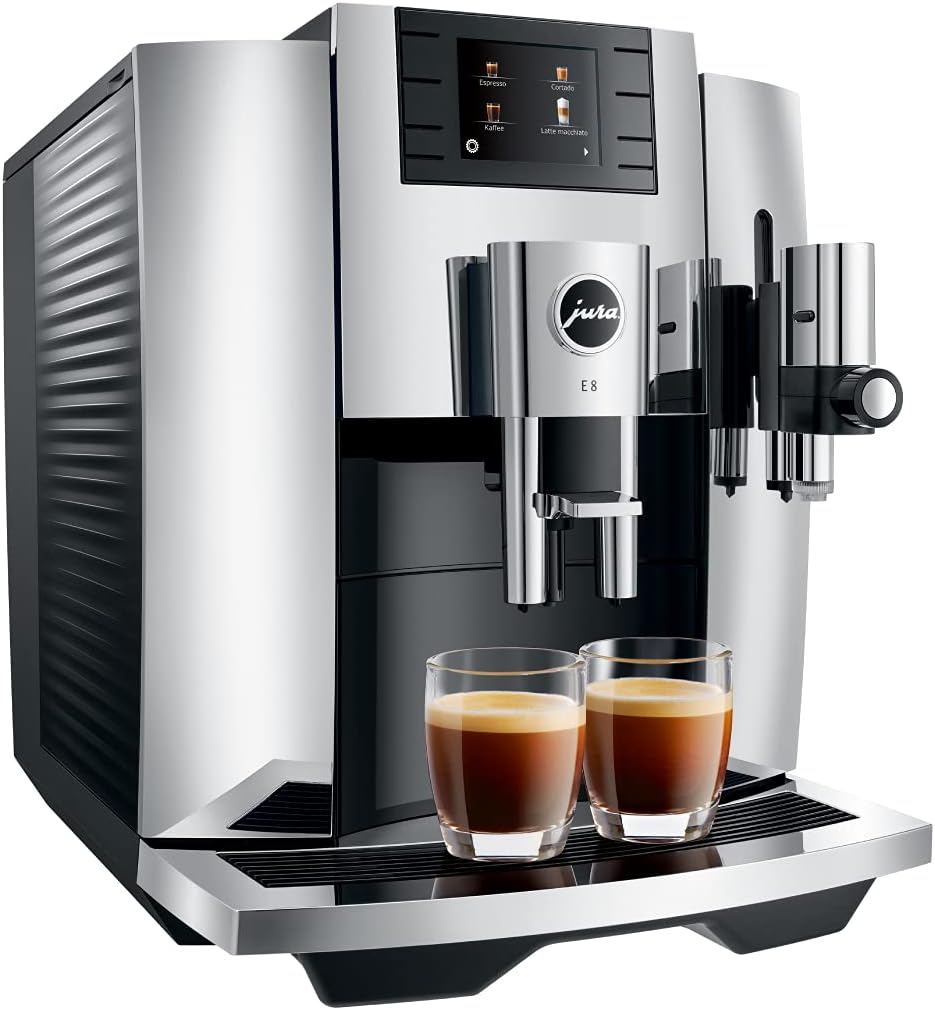
Jura E8 - Best Overall for Home Use
17 specialties, HP3 fine foam, Aroma G3 grinder. Similar noise level to all Jura home models - the right choice for most home buyers regardless of noise preference.
Check E8 Price →As an Amazon Associate, we earn from qualifying purchases at no extra cost to you.
See also: Jura E8 Review | Jura ENA 4 Review | Best Jura Under $2,000 | Jura Troubleshooting Guide