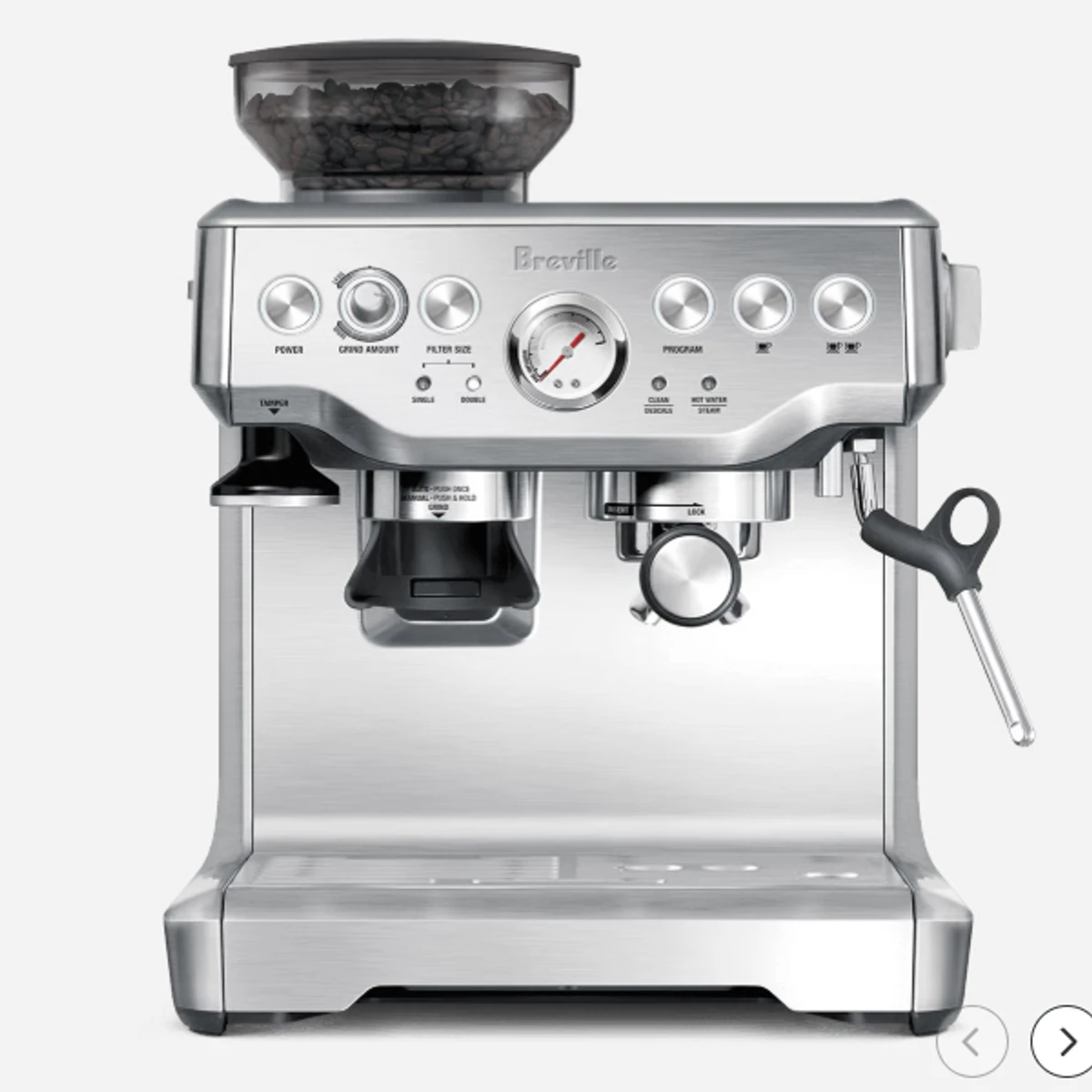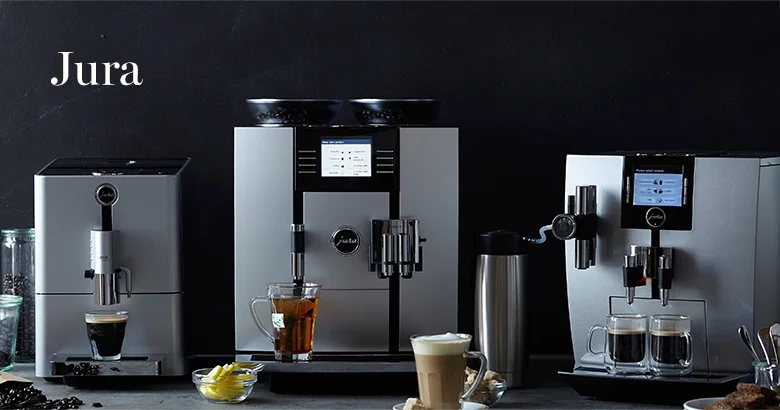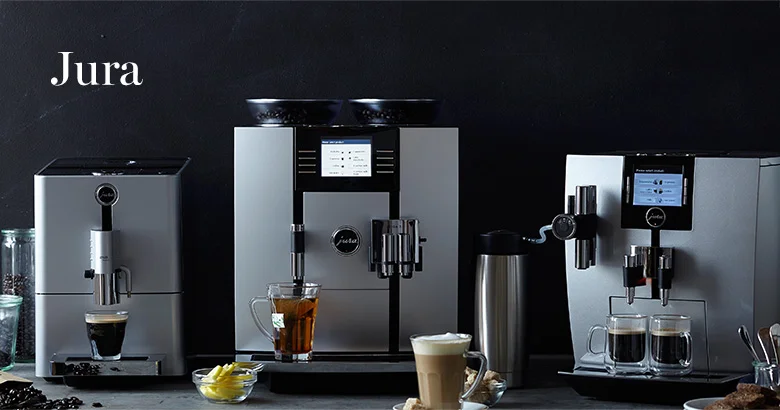
The short answer: buy the Jura ENA 4 if you drink black espresso and want the best grinder quality in the sub-$900 category. Buy the De’Longhi Magnifica Evo if you want milk drinks and prefer spending $100-$150 less upfront. These two machines are not really competing for the same buyer - once you know what you actually drink, the decision is straightforward.
Best for Pure Espresso - ~$799-$849
Jura ENA 4
Aroma G3 ceramic grinder, P.E.P. extraction, ultra-compact Swiss build. The cleanest espresso in this price range.
Check Price →Best for Milk Drinks - ~$699-$799
De’Longhi Magnifica Evo
7 specialties, LatteCrema manual frother, 1.8L tank, 250g hopper. More complete for mixed households.
Check Price →Full Side-by-Side Comparison
| Feature | Jura ENA 4 | De’Longhi Magnifica Evo |
|---|---|---|
| Typical price (2026) | $799-$849 | $699-$799 |
| One-touch specialties | 6 | 7 |
| Grinder type | Aroma G3 ceramic burr | Steel burr (7 settings) |
| Extraction | P.E.P. pulse extraction | Standard extraction |
| Milk system | None | LatteCrema manual frother |
| Water tank | 1.0L | 1.8L |
| Bean hopper | 125g | 250g |
| Noise level | Quieter (ceramic grinder) | Louder (steel burr) |
| Footprint | Ultra-compact (ENA series) | Standard - larger body |
| Brew unit | Fixed (automated cleaning) | Removable (manual rinse) |
| Country of origin | Switzerland | Romania |
| Best for | Black coffee only, small kitchens | Milk drinks, families, value |
Grinder Quality: Ceramic vs Steel
This is where the ENA 4 pulls ahead clearly. Jura’s Aroma G3 ceramic burr grinder has two meaningful advantages over the Magnifica Evo’s steel burr:
Heat: Ceramic generates less friction heat during grinding. This matters because heat degrades coffee aromatics. A steel burr grinder running continuously through 10-15 drinks a day will transfer more heat to the beans than a ceramic equivalent. For occasional home use the difference is minor. For households making 4-6 drinks daily, the ceramic grinder preserves more of the bean’s flavor profile.
Noise: Ceramic grinders are noticeably quieter than steel burr grinders at equivalent RPM. If you make coffee early in the morning before others are awake, or if you work from a home office and run the machine during calls, the ENA 4’s quieter operation is a genuine quality-of-life advantage. Multiple owners report the Magnifica Evo’s grinder as the loudest part of the machine.
Grind settings: The Magnifica Evo offers 7 grind settings vs the ENA 4’s fewer options, which is a practical advantage for dialing in different beans. In day-to-day use, most people find one or two settings and leave them there - but if you experiment with different roast levels frequently, more grind settings are useful.
P.E.P. extraction: The ENA 4 includes Jura’s Pulse Extraction Process, which pulses water through the grounds rather than applying continuous pressure. This improves extraction on short drinks - particularly ristretto and espresso - by increasing contact time without over-extraction. The Magnifica Evo uses standard extraction. On black espresso in a direct comparison, the ENA 4 produces a cleaner, more aromatic shot.
Milk System (or Lack Thereof)
This is the decision for most buyers.
The ENA 4 has no milk system. It makes espresso, coffee, ristretto, lungo, and macchiato-style drinks using black coffee only. There is no steam wand, no milk frother, and no option to add one natively. If you want a latte or cappuccino from the ENA 4, you need a separate standalone frother.
The Magnifica Evo includes a LatteCrema manual frother. It is not an automatic system - you position the wand over a separate milk jug and it steams the milk while you hold it. This takes 20-30 seconds of active involvement rather than the one-touch experience of the Jura E8 or S8’s HP3 system. The foam quality is decent for home use: functional cappuccinos and lattes, though not the dense microfoam you get from an automatic integrated system.
If you drink milk-based drinks even two or three times a week, buy the Magnifica Evo. The manual frother is one extra step, but it produces a genuinely drinkable cappuccino without any additional equipment. The ENA 4 simply cannot do this without a separate appliance.
If you drink exclusively black espresso, lungo, or filter-style coffee, the ENA 4’s lack of a milk system is not a drawback. You are not paying for hardware you will not use, and the machine is simpler and quieter as a result.
Pure Espresso Pick
Jura ENA 4 - Swiss ceramic grinder, P.E.P. extraction
The cleanest espresso at this price point. Compact enough for small kitchens. No milk hardware to complicate the picture.
Long-Term Cost and Reliability
Upfront cost: The Magnifica Evo is $100-$150 cheaper than the ENA 4 in most markets. Over a 5-year ownership period, that gap shrinks when you factor in ongoing consumables and repair likelihood.
Maintenance consumables: Jura machines require cleaning tablets, descaling tablets, and CLARIS water filters on a set schedule. These cost roughly $80-$120 per year. The Magnifica Evo uses its own descaling cycle and a removable brew unit that rinses under the tap - its annual maintenance cost is somewhat lower, around $40-$70 depending on water hardness.
Reliability and lifespan: Jura machines are Swiss-engineered and built to a higher mechanical tolerance than the Magnifica Evo. Industry repair data and owner reports consistently place Jura’s expected lifespan at 8-12 years with proper maintenance, vs 5-8 years for De’Longhi’s entry-level lineup. At the $800 price point, you are likely to replace the Magnifica Evo 2-3 years earlier than the ENA 4. When you amortize the purchase price across the machine’s useful life, the ENA 4’s per-year cost is actually lower.
Repairability: De’Longhi has an advantage here. The removable brew unit means you can physically pull out and rinse the brewing component - something Jura’s sealed system does not allow. De’Longhi parts are also more widely available through third-party suppliers. If you are handy and want the option to self-service, the Magnifica Evo is easier to maintain at a component level.
Water tank and hopper: The Magnifica Evo’s 1.8L water tank and 250g bean hopper are nearly double the ENA 4’s 1.0L tank and 125g hopper. For a household making 4+ drinks daily, the ENA 4 will need filling more often - this is a real inconvenience to be aware of. If you make 8-10 drinks a day across a household, the Magnifica Evo’s larger capacity reduces daily maintenance friction significantly.
Milk Drinks + More Capacity
De’Longhi Magnifica Evo - 1.8L tank, 250g hopper
Better daily capacity, LatteCrema frother, removable brew unit. The more practical choice for multi-drink households.
Who Each Machine Is For
Buy the Jura ENA 4 if:
- You drink espresso, ristretto, lungo, or black coffee exclusively
- Your kitchen has limited counter space - the ENA 4 is one of the smallest fully automatic machines on the market
- Quiet operation matters to you (early mornings, open-plan offices, thin walls)
- You want the best espresso extraction quality in the sub-$900 bracket
- You plan to keep the machine for 8+ years and want Swiss build quality
- You drink alone or in a two-person household with similar preferences
Buy the De’Longhi Magnifica Evo if:
- You make cappuccinos, lattes, or flat whites at least a few times per week
- Your household has multiple people with different drink preferences
- You prefer spending $100-$150 less upfront
- A larger water tank and bean hopper reduce how often you want to refill
- You want a removable brew unit for hands-on cleaning
- You are less certain about your long-term commitment to the machine
Consider stepping up if:
If milk drink quality genuinely matters to you, neither of these machines is the ideal answer. The ENA 4 has no milk system, and the Magnifica Evo’s manual frother is functional but not impressive. For $200-$400 more, the Jura E6 (with HP2 automatic fine-foam) or Jura D6 (with a basic integrated frother) offer a better automated milk experience within the Jura ecosystem.
For a broader look at how Jura and De’Longhi compare across their full lineups, see our Jura vs De’Longhi comparison.
FAQ
Is the Jura ENA 4 worth $100 more than the Magnifica Evo?
For black espresso drinkers, yes. The ceramic grinder, P.E.P. extraction, quieter operation, and longer expected lifespan justify the premium. For milk drink drinkers, no - the ENA 4 lacks the milk hardware entirely, making it the wrong machine regardless of price.
Can I add milk capability to the Jura ENA 4 later?
Not natively. The ENA 4 does not have ports or hardware for an integrated milk system. You can use a standalone electric frother (like the Jura Hot and Cold milk frother) as a separate appliance alongside the ENA 4, but it adds another device to your counter and another cleaning routine to your day.
Which machine is quieter?
The Jura ENA 4 is meaningfully quieter. The Aroma G3 ceramic grinder produces less noise than the Magnifica Evo’s steel burr. If you make coffee early in the morning in a shared home, the ENA 4 is the more considerate choice.
How often do I need to refill the ENA 4’s water tank?
The ENA 4’s 1.0L tank will need refilling after roughly 5-8 drinks depending on drink size. For one or two people making 2-3 drinks each per day, you will typically refill every 2-3 days. For larger households, this becomes a daily task. The Magnifica Evo’s 1.8L tank lasts roughly twice as long between fills.
Does the Magnifica Evo make better milk drinks than the ENA 4?
Yes - the ENA 4 makes no milk drinks at all, so any comparison is the Magnifica Evo by default. The LatteCrema frother produces decent foam for cappuccinos and lattes. It is not as refined as Jura’s HP3 automatic system (found on the E8 and S8), but it is a competent manual steamer for everyday home use.
Which has better resale value?
Jura. Used Jura machines hold 40-60% of original retail on the secondary market after 3-4 years. De’Longhi entry-level machines depreciate faster. If you think you might upgrade in 3-5 years, the ENA 4 will return more of its purchase price.
Is the De’Longhi Magnifica Evo fully automatic?
Mostly. Grinding, brewing, and dose management are fully automatic. The milk steaming step requires you to position and activate the LatteCrema wand manually - it is not a one-touch milk drink experience. For fully automatic milk drinks, you would need to look at the De’Longhi Dinamica or Jura E6 and above.
Our Verdict
For black espresso drinkers: the Jura ENA 4. Better grinder, better extraction, longer lifespan, and genuinely quieter operation. The lack of a milk system is not a compromise if you do not use milk.
For milk drink households: the De’Longhi Magnifica Evo. It costs less, holds more water and beans, and includes a functional manual frother. It is not a perfect machine, but it covers the bases that the ENA 4 simply cannot.
Neither machine is ideal if you want high-quality automatic milk drinks. Both require a significant step up - to the Jura E6 or D6 within the Jura lineup, or to the De’Longhi Dinamica - to get genuinely good one-touch milk foam.
Our Top Pick at This Price
Jura ENA 4 - Best Espresso Under $900
Swiss ceramic grinder, P.E.P. pulse extraction, ultra-compact body. The best pure espresso machine at this price point - as long as you drink black coffee.
Check ENA 4 Price on Amazon →As an Amazon Associate, we earn from qualifying purchases at no extra cost to you.
Related
- Jura ENA 4 Review (2026) - full hands-on ENA 4 review
- Jura vs De’Longhi (full comparison) - how both brands compare across all price tiers
- Jura ENA 4 vs D6 - ENA 4 vs the next step up within Jura
- Jura ENA 4 vs ENA 8 - ENA series comparison
- Best Jura Espresso Machine 2026 - full lineup guide
- Best Coffee Beans for Jura Machines - bean recommendations