Jura recommends descaling every 2-3 months. That figure is based on average European tap water - moderately soft, moderate usage. If you live in Phoenix, Arizona or Dallas, Texas, that schedule will leave you with a machine clogged with limescale well before the reminder appears. If you live in Portland, Oregon, you could probably stretch to twice a year without issue.
The correct descaling frequency is not on a calendar. It is a function of three things: your water hardness, how many cups you make per day, and whether you use a CLARIS filter.
Why Water Hardness Is the Main Variable
Limescale forms when dissolved calcium and magnesium minerals in water get left behind as water heats and evaporates inside the boiler. Hard water has more of these minerals, so scale builds faster. The damage is cumulative - the heating element works harder, brew temperature drops, flow rate slows, and eventually you get a failed pump or cracked boiler.
Jura machines have a water hardness setting in the menu (usually under Maintenance or Settings). This setting controls when the machine prompts you to descale. If you set it wrong - or never set it at all - the prompt will come too late for hard water users and unnecessarily early for soft water users.
US Water Hardness by Region
Municipal water hardness varies widely across the United States. This table gives you a general sense of where your region falls.
| Region | Typical Hardness | Hardness Level |
|---|---|---|
| Pacific Coast (OR, WA, N. California) | 0-3 gpg / 0-50 ppm | Soft |
| Northeast (NY, MA, VT, ME) | 3-7 gpg / 50-120 ppm | Moderately soft |
| Mid-Atlantic (PA, NJ, MD) | 7-10 gpg / 120-170 ppm | Moderately hard |
| Southeast (FL, GA, SC) | 10-14 gpg / 170-240 ppm | Hard |
| Midwest (IL, OH, IN, MI) | 10-15 gpg / 170-260 ppm | Hard |
| Southwest (AZ, NM, TX, NV) | 14-25+ gpg / 240-430+ ppm | Very hard |
gpg = grains per gallon. These are regional averages - your city’s actual number may differ.
If you live in a hard or very hard water area and you have been following the “every 3 months” rule, you have been under-descaling.
Core Frequency Chart: Hardness vs. Descaling Interval
Use this as your starting point. Adjust down (more frequent) if you make more than 6 cups per day, or up (less frequent) if you use a CLARIS filter.
| Water Hardness | Hardness Level | Descaling Interval | CLARIS Filter Replacement |
|---|---|---|---|
| 0-3 gpg (0-50 ppm) | Soft | Every 5-6 months | Every 4-5 months |
| 3-7 gpg (50-120 ppm) | Moderately soft | Every 3-4 months | Every 3-4 months |
| 7-10 gpg (120-170 ppm) | Moderately hard | Every 8-10 weeks | Every 8-10 weeks |
| 10-14 gpg (170-240 ppm) | Hard | Every 6-8 weeks | Every 6-8 weeks |
| 14+ gpg (240+ ppm) | Very hard | Every 4-6 weeks | Every 4-6 weeks |
Heavy users (8+ cups/day) should move one row down the frequency column.
Official Jura Descaling
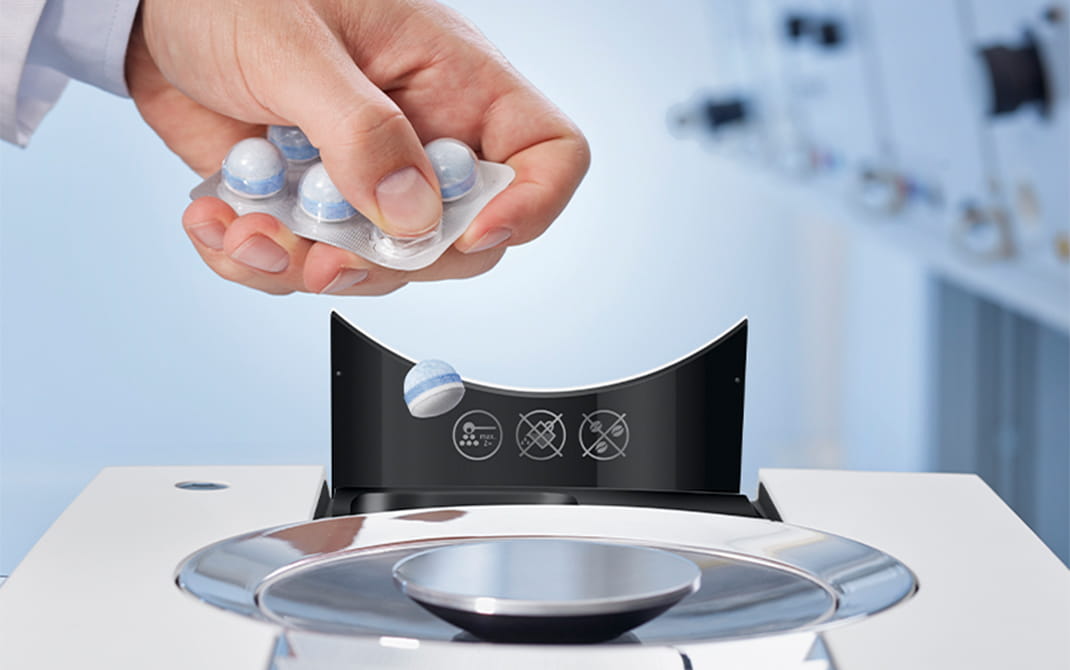
Jura Descaling Tablets
Only use Jura-approved descalers. Third-party tablets can damage internal seals and void your warranty.
How to Find Your Actual Water Hardness
Free option - municipal water report: Your city or water utility is required to publish an annual water quality report (Consumer Confidence Report). Search for “[your city] water quality report” or go to the EPA’s website at epa.gov/ccr. Look for “total hardness” or “calcium hardness” in the results.
Fast option - test strips: Aquarium and pool test strips that measure water hardness cost $8-12 on Amazon. Dip one in your tap water for 30 seconds and compare to the color chart. Accuracy is good enough to place you in the right hardness band from the table above.
Once you have your number, set the water hardness level in your Jura’s settings menu. This recalibrates when the machine prompts you for descaling and filter replacement.
How a CLARIS Filter Changes Everything
Jura’s CLARIS filters are ion-exchange filters that soften your incoming tap water before it reaches the boiler. If your tap is hard, the filter absorbs the calcium and magnesium before it can become limescale.
The practical result: CLARIS filter users in hard water areas often descale 30-50% less frequently than users without filters, while also getting better-tasting coffee (fewer dissolved minerals = cleaner cup).
The trade-off is that the filter itself gets saturated and needs regular replacement - roughly on the same schedule as you would otherwise be descaling. When the filter is spent, you are back to running unfiltered hard water through your machine.
You can see a comparison of Jura CLARIS filter types and which fits your machine at /best-jura-claris-filters.
Reduce Descaling Frequency
Jura CLARIS Water Filter
Softens hard tap water before it reaches the boiler - the single most effective way to reduce limescale buildup and extend time between descaling cycles.
Check Price on Amazon →Warning Signs You Have Waited Too Long
Your Jura’s descaling prompt is the minimum signal - it is based on usage count and your hardness setting, not a direct measurement of scale buildup. If your hardness setting is wrong, the prompt is unreliable. Watch for these signs regardless of what the machine says:
- Slower brew time. A shot that used to take 25 seconds now takes 35-40. Scale restricts water flow through the heating block.
- Temperature drop. Coffee comes out noticeably cooler than usual. The heating element is working against scale deposits.
- Machine prompts earlier than expected. If you recently moved or changed your water source, your hardness setting may be set too low.
- Unusual sounds. Grinding or struggling noises during brewing can indicate the pump is working harder against flow restriction.
If you notice any of these, do not wait for the prompt. Run a descaling cycle immediately. See the full step-by-step guide to descaling your Jura for the exact process.
For the correct tablets to use in your machine, see which Jura descaling tablets are compatible - not all tablets work with all models, and using the wrong one can damage seals.
FAQ
Can I descale too often?
Yes, but the threshold is high. Descaling solution is mildly acidic and extended or unnecessarily frequent contact can wear internal rubber seals over years. For most users, the risk of under-descaling (limescale damage) is far greater than over-descaling. Sticking to the chart above is safe. Going twice as often as the chart recommends would be unnecessary, but not immediately harmful.
Does my water hardness affect espresso taste?
It does. Very soft water (under 50 ppm total dissolved solids) can make espresso taste flat or sour - minerals in water actually help extract flavor compounds from coffee grounds. Very hard water can contribute a chalky or mineral taste. The sweet spot for espresso is typically 75-150 ppm. If your water is very hard, a CLARIS filter brings it into that range while also protecting your machine.
Should I use filtered or bottled water instead?
Jura does not recommend distilled or very soft bottled water - no minerals means no extraction and potential corrosion of some internal components. If your tap water is very hard, a CLARIS filter is the better solution than switching to bottled water.
Descaling is straightforward once you know your water hardness. Get your municipal report, set your machine’s hardness level correctly, and follow the interval from the chart. If you are in a hard water area, consider adding a CLARIS filter to extend those intervals and protect the heating block over the long term.
For the full descaling procedure, timing, and what to expect during the cycle, see the complete descaling guide. For a full maintenance schedule covering cleaning tablets, milk circuit cleaning, and filter replacement together, see Jura maintenance guide. If you are considering a new machine, the Jura E8 review includes a complete annual cost estimate covering all maintenance.
Keep Your Jura Running Clean
Jura Descaling Tablets
Use official Jura descaling tablets - the formula is matched to Jura’s internal components and will not damage seals or void your warranty the way generic descalers can.
Check Price on Amazon →